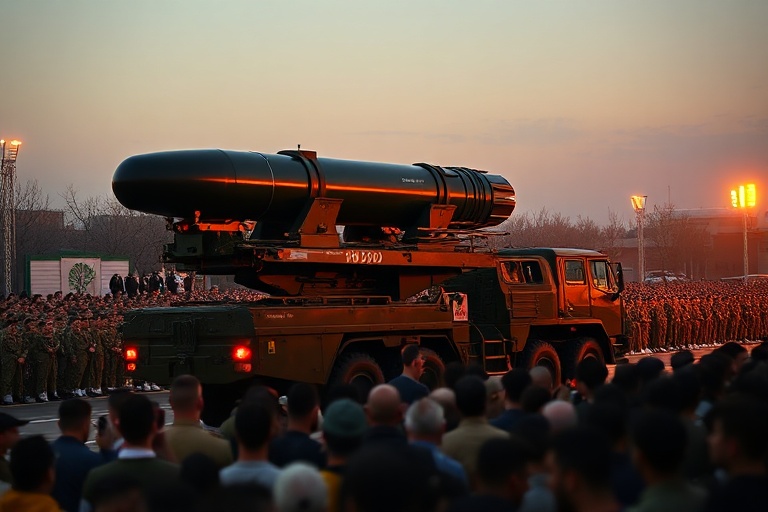
Iran’s Missile Program: Capabilities, Concerns, and Regional Impact
The development of Iran’s missile program has been a focal point of international security discussions for decades. From short-range ballistic missiles to long-range systems, Iran’s arsenal has evolved significantly since its inception following the Iran-Iraq War in the 1980s. Today, these missiles represent a key component of Iran’s defense strategy and a source of regional tension.
The program’s origins trace back to the 1980s, when Iran sought to counter Iraqi missile attacks during the Iran-Iraq War. Initially relying on foreign-sourced systems, Iran quickly turned to domestic production to address its security needs. This decision laid the foundation for a self-sufficient missile industry that has since expanded through reverse engineering, foreign assistance, and indigenous innovation.
The Evolution of Iran’s Missile Arsenal
Iran’s missile program has progressed from basic short-range systems to more advanced medium- and long-range ballistic missiles. Key milestones include the development of the Shahab series in the 1990s, which drew inspiration from North Korean and Russian designs. The Shahab-1 and Shahab-2 missiles, with ranges of 300 km and 500 km respectively, were among the first domestically produced systems.
By the 2000s, Iran had expanded its capabilities with the introduction of the Shahab-3, a medium-range missile with a range of approximately 1,300 km. This system marked a significant leap forward, bringing Israel and U.S. military bases in the region within striking distance. Subsequent advancements, such as the Sejjil and Emad missiles, demonstrated Iran’s growing expertise in solid-fuel technology and precision guidance systems.
In recent years, Iran has unveiled systems like the Khorramshahr and the solid-fuel Sejjil-2, further solidifying its position as a regional missile power. These developments have raised concerns among neighboring countries and Western powers, particularly regarding Iran’s compliance with international agreements and its potential to destabilize the region.
Key Milestones in Iran’s Missile Program
- 1980s: Development begins in response to Iraqi missile attacks during the Iran-Iraq War.
- 1990s: Introduction of the Shahab-1 and Shahab-2 missiles, based on foreign designs.
- 2000s: Deployment of the Shahab-3, a medium-range missile with a range of 1,300 km.
- 2010s: Development of solid-fuel systems like the Sejjil and Emad missiles.
- 2020s: Introduction of advanced systems such as the Khorramshahr and Sejjil-2.
International Response and Diplomatic Tensions
Iran’s missile program has drawn sharp criticism from the international community, particularly the United States and its allies in the Middle East. The U.N. Security Council has imposed multiple rounds of sanctions targeting Iran’s ballistic missile activities, citing concerns over proliferation and regional stability. These sanctions have sought to restrict Iran’s access to missile technology and financial resources.
In 2015, the Joint Comprehensive Plan of Action (JCPOA), or Iran nuclear deal, briefly eased tensions by placing restrictions on Iran’s nuclear program. However, the deal did not address Iran’s missile activities, leaving this issue unresolved. The U.S. withdrawal from the JCPOA in 2018 under the Trump administration further complicated diplomatic efforts, as Iran resumed uranium enrichment and accelerated its missile development.
Regional actors, such as Saudi Arabia and Israel, have also expressed deep concerns over Iran’s missile program. Israel, in particular, has repeatedly highlighted the threat posed by Iran’s long-range missiles, which it views as a direct security challenge. Saudi Arabia, meanwhile, has accused Iran of destabilizing the region through its support for proxy groups equipped with ballistic missiles.
Regional Implications and Strategic Considerations
The proliferation of Iran’s missiles has had far-reaching implications for the Middle East’s security landscape. Neighboring countries, such as Saudi Arabia, the United Arab Emirates, and Israel, have responded by enhancing their own missile defense systems and seeking security guarantees from the United States. The deployment of U.S. missile defense systems, such as the THAAD and Patriot systems, in the region underscores the growing sense of urgency.
Iran’s missile program also plays a critical role in its regional strategy, serving as both a deterrent and a tool of influence. The ability to strike targets across the region has bolstered Iran’s position in conflicts involving its proxy groups in Syria, Iraq, Yemen, and Lebanon. For example, the use of ballistic missiles by Houthi rebels in Yemen, allegedly supplied by Iran, has intensified the Saudi-led intervention in the country.
Moreover, Iran’s missile program has become intertwined with its broader geopolitical ambitions. The development of long-range missiles capable of reaching Europe has raised concerns in Western capitals, particularly as Iran continues to expand its influence in Syria and Iraq. These developments have fueled debates about the potential for a wider conflict and the need for a coordinated international response.
Future Outlook and Potential Scenarios
Looking ahead, Iran’s missile program is poised to remain a central issue in Middle Eastern security dynamics. The expiration of key restrictions under the JCPOA and Iran’s continued advancements in missile technology suggest that the program will only grow in sophistication. This trajectory raises several potential scenarios for the future.
One possibility is that Iran will continue to develop its missile capabilities while seeking to negotiate partial restrictions or confidence-building measures with regional and international actors. Such negotiations could focus on limiting the range or payload of Iran’s missiles, as well as establishing transparency mechanisms to reduce misperceptions and build trust.
Alternatively, the absence of diplomatic progress could lead to further escalation, with Iran expanding its missile arsenal and regional actors doubling down on their defense postures. This scenario risks triggering a costly arms race in the Middle East, with long-term implications for stability and security.
Another factor to consider is the role of technological advancements, such as hypersonic missiles and improved guidance systems. If Iran succeeds in developing these technologies, it could significantly alter the regional balance of power and increase the threat posed by its missile program.
For policymakers and analysts, the challenge lies in balancing deterrence with diplomacy. While Iran’s missile program presents legitimate security concerns, a purely confrontational approach risks exacerbating tensions and pushing Iran toward further militarization. A more nuanced strategy, combining targeted sanctions with diplomatic engagement, may offer a path forward.
Ultimately, the future of Iran’s missile program will depend on a combination of technological progress, regional dynamics, and international diplomacy. Addressing this issue will require sustained efforts to reduce mistrust, promote dialogue, and foster cooperation among all stakeholders.
As the situation evolves, it is crucial to monitor Iran’s missile activities closely and assess their broader implications for regional and global security. By staying informed and engaging in constructive debate, policymakers and analysts can help shape a more stable and secure future for the Middle East.
For further insights into regional security dynamics, explore our Politics and News categories on Dave’s Locker.