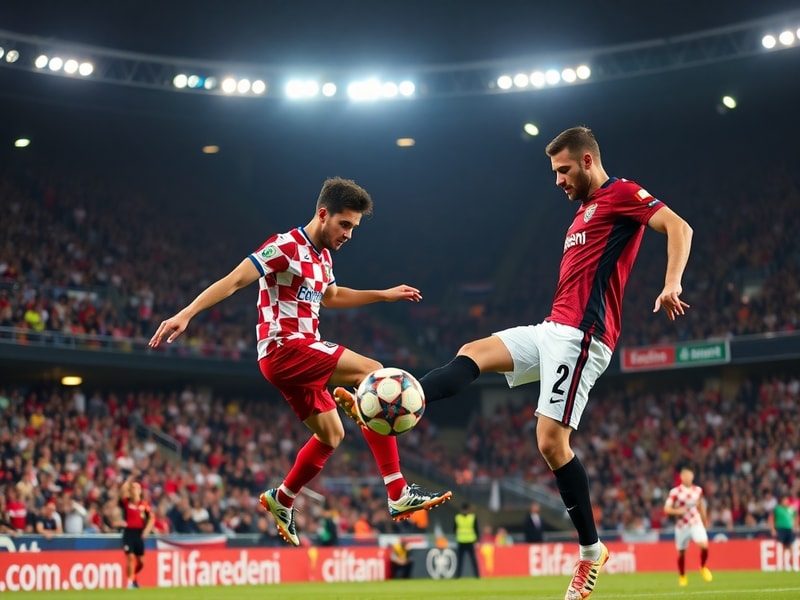
At 19 years old, Jack Hinshelwood has emerged as one of Brighton & Hove Albion’s most exciting prospects. His rapid rise from the club’s academy to the first team has not only captivated fans but also raised broader questions about the development pathways of young English footballers in the modern game. Hinshelwood’s journey reflects the increasing emphasis on technical proficiency, tactical intelligence, and mental resilience in youth development—a shift that mirrors the demands of today’s Premier League.
Born on April 11, 2005, in Worthing, West Sussex, Hinshelwood joined Brighton’s academy at the age of eight. His progression through the youth ranks was marked by consistent performances, technical refinement, and a maturity beyond his years. By the 2022–23 season, he captained the under-18 team to an FA Youth Cup final, a run that included standout displays against Manchester City and Liverpool. These performances caught the attention of first-team manager Roberto De Zerbi, who handed him his senior debut in May 2023. Since then, Hinshelwood has become a regular presence in midfield, earning praise for his composure, passing range, and work rate.
From Academy Prospect to First-Team Regular
Hinshelwood’s breakthrough into the Brighton first team was not merely a product of raw potential but of deliberate development. Under the guidance of Brighton’s academy staff, he was exposed to high-level tactical training early, with a focus on positional play and pressing triggers. His ability to read the game and make intelligent decisions under pressure has made him an asset in both defensive and attacking phases.
His senior debut came in a 4–1 Premier League win over Manchester United at Old Trafford—a moment that underscored his readiness for top-flight football. Since then, he has featured in over 30 appearances across all competitions, playing as a defensive midfielder, central midfielder, and even as a makeshift right-back. His versatility has been a valuable asset for Brighton, particularly under multiple managerial changes during a transitional period at the club.
One of the most striking aspects of Hinshelwood’s rise is his physical and mental resilience. Standing at 5’11” with a lean but strong frame, he combines agility with endurance, allowing him to cover large areas of the pitch. Equally important is his ability to remain composed in high-pressure situations—a trait that has drawn comparisons to former Brighton academy graduate Lewis Dunk, who now captains the team.
The Modern Midfielder: Technical and Tactical Evolution
Hinshelwood embodies the evolution of the modern midfielder. Unlike traditional defensive midfielders who relied solely on physicality, Hinshelwood’s game is built on technical precision and tactical awareness. His passing completion rate consistently hovers above 85%, and he averages over 50 passes per game in the Premier League—a testament to his role as a deep-lying playmaker. His ability to switch play with a single touch and break lines with vertical passes has become a hallmark of Brighton’s possession-based style.
Defensively, he is proactive rather than reactive. He averages more than two tackles and interceptions per game, often stepping out to intercept passes or close down opponents before they can turn. This proactive approach is indicative of the high pressing systems employed by modern managers, where midfielders are expected to contribute both in build-up and defensive transitions.
The data supports his impact. According to Dave’s Locker Sports analysis, Hinshelwood ranks in the top 15% of Premier League midfielders for progressive passes and successful dribbles, placing him among the league’s most advanced young players in his position. His performance metrics suggest that he is not just filling a role but redefining it for his generation.
Key Attributes of Jack Hinshelwood
- Technical Ability: Exceptional first-touch control and passing accuracy under pressure.
- Tactical Intelligence: High football IQ, capable of reading the game and anticipating play.
- Versatility: Comfortable in multiple midfield and defensive roles.
- Physical Profile: Agile, strong in duels, and capable of sustained high-intensity performance.
- Mental Fortitude: Remains calm in high-pressure situations and adapts quickly to tactical changes.
Broader Implications: The Future of English Football Talent
Hinshelwood’s development trajectory speaks to larger trends in English football. The traditional pathway—where young players were rushed into first-team environments without adequate preparation—has shifted toward more holistic, long-term development models. Brighton’s academy, under the leadership of technical director David Leman, has been at the forefront of this evolution, emphasizing technical development, psychological support, and gradual integration into senior football.
This approach contrasts with the experiences of many young English players who have struggled to adapt to the physicality and speed of the Premier League. Hinshelwood’s success suggests that clubs investing in youth development—rather than relying solely on recruitment—can produce players who are not only technically proficient but also tactically astute. This model could influence other Premier League clubs to rethink their youth strategies, particularly as financial fair play regulations tighten and homegrown player quotas become more stringent.
Moreover, Hinshelwood represents a shift in the perception of English midfielders. Historically, English players in this position were often stereotyped as either physical enforcers or one-dimensional passers. Hinshelwood, however, combines the best of both worlds: the technical elegance of a Spanish deep-lying midfielder with the athleticism and intensity of a typical English prospect. His emergence could help redefine the archetype of the modern English midfielder on the global stage.
A Look Ahead: What’s Next for Hinshelwood?
At just 19, Hinshelwood’s future appears limitless. His performances have already drawn interest from several top European clubs, and he has been included in England’s youth setups, including the under-21 squad. However, the challenge for Brighton will be managing his development carefully. Over-exposure at a young age could hinder his progress, while premature moves to bigger clubs could disrupt his rhythm.
For now, Hinshelwood remains focused on contributing to Brighton’s ambitions. With the club aiming for European competition in the coming seasons, his role in the midfield could be pivotal. His ability to dictate play, win duels, and maintain high energy levels will be crucial as Brighton looks to consolidate their status as a top-half Premier League team.
Off the pitch, Hinshelwood has also become a role model for young players. His humility, work ethic, and professionalism have made him a respected figure among teammates and fans alike. In an era where social media often amplifies the wrong values, Hinshelwood’s grounded approach offers a refreshing contrast.
As the 2024–25 season approaches, all eyes will be on Hinshelwood. Will he take the next step toward becoming a first-choice midfielder for both club and country? Can he maintain his development pace without succumbing to the pressures of premature expectations? These questions will define the next chapter of his career—and perhaps the future of English midfield talent.
Conclusion
Jack Hinshelwood’s rise is more than just a personal success story; it is a case study in modern football development. His journey from Brighton’s academy to the Premier League highlights the importance of technical training, tactical education, and psychological resilience in shaping the next generation of footballers. As clubs across England and Europe reassess their youth development strategies, Hinshelwood serves as both an example and an inspiration.
For Brighton, he represents the culmination of years of investment in their academy—a tangible return on their commitment to homegrown talent. For English football, he is a symbol of hope, proving that the future of the national team may not lie solely in recruitment but in the cultivation of homegrown genius.
As Hinshelwood continues to grow, one thing is certain: his story is only beginning. And if his trajectory holds, he may well become a defining figure in the next era of English football.