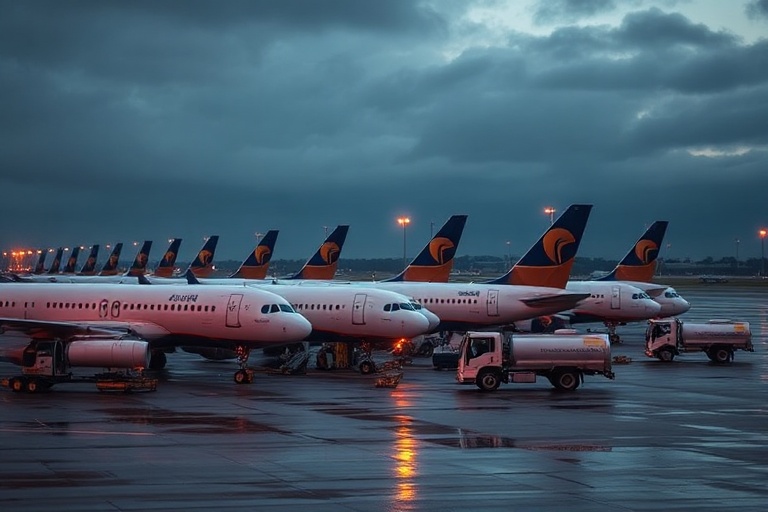
Jet Fuel Shortages Hit Airlines: Causes and Impact on Travel
The skies above us are facing an unexpected challenge. Airlines worldwide are grappling with jet fuel shortages that threaten to upend travel plans, inflate ticket prices, and strain already fragile supply chains. This isn’t merely a hiccup in logistics—it’s a symptom of deeper systemic issues reshaping the aviation industry.
The problem has escalated quietly over the past year. What began as regional disruptions has snowballed into a global concern, with major hubs from Heathrow to Dubai reporting tightened supplies. While the immediate impact on travelers—delays, cancellations, and surcharges—grabs headlines, the broader implications are far more complex.
The Root Causes Behind the Shortage
The jet fuel crisis didn’t emerge overnight. Several converging factors have created a perfect storm, each amplifying the others in ways few anticipated.
First, geopolitical tensions have played a pivotal role. The war in Ukraine disrupted global oil flows, particularly from Russia, a major supplier of refined products to Europe. While sanctions targeted crude oil initially, the ripple effects extended to jet fuel, a secondary product of refining. Refineries in Europe, already operating at reduced capacity due to environmental regulations, found themselves unable to pivot quickly.
Second, refining capacity has lagged behind demand. For years, the aviation industry enjoyed stable fuel prices and abundant supply, leading to underinvestment in refining infrastructure. Now, as demand rebounds post-pandemic—especially in Asia and North America—refineries are struggling to keep pace. The shift toward sustainable aviation fuels (SAFs) adds another layer of complexity, diverting feedstocks and increasing production costs.
Third, logistical bottlenecks have worsened the situation. Airports with limited storage and distribution networks are ill-equipped to handle sudden supply fluctuations. In some cases, fuel suppliers are prioritizing higher-margin customers, leaving airlines scrambling for allocations.
Finally, climate policies are reshaping the supply chain. Stricter emissions standards and carbon pricing in the EU and U.S. are pushing refiners to retool facilities, reducing their ability to produce jet fuel. The paradox is striking: efforts to green the industry are, in the short term, tightening supply.
Key Factors Contributing to Jet Fuel Shortages
- Geopolitical instability: Disruptions in oil flows from key suppliers like Russia and the Middle East.
- Underinvestment in refining: Years of stable prices led to minimal expansion of jet fuel production capacity.
- Post-pandemic demand surge: Travel rebound outpacing the industry’s ability to adapt.
- Climate regulations: Stricter environmental rules are diverting resources away from traditional fuel production.
- Logistical constraints: Limited storage and distribution infrastructure at airports.
How Airlines Are Responding
Airlines are taking drastic measures to mitigate the fallout. Some carriers are rerouting flights to avoid high-demand regions, while others are cutting back on less profitable routes. Fuel surcharges have become commonplace, with passengers paying up to $50 extra per ticket on some international flights.
In a bid to secure supply, airlines are also exploring long-term contracts with refiners, locking in prices at a premium. This strategy, while stabilizing costs, reduces flexibility and could backfire if fuel prices drop in the future. Regional carriers, particularly in Africa and South America, are hardest hit, as they lack the bargaining power to negotiate favorable terms.
Technology is playing a role in optimization. Airlines are using AI-driven route planning to minimize fuel consumption, and some are experimenting with hybrid-electric aircraft on shorter routes. However, these solutions are stopgaps—not long-term fixes for a systemic issue.
The Ripple Effects on Travel and Beyond
The consequences of jet fuel shortages extend far beyond delayed vacations or canceled business trips. The aviation industry accounts for approximately 2.5% of global CO₂ emissions, and its struggles highlight the delicate balance between sustainability and reliability.
For travelers, the immediate impact is financial. Ticket prices have risen by an average of 12% year-over-year in some markets, with premium cabins seeing even steeper increases. Budget airlines, once a refuge for cost-conscious flyers, are also raising fares, eroding one of their key competitive advantages.
Economically, the shortages could dampen tourism, a critical revenue stream for many countries. Destinations reliant on international visitors—from Thailand to Iceland—are bracing for declines in arrivals. Meanwhile, businesses dependent on air freight, such as electronics manufacturers and pharmaceutical companies, face delays and higher shipping costs.
Environmentally, the situation is paradoxical. While the shortage pushes airlines toward sustainable fuels, the short-term reliance on traditional jet fuel could lead to increased emissions if carriers cut back on efficiency measures to meet demand. The International Air Transport Association (IATA) warns that without coordinated action, the industry’s net-zero goals could be delayed by a decade.
What’s Next for the Aviation Industry?
The path forward is uncertain, but several trends are likely to shape the industry’s response. On one hand, refiners are expected to gradually increase capacity as new facilities come online and existing ones are retooled. On the other, geopolitical risks and climate policies will continue to create volatility.
Collaboration will be critical. Governments, airlines, and fuel producers must work together to stabilize supply chains and invest in sustainable alternatives. The EU’s ReFuelEU Aviation initiative, which mandates a minimum share of SAFs in jet fuel, is a step in the right direction. However, its success depends on scaling up production—a process that could take years.
For passengers, the message is clear: flexibility is key. Booking refundable tickets, monitoring airline communications, and considering alternative travel methods may become the new normal.
One thing is certain—the jet fuel shortage is more than a temporary crisis. It’s a wake-up call for an industry at a crossroads, forced to confront the limits of its infrastructure, the fragility of its supply chains, and the urgent need for sustainable transformation.
As airlines navigate this turbulent period, travelers and businesses alike will need to adapt. The skies may be vast, but the challenges below them are only growing steeper.
For more on the aviation industry’s challenges and innovations, explore our Trending and Technology sections.