The Reggio Emilia approach stands as one of the most influential early childhood education models in the world today. Originating in the small Italian town of Reggio Emilia after World War II, this philosophy has reshaped how educators view children’s learning and development. Unlike traditional educational frameworks, Reggio Emilia positions children as capable, competent individuals who actively shape their own knowledge through exploration and collaboration.
The approach emerged from the grassroots efforts of Loris Malaguzzi, a teacher and psychologist, along with the parents of Reggio Emilia. After the war, communities in northern Italy came together to build schools for young children using materials salvaged from the conflict. This spirit of collective effort and respect for children’s potential became the foundation of what we now recognize as the Reggio Emilia approach. Today, schools following this model operate in over 140 countries, demonstrating its global relevance and adaptability.
The Core Principles of Reggio Emilia
The Reggio Emilia approach is built on several foundational principles that distinguish it from conventional educational methods. At its heart lies the belief in the “hundred languages of children”—the idea that children express themselves through multiple symbolic languages, including art, movement, music, and speech. This concept challenges the traditional dominance of verbal and written communication in learning environments.
Another key principle is the image of the child as a capable learner. Educators who embrace this philosophy view children as active participants in their own development, rather than passive recipients of knowledge. The role of the teacher transforms from an authority figure to a “co-learner” who guides children through their explorations while maintaining deep respect for their ideas and processes.
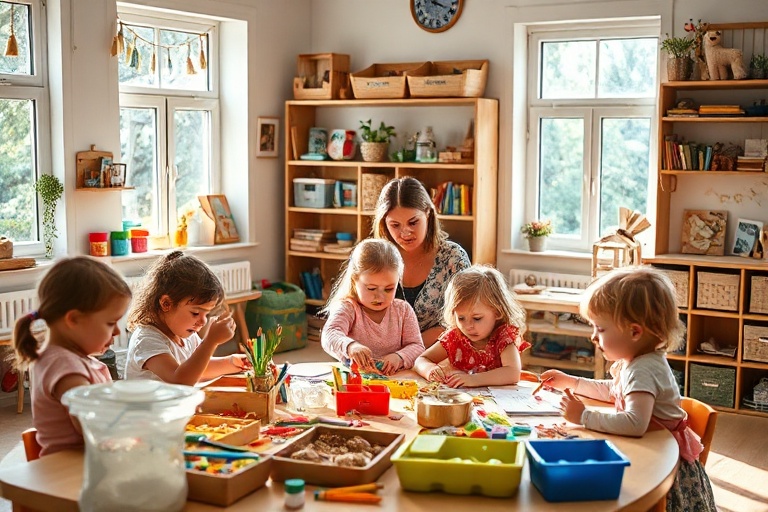
The environment itself serves as the “third teacher” in Reggio Emilia classrooms. Classroom design prioritizes natural light, open spaces, and carefully curated materials that invite exploration. Documentation plays a crucial role—teachers meticulously record children’s learning processes through photographs, notes, and transcripts, creating a visible trail of their intellectual growth that can be revisited and analyzed.
- Child as capable learner: Children are seen as competent individuals who construct knowledge through interaction with their environment.
- Project-based learning: Deep investigations emerge from children’s interests, often lasting weeks or months.
- Documentation as assessment: Learning is made visible through systematic recording and display.
- Community involvement: Parents, teachers, and local citizens collaborate in the educational process.
The Role of the Environment in Reggio-Inspired Classrooms
In Reggio Emilia-inspired classrooms, the physical space is carefully designed to support children’s natural curiosity. Unlike traditional classrooms with rows of desks, these learning environments feature flexible arrangements that encourage movement, collaboration, and independent exploration. Natural materials like wood, stone, and fabric dominate, creating a warm, inviting atmosphere that contrasts with the sterile aesthetics of conventional schools.
Light plays a crucial role in these spaces. Large windows, mirrors, and carefully positioned lamps create opportunities for children to observe light and shadow in different ways. The Atelier, a dedicated art studio, serves as the creative heart of the classroom where children experiment with various media under the guidance of an atelierista—a specialist trained in visual arts.
Materials are selected for their aesthetic qualities and open-ended possibilities. Loose parts like fabric scraps, pinecones, and blocks invite children to manipulate and transform their environment. The Reggio Emilia approach emphasizes the importance of beauty in learning spaces, believing that an aesthetically pleasing environment nurtures children’s sense of wonder and respect for their surroundings.
The Hundred Languages of Children
This central metaphor of the Reggio Emilia approach highlights the many ways children express their understanding and creativity. When children draw, sculpt, build, or dance, they are engaging in a form of symbolic communication that deserves equal attention to verbal language. Educators in Reggio-inspired settings provide multiple avenues for children to explore their ideas, recognizing that different mediums allow for different types of thinking and expression.
For example, a child fascinated by shadows might spend weeks exploring light through drawing, photography, shadow puppetry, and three-dimensional constructions. Each activity reveals different facets of their understanding while honing specific skills. This approach validates the diversity of children’s intelligences and learning styles, creating space for every child to find their voice.
Project-Based Learning in Practice
Project-based learning forms the backbone of the Reggio Emilia curriculum. Rather than following a predetermined scope and sequence, teachers observe children’s interests and develop projects that extend over weeks or even months. These investigations emerge from the children themselves, creating authentic learning experiences that connect deeply with their lives.
A classic example is the “Shadow Project” that emerged in one Reggio Emilia classroom. Children’s fascination with their own shadows led to an extended investigation that incorporated science, mathematics, art, and philosophy. They experimented with light sources, measured shadow lengths, created shadow stories, and even debated whether shadows were real or imaginary. The project evolved based on children’s questions and discoveries, demonstrating the organic nature of learning in this approach.
Documentation serves as both a learning tool and assessment method in project-based learning. Teachers create panels displaying photographs, children’s notes, and teacher reflections that trace the development of each project. These documentation panels serve multiple purposes: they help children revisit and reflect on their learning, allow teachers to assess growth over time, and communicate the depth of children’s thinking to parents and the wider community.
Implementing Reggio Emilia Principles Beyond Italy
While the Reggio Emilia approach originated in Italy, its principles have been adapted worldwide in diverse cultural contexts. In the United States, for example, many preschools and elementary schools incorporate Reggio-inspired elements into their programs, though adaptations are often necessary to align with local regulations and cultural expectations.
Some schools create “Reggio-inspired” classrooms that blend the approach’s core principles with their existing curricula. Others, particularly in early childhood settings, fully embrace the philosophy while navigating challenges like limited budgets for high-quality materials or resistance from administrators accustomed to more traditional models. The key to successful implementation lies in understanding the spirit of Reggio rather than rigidly adhering to specific practices.
For parents interested in Reggio-inspired education, education category on Dave’s Locker offers resources for finding programs and understanding what to look for in a quality early childhood setting. The approach’s emphasis on child-led learning and holistic development aligns closely with progressive educational values that many families seek.
The Challenges and Criticisms of the Reggio Emilia Approach
Despite its many strengths, the Reggio Emilia approach faces challenges when implemented outside its original cultural context. Some critics argue that the model’s emphasis on child-led learning can lead to insufficient structure, particularly in settings where academic accountability is prioritized. Others point out that the approach’s reliance on highly trained teachers and quality materials makes it difficult to scale, especially in underfunded schools.
The approach’s documentation practices have also sparked debate. While detailed record-keeping provides valuable insights into children’s learning, some educators question whether this labor-intensive process detracts from direct teaching time. Additionally, the aesthetic focus of Reggio classrooms—while beautiful—can present challenges in maintaining order and cleanliness, particularly for teachers accustomed to more traditional classroom management.
Cultural differences also impact the approach’s effectiveness. In some cultures, the image of the child as a capable learner conflicts with traditional views of children as needing adult guidance. Similarly, the emphasis on individual expression may need adaptation in collectivist cultures where group harmony is prioritized over personal exploration.
Why the Reggio Emilia Approach Matters Today
In an educational landscape often dominated by standardized testing and scripted curricula, the Reggio Emilia approach offers a refreshing alternative that honors children’s natural curiosity and creativity. Its emphasis on authentic learning experiences and deep understanding over rote memorization aligns with modern research on how children develop and learn.
The approach’s global spread demonstrates its adaptability and relevance across cultures. From urban centers in North America to rural communities in Africa, educators are finding ways to incorporate Reggio principles into their practice, often blending them with local traditions and resources. The approach’s focus on sustainability—using natural materials, emphasizing care for the environment, and developing long-term projects—also resonates in an era of climate awareness.
Perhaps most importantly, the Reggio Emilia approach reminds us of the importance of childhood itself. In a world that often rushes children toward academic achievement, this philosophy slows down to honor the process of learning. It teaches us that education isn’t just about preparing children for the future, but about nurturing their capacity to wonder, question, and create in the present moment.
For educators and parents seeking alternatives to traditional models, the Reggio Emilia approach provides a framework that is both deeply respectful of children’s capabilities and responsive to their individual needs. As we continue to refine our understanding of early childhood education, the lessons from Reggio Emilia will undoubtedly remain a vital part of the conversation.