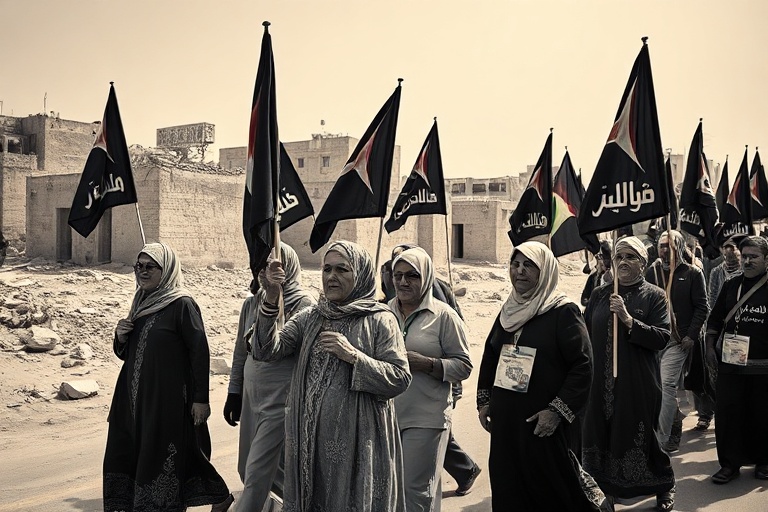
Nakba Day: Why This Palestinian Remembrance Resonates Worldwide
What Is Nakba Day and Why Does It Matter Beyond Palestine?
Nakba Day, observed annually on May 15, marks the displacement of more than 700,000 Palestinians during the 1948 Arab-Israeli War. The term nakba translates to “catastrophe” in Arabic, a word that carries deep historical weight. While widely commemorated in Palestine and among Palestinian communities worldwide, the significance of Nakba Day extends into global conversations about memory, justice, and national identity. It is not merely a historical event but a living narrative that shapes political discourse, cultural expression, and international law today.
Unlike many historical commemorations that fade into the past, Nakba Day remains a point of contention and solidarity. Its observance has grown beyond the Middle East, resonating in diaspora communities, academic circles, and human rights organizations. This global dimension reflects how displacement and loss transcend borders, influencing contemporary debates on refugees, statehood, and self-determination.
The Historical Roots of the Nakba: From 1948 to Present Memory
The events of 1948 began long before May 15. As British colonial rule in Palestine neared its end, Zionist militias and later the Israeli army engaged in military operations that led to the expulsion and flight of hundreds of thousands of Palestinians. Towns were depopulated, villages destroyed, and families separated—many never allowed to return. The newly declared State of Israel, recognized by the United Nations in November 1947, became a reality built partly on this displacement.
By the end of the war, around 78% of historic Palestine was under Israeli control. The remaining 22% was divided into the West Bank and Gaza Strip, territories that would later become central to another wave of displacement in 1967. Nakba Day, therefore, does not commemorate a single event but a process of dispossession that continues across generations.
In Israel, the state has historically downplayed or denied the Palestinian narrative of the Nakba. Until 2011, Palestinian citizens of Israel were banned from publicly mourning the event. Today, while some Israeli historians and activists acknowledge the Nakba, the government continues to restrict its public commemoration. This tension highlights how historical memory is not neutral—it is contested, legislated, and weaponized in nation-building.
How Nakba Day Is Observed: From Protests to Art and Education
Nakba Day is marked through a range of expressions across the globe. In Palestine, it often begins with marches toward destroyed villages, now inside Israel, known as return marches. These events are met with heavy Israeli military response, as seen most tragically during the 2018–2019 Gaza border protests, where over 200 Palestinians were killed by Israeli forces.
Beyond Palestine, Nakba Day is observed through cultural and educational initiatives. Palestinian artists, filmmakers, and writers use the day to share stories of displacement. Museums and universities host exhibitions, lectures, and film screenings. For example, the Palestinian Museum in Birzeit has curated exhibitions that visually reconstruct lost villages through archival photographs and oral histories.
In the diaspora, cities like London, Chicago, and Santiago host rallies, vigils, and art installations. These events often intersect with broader justice movements, linking Palestinian rights to struggles against colonialism, racism, and militarization worldwide. Social media amplifies these observances, with hashtags like #NakbaDay and #ReturnPalestinians trending annually, reaching audiences in Europe, North America, and beyond.
Education plays a key role in shaping how younger generations understand the Nakba. Palestinian school curricula include the event as a foundational trauma, while in Israel, textbooks often omit or revise its narrative. This discrepancy underscores the role of education in shaping national identity—and the power of counter-narratives in challenging state-sanctioned history.
A Global Lens: How Nakba Day Connects to Other Struggles
The Nakba is not an isolated tragedy. It echoes in the displacement of Indigenous peoples in the Americas, the partition of India and Pakistan, and the Syrian refugee crisis. Each of these events involves the forced movement of populations, the erasure of cultural landscapes, and the struggle for return or restitution. Nakba Day, therefore, serves as a lens through which to examine global patterns of displacement and resistance.
One powerful connection lies with Indigenous communities in North America. Like Palestinians, many Native nations were displaced from their lands through colonization and state violence. Shared themes of land theft, cultural erasure, and the fight for sovereignty appear in both movements. This solidarity has led to exchanges between Palestinian and Native American activists, including delegations and joint statements.
Another comparison emerges with the Rohingya crisis in Myanmar. Like Palestinians, the Rohingya face denial of their history and identity, mass expulsion, and international inaction. Nakba Day becomes a moment to reflect on how the international community responds—or fails to respond—to such crises. It challenges the idea that humanitarian intervention is applied universally.
In Europe, Nakba commemorations have grown alongside movements for migrant and refugee rights. Groups like Jewish Voice for Peace and Jewish-Israeli organization Zochrot frame the Nakba as part of a broader critique of Zionism and state violence. They advocate for the right of return not as a threat to Israel’s existence but as a necessary step toward justice and reconciliation.
Looking Ahead: Can Memory Lead to Justice?
The question of return remains central to Palestinian liberation. The United Nations Resolution 194, adopted in 1948, affirms the right of Palestinian refugees to return to their homes. Yet, Israel has consistently rejected this right, arguing it would threaten the Jewish majority. Recent laws like Israel’s 2018 Nation-State Law, which declares only Jews have the right to self-determination in Israel, further entrench this position.
Despite these obstacles, return remains a powerful symbol. It is not only about physical repatriation but about restoring dignity, healing generational trauma, and reasserting Palestinian presence on the land. Projects like the Palestinian Oral History Archive at Birzeit University are preserving these stories for future generations, ensuring the Nakba is not forgotten.
On the international stage, Nakba Day prompts reflection on accountability. Should states that supported the creation of Israel in 1948 acknowledge their role in the displacement? Can reparations be made not just financially but through land restitution and political recognition? These questions remain unanswered, but they are increasingly raised in academic, legal, and diplomatic forums.
The future of Nakba remembrance may lie in its ability to bridge communities. As younger generations—both Palestinian and global—engage with the Nakba through digital storytelling, art, and activism, the narrative is evolving. It is no longer confined to history books but lives in murals, podcasts, and protest chants. This cultural shift may be slow, but it is steady.
Nakba Day reminds us that history is not static. It is carried in the stories we tell, the silences we uphold, and the justice we demand. As the world marks another year since 1948, the question is not only about what happened—but what we choose to do with that memory now.