Understanding the NBA Draft Lottery: How Teams Chase the Next Big Star
The NBA Draft Lottery remains one of the most scrutinized and debated mechanisms in professional sports. Introduced in 1985, it was designed to prevent teams from intentionally losing games to secure the worst record and the top pick—a practice known as “tanking.” The system uses a weighted lottery to distribute the first four selections among the 14 teams that miss the playoffs, with the worst team holding the highest odds of securing the top pick.
Over the years, the lottery has evolved. The NBA has adjusted the odds multiple times, most recently in 2019, to reduce the incentive for tanking while still preserving competitive balance. The current system awards the three worst teams in the league a 14%, 12.5%, and 11.5% chance at the first overall pick, respectively, while the remaining lottery spots are distributed more evenly among the other non-playoff teams.
The Mechanics Behind the Lottery: Odds, Balls, and Transparency
The NBA Draft Lottery is not a random drawing in the traditional sense. Instead, it relies on a sophisticated process involving 14 ping-pong balls, each assigned a unique number. Four balls are drawn at random to form a combination, and these combinations are pre-assigned to the teams based on their lottery odds. For example, the combination 1-2-3-4 belongs to the worst team, while combinations like 11-12-13-14 are shared among the teams with the best odds.
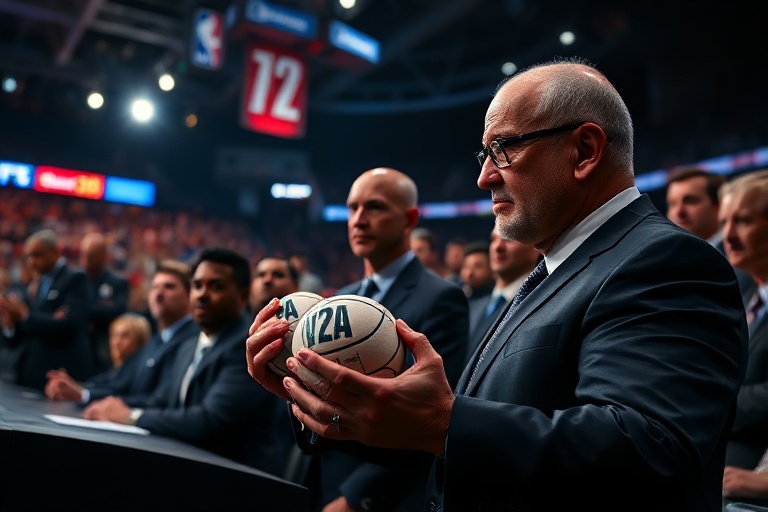
The lottery itself is conducted in a sealed room with representatives from each team, NBA officials, and an independent accounting firm overseeing the process. Once the combinations are drawn, they are matched to the teams, and the selections are announced live on television. This method ensures fairness and transparency, though it has not eliminated controversy entirely.
One of the most notable criticisms of the lottery system is its unpredictability. Even teams with the best odds can lose out to a team with worse odds due to the random nature of the draw. For instance, in 2023, the San Antonio Spurs won the lottery with just a 14% chance, leapfrogging teams like the Detroit Pistons (12.5%) and the Houston Rockets (11.5%). Such outcomes often spark debates about whether the system truly rewards merit or simply adds an element of chance to the draft process.
Historical Lottery Outcomes: Winners, Losers, and Lessons Learned
The NBA Draft Lottery has produced some of the most iconic players in league history, but it has also led to frustration for teams that felt hard done by the system. One of the most infamous examples occurred in 2019, when the New Orleans Pelicans secured the first overall pick despite having just a 6% chance. Zion Williamson, the consensus top prospect that year, became an instant franchise cornerstone, proving that even low-probability outcomes can yield generational talent.
On the other hand, the lottery has also denied teams the chance to draft franchise-changing players. In 2017, the Boston Celtics moved up to the second pick despite having only the eighth-best odds, while the Los Angeles Lakers—who had the second-worst record—ended up with the second pick, a turn of events that many believed was rigged against them. The NBA investigated the allegations, which involved a phone call between Lakers owner Jeanie Buss and then-Memphis Grizzlies owner Robert Pera, but no wrongdoing was found. The incident highlighted the emotional investment teams and fans place in the lottery and the scrutiny it faces when outcomes seem unfair.
Another pivotal moment came in 2020, when the Minnesota Timberwolves won the lottery with a 1.7% chance, securing Anthony Edwards, who has since become a cornerstone of their rebuild. That same year, the Golden State Warriors moved up to the second pick, drafting James Wiseman, who has shown flashes of potential alongside Stephen Curry. These outcomes underscore how the lottery can reshape franchises overnight, for better or worse.
Tanking, Tanking, and More Tanking: Is the Lottery Still the Right Solution?
The NBA’s battle against tanking has been a constant theme since the lottery’s inception. Teams like the Philadelphia 76ers in the 2010s famously embraced a “trust the process” mentality, intentionally losing games to secure top draft picks. While the lottery was designed to mitigate this behavior, its weighted odds still provide a significant incentive for teams to finish with the worst record. The NBA has attempted to curb this by tweaking the lottery format, but the fundamental issue persists.
Some analysts argue that the current system does not go far enough. A proposal floated in recent years suggests eliminating the lottery entirely and instead awarding the top pick to the worst team, with the second-worst team picking second, and so on. This “reverse standings” approach would remove the element of chance and force teams to compete for draft position. However, critics argue that such a system could lead to collusion among teams to avoid finishing in the bottom three, creating new forms of tanking.
Another potential solution is to expand the lottery to include more teams, reducing the odds for any single team and making the process more unpredictable. The NBA has experimented with this idea, increasing the number of lottery spots from three to four in 2019. While this change has made the lottery slightly more competitive, it has not eliminated the debate over whether the system truly rewards effort or merely favors luck.
What’s Next for the NBA Draft Lottery?
The NBA Draft Lottery remains a topic of ongoing discussion among executives, players, and fans. The league has shown a willingness to adapt, as seen in the 2019 reforms, but the core challenges of tanking and fairness persist. One possible future change could involve incorporating performance-based metrics into the lottery odds, rewarding teams that show improvement even if they miss the playoffs. This hybrid approach could strike a balance between rewarding effort and maintaining unpredictability.
For fans, the lottery is more than just a draft tool—it’s a moment of hope and drama. The anticipation of a ping-pong ball bounce can send ripples through a franchise’s future, and the outcomes often define eras. Whether it’s a team landing a generational talent or a heartbreaking loss that sets back a rebuild, the lottery is a reminder of how unpredictable sports can be.
As the NBA continues to evolve, so too may the draft lottery. But one thing is certain: as long as there’s a chance to draft the next superstar, teams will chase it—and the lottery will remain a defining feature of the league’s annual calendar.
For more insights into NBA draft strategies and team rebuilds, visit our NBA News and Analysis sections.
Conclusion: The Lottery’s Enduring Legacy
The NBA Draft Lottery is a carefully crafted system designed to balance competition and chance. While it has succeeded in reducing outright tanking, it has not eliminated the debate over fairness and merit. The lottery’s unpredictability ensures that every offseason brings drama, but it also leaves room for criticism when outcomes seem unjust.
As the NBA looks to the future, the lottery will likely continue to evolve. Whether through further adjustments to the odds or entirely new formats, the league will seek to refine a system that remains central to its draft process. For now, fans can only watch the ping-pong balls bounce and hope their team’s number comes up.