NIO Stock: China’s EV Ambition Faces Global Scrutiny in 2024
China’s EV Ambitions Ride on NIO’s Financial Tightrope
NIO, often dubbed the “Tesla of China,” has become a bellwether for the country’s electric vehicle ambitions. Founded in 2014 by entrepreneur William Li, the Shanghai-based automaker has expanded rapidly across China, Europe, and Southeast Asia. Its stock, listed on both the New York Stock Exchange (NYSE: NIO) and the Hong Kong Stock Exchange (HKEX: 9866), reflects investor confidence in China’s push to dominate the global EV market.
Yet recent quarters have tested that confidence. NIO’s stock price has swung dramatically, influenced by macroeconomic pressures, supply chain bottlenecks, and intensifying competition from domestic rivals like BYD and XPeng. The company’s aggressive expansion into international markets—including Norway, Germany, and the Netherlands—has also raised questions about execution and profitability.
Financial Performance: Growth with Persistent Losses
NIO’s revenue grew 65% year-over-year in 2023, reaching $12.2 billion, driven by strong deliveries of its ES6, ES8, and ET7 models. However, the company continues to operate at a loss. In 2023, it reported a net loss of $2.7 billion, slightly improved from $2.8 billion in 2022. Gross margins have hovered around 10-14%, far below Tesla’s 18-25%, reflecting higher production costs and pricing pressures.
The company’s cash burn remains a concern. Despite raising $2.2 billion through convertible bonds and stock offerings in 2023, NIO’s liquidity position has tightened. As of Q1 2024, it held $7.3 billion in cash and equivalents, down from $9.7 billion at the end of 2022. Analysts warn that sustaining growth without achieving profitability could erode investor trust over time.
Global Expansion: A Double-Edged Sword
NIO’s international strategy is bold but risky. The company entered Europe in 2021 with battery-swap stations and direct sales, positioning itself as a premium alternative to Tesla. In 2023, NIO delivered 12,000 vehicles in Europe, a 60% increase from 2022. Norway alone accounted for 4,000 units, making it the brand’s second-largest market after China.
However, cultural and regulatory challenges have slowed progress. European consumers, accustomed to long-standing automotive brands, have been slow to adopt NIO’s direct-to-consumer model. Meanwhile, stringent emissions regulations and local incentives favor homegrown brands like Volkswagen and BMW. In Southeast Asia, NIO faces entrenched competition from affordable EVs produced by Chinese rivals with deeper local partnerships.
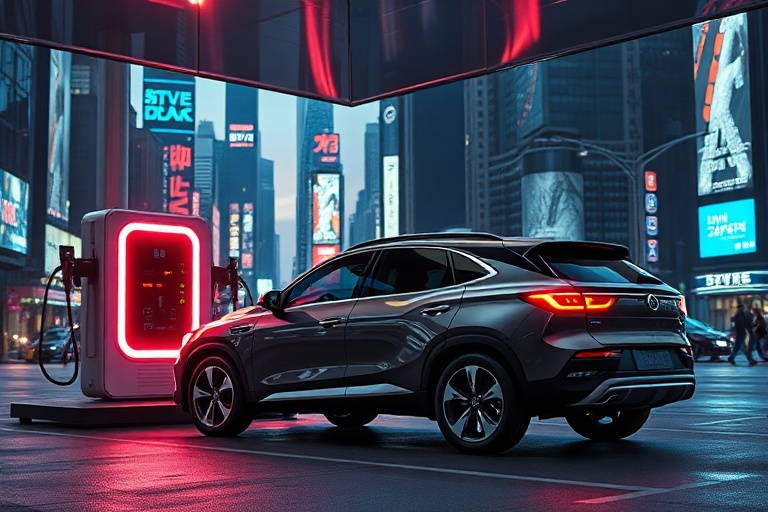
The company’s battery-swap technology, a core differentiator, has gained traction but still faces infrastructure hurdles. While NIO boasts over 2,300 swap stations globally, the model requires significant upfront investment and standardization across markets. Rivals like CATL and BYD are investing heavily in alternative charging solutions, potentially rendering NIO’s approach less unique over time.
Competitive Pressures: The BYD Effect
NIO’s biggest threat isn’t Tesla—it’s BYD. The Shenzhen-based giant, backed by Warren Buffett’s Berkshire Hathaway, has surged ahead in both sales and market capitalization. In 2023, BYD sold 3.02 million EVs, nearly triple NIO’s 122,000 units. BYD’s Blade Battery technology and vertically integrated supply chain have given it a cost advantage that NIO struggles to match.
Domestic competition is intensifying. XPeng, another high-profile EV startup, has carved out a niche in smart driving technology, while traditional automakers like Geely and Changan are accelerating their EV transitions. Even legacy brands like SAIC and FAW are launching competitive models with aggressive pricing.
For NIO, differentiation has become critical. The company is betting on next-generation models like the ET9 sedan and the upcoming Onvo family crossover to redefine its brand. Its focus on user experience—through NIO Life, NIO Power, and NIO Service—aims to create an ecosystem beyond just vehicles. Yet, these initiatives require substantial capital and time to yield returns.
Investor Sentiment: Cautious Optimism or Red Flags?
NIO’s stock has been a rollercoaster. After peaking at $62 in January 2021, it plummeted to below $10 in 2022 amid China’s regulatory crackdown on tech stocks and global market volatility. A partial recovery in 2023 saw the stock rebound to around $20, only to dip again in early 2024 as concerns over liquidity and competition resurfaced.
Analysts remain divided. Bullish investors point to NIO’s strong brand loyalty, expanding product lineup, and government support for China’s EV sector. Bearish analysts highlight its high cash burn, reliance on debt financing, and vulnerability to macroeconomic shocks. A recent report from Goldman Sachs downgraded NIO’s stock to “neutral,” citing “execution risks” in its international expansion.
The company’s secondary listing in Hong Kong has provided some relief, attracting investors who prefer local exchanges. However, the stock’s inclusion in major indices like the MSCI China Index remains uncertain, limiting its appeal to institutional investors.
The Road Ahead: Can NIO Survive the EV Wars?
NIO’s future hinges on three critical factors: profitability, innovation, and global acceptance. Achieving consistent gross margins above 15% will be essential to reassure investors. The company has outlined plans to launch three new models annually through 2025, including the ET9, which promises a range of over 800 km (500 miles).
Its battery-swap network must expand rapidly to justify its premium positioning. NIO aims to double its swap stations to 4,000 by 2025, but funding this growth without diluting shareholder value remains a challenge. Partnerships with local players could help, but cultural and operational differences may complicate collaborations.
For global markets, NIO must refine its marketing strategy to resonate with local tastes. In Europe, emphasizing sustainability and cutting-edge technology may resonate more than in China, where brand prestige plays a larger role. Meanwhile, in Southeast Asia, affordability and after-sales service could be decisive factors.
Ultimately, NIO’s survival depends on its ability to balance ambition with pragmatism. The company’s trajectory will offer insights into whether China’s EV upstarts can challenge the dominance of global incumbents—or if they will become cautionary tales of overreach in a hyper-competitive industry.
Key Takeaways for Investors
- Financial Health: NIO remains unprofitable with high cash burn, but revenue growth is strong.
- Global Expansion: Europe and Southeast Asia are growth targets, but competition and regulation pose risks.
- Competitive Threat: BYD and XPeng are outpacing NIO in sales and innovation.
- Stock Volatility: NIO’s share price is sensitive to macroeconomic trends and investor sentiment.
- Long-Term Bet: NIO’s ecosystem approach could differentiate it, but execution is key.
Conclusion: A High-Stakes Gamble for China’s EV Pioneers
NIO’s journey encapsulates the broader challenges facing China’s electric vehicle sector. The country’s push to lead the global EV transition has created unprecedented opportunities, but also exposed vulnerabilities. For NIO, the stakes are particularly high. Its ability to deliver on promises, innovate relentlessly, and navigate geopolitical risks will determine whether it becomes a global powerhouse or a cautionary tale.
Investors watching NIO must weigh its potential against its risks. The company’s story is not just about cars—it’s about the future of mobility, the battle for technological supremacy, and the enduring allure of the Chinese dream. As the EV wars intensify, NIO’s stock will continue to be a barometer of both corporate resilience and market sentiment.