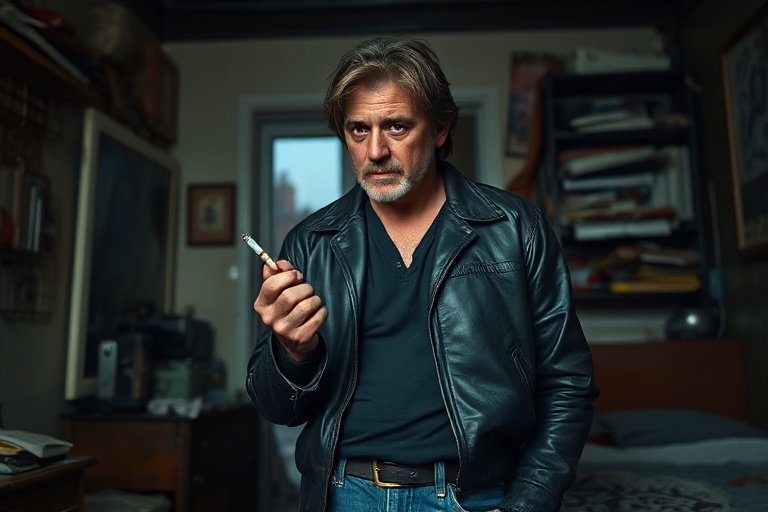
norman reedus
Norman Reedus has spent over three decades carving a niche in entertainment that few actors manage to achieve. Starting as a fashion model in the late 1980s, he transitioned into acting with a raw, offbeat energy that defied conventional Hollywood norms. Today, he is best known for his role as Daryl Dixon in The Walking Dead, a character that became a global phenomenon and cemented Reedus’ place in pop culture.
But Reedus’ career extends far beyond zombies and post-apocalyptic landscapes. He has starred in indie films, directed music videos, and built a presence in the art world. His journey reflects the shifting dynamics of celebrity culture, where authenticity often trumps traditional fame. From New York runways to rural Georgia, Reedus’ career is a study in adaptability and quiet persistence.
Early Life and Modeling Career
Born on January 6, 1969, in Hollywood, Florida, Reedus grew up in a working-class family. His mother worked as a teacher, and his father was in the military. The family moved frequently, exposing Reedus to diverse cultures and environments. After high school, he briefly studied photography at Bethany College in West Virginia but left before graduating.
At 22, Reedus moved to Los Angeles with dreams of becoming a painter. Instead, he was discovered by a photographer and began modeling. His androgynous features and brooding intensity made him a favorite in the New York fashion scene during the late 1980s and early 1990s. He walked runways for brands like Prada, Levi’s, and Versace, sharing the stage with supermodels like Kate Moss and Naomi Campbell.
Modeling provided Reedus with financial stability and global exposure, but he felt unfulfilled. He once said in an interview, “I wanted to be more than just a face in a magazine.” This restlessness led him to acting.
Breakthrough and Indie Cred
Reedus made his film debut in Mimic (1997), a sci-fi horror thriller directed by Guillermo del Toro. Though his role was small, it introduced his ability to convey depth with minimal dialogue. His first major role came in Six Ways to Sunday (1997), a gritty indie drama where he played a troubled young man.
Throughout the late 1990s and early 2000s, Reedus became a staple in independent cinema. He starred in Floating (1999), a surreal drama about a man searching for his missing wife, and The Boondock Saints (1999), a violent, stylish crime thriller that developed a cult following. His performance as Murphy MacManus, one half of the infamous “Saints,” showcased his ability to balance intensity with dark humor.
Reedus’ work in indie films aligned with a broader cultural shift toward antiheroes and morally ambiguous characters. Directors like Sean Penn and Alejandro González Iñárritu were reshaping cinema by prioritizing raw performances over polished Hollywood aesthetics. Reedus fit seamlessly into this movement, earning praise for his authenticity.
Global Fame with The Walking Dead
In 2010, Reedus was cast as Daryl Dixon in The Walking Dead, AMC’s adaptation of the comic book series. Initially, Daryl was intended to be a minor character, but Reedus’ performance turned him into a fan favorite. Armed with a crossbow, a Southern drawl, and a quiet intensity, Daryl became the moral compass of the group in a world overrun by the undead.
Reedus’ portrayal resonated globally. The show became a cultural touchstone, airing in over 120 countries and dubbed into multiple languages. Fans in Japan, Brazil, and Europe embraced Daryl as a reluctant hero. Reedus himself became a symbol of resilience, a man who could survive the apocalypse with minimal dialogue and maximum impact.
The success of The Walking Dead catapulted Reedus to new heights. He reprised the role in spin-offs like Fear the Walking Dead and Tales of the Walking Dead. His presence helped maintain the franchise’s relevance for over a decade, proving the power of a character who transcends the screen.
Cultural Impact and Fan Connection
Reedus’ relationship with fans has always been unusually personal. Unlike many celebrities who maintain distance, he engages directly through social media, sharing behind-the-scenes content and personal reflections. His Instagram, with over 2 million followers, offers glimpses into his life as an artist, photographer, and motorcycle enthusiast.
Reedus’ authenticity has made him an icon not just in the U.S., but in Europe and Asia. In Japan, where he has a strong following, he has collaborated with brands like Uniqlo and appeared in fashion campaigns. His rugged, unpolished aesthetic aligns with Japanese concepts of wabi-sabi—beauty in imperfection.
The Artist and the Man Behind the Myth
Beyond acting, Reedus has pursued his passion for art. He has worked as a photographer, capturing landscapes and portraits with a keen eye. His photography has been exhibited in galleries, including a show in Tokyo in 2019. Art offers him a space to express the same raw emotion he brings to his roles.
Reedus is also an avid motorcycle collector and rider. He owns several rare bikes, including a vintage Triumph and a Ducati. His love for motorcycles led to a partnership with Harley-Davidson and appearances in motorcycle culture events worldwide. For him, riding is a form of freedom—a way to escape the constraints of celebrity.
A Quiet Activist
Though Reedus avoids overt political statements, he has used his platform to support causes like animal rights and environmental conservation. He has partnered with organizations such as the Humane Society and has spoken out against animal cruelty. His personal life reflects these values; he is a devoted pet owner and advocate for rescue animals.
Reedus’ global appeal lies in his refusal to conform. He has never chased mainstream validation, instead building a career on his own terms. Whether through indie films, television, or art, he has remained true to his vision of storytelling.
The Legacy and Future
As of 2024, Reedus continues to evolve as an artist. He has ventured into video game voice acting, starring as Sam Porter Bridges in Death Stranding, a critically acclaimed game directed by Hideo Kojima. The role allowed him to explore new dimensions of performance, blending live-action with digital storytelling.
Reedus also remains active in film, with upcoming projects in both independent and mainstream cinema. His ability to adapt to changing media landscapes—from film to television to gaming—demonstrates a rare versatility.
Looking ahead, Reedus shows no signs of slowing down. He continues to balance his acting career with his artistic pursuits, proving that creativity knows no boundaries. In an industry obsessed with youth and reinvention, Reedus offers a refreshing model of longevity through authenticity.
For fans around the world, Norman Reedus represents more than a character or a celebrity. He embodies the idea that true artistry transcends mediums and cultures. Whether in a post-apocalyptic wasteland or a Tokyo art gallery, he brings the same quiet intensity—a reminder that greatness often lies in the unassuming.
As one critic wrote, “Norman Reedus doesn’t act. He exists. And that’s what makes him unforgettable.”
Explore more about film and television icons in our Entertainment section.