Oliver Tree: The Unpredictable Force Redefining Alternative Music
Oliver Tree has carved out a niche that defies easy categorization. With a blend of hyperpop, rock, and absurdist performance art, he has become one of the most distinctive voices in modern alternative music. His rise from underground viral sensations to mainstream recognition reflects a deliberate embrace of chaos—both in his music and his public persona.
Born Oliver Nickell in 1993, Tree grew up in Santa Cruz, California, where his early exposure to punk rock and hip-hop shaped his eclectic sound. He studied music at the University of Southern California, but his career trajectory shifted dramatically when he began posting comedic and surreal videos online. These clips, often featuring Tree in bizarre costumes or engaging in outlandish antics, caught the attention of a global audience long before his music did.
The Music: A Fusion of Genres and Personas
Tree’s discography is a testament to his genre-blending creativity. His 2020 album Ugly Is Beautiful introduced listeners to his signature style—a mix of crunchy guitars, electronic beats, and lyrics that oscillate between vulnerability and absurdity. Tracks like “Miracle Man” and “Hurt” showcase his ability to merge introspective songwriting with infectious hooks, while songs like “Life Goes On” and “Cash Machine” lean into his absurdist humor.
His follow-up, Cowboy Tears (2022), doubled down on this approach. The album’s lead single, “Cowboy Tears,” is a genre-defying anthem that layers country twang over industrial beats, while “Freaks” and “Skeleton” highlight his knack for creating infectious, meme-worthy moments. Tree’s music is often dismissed as a gimmick, but his ability to balance depth with silliness speaks to a more nuanced artistic vision.
- Hyperpop Influence: Tree’s sound is deeply rooted in the hyperpop movement, with its emphasis on maximalist production and emotional extremes. Artists like Charli XCX and 100 gecs have undoubtedly shaped his aesthetic.
- Punk Roots: His live performances and DIY ethos reflect his punk influences, particularly bands like Green Day and Blink-182.
- Absurdist Humor: Tree’s lyrics often employ surreal imagery and self-deprecating jokes, a nod to comedic influences like Tim Robinson and Eric Andre.
- Electronic Experimentation: His use of glitchy synths and distorted vocals aligns him with the experimental electronic scene, particularly artists like Grimes and Oneohtrix Point Never.
The Persona: A Deliberate Act of Self-Mythologizing
Tree’s public image is as carefully constructed as his music. His on-stage antics—whether crowd-surfing in a full-body morphsuit or performing in a giant inflatable sumo suit—are not mere attention-grabbing stunts. They are extensions of his artistic identity, blurring the line between performance art and rock stardom. This persona has drawn comparisons to artists like Lady Gaga and David Bowie, who used theatricality to challenge conventional notions of celebrity.
Yet Tree’s approach is uniquely his own. Where Gaga’s persona often feels like a metaphor for broader cultural issues, Tree’s is rooted in silliness and self-awareness. His 2021 “FUNeral Tour” was a prime example: a series of concerts marketed as a “funeral for fun,” complete with a coffin-shaped stage prop and a setlist that leaned heavily into his most upbeat tracks. The tour was both a celebration and a send-off, a meta-commentary on the fleeting nature of viral fame.
This duality extends to his social media presence, where he balances promotional content with absurdist memes and personal reflections. His Instagram, for instance, often features him in increasingly bizarre outfits, from a full-body banana costume to a suit made entirely of spaghetti. These posts are not just for laughs; they reinforce his brand as an artist who refuses to take himself—or anything—too seriously.
The Business: Navigating Virality and Long-Term Growth
Tree’s career is a case study in how to leverage viral moments into sustained relevance. Unlike many artists who peak and fade, Tree has managed to maintain momentum by embracing unpredictability. His 2020 single “Bury Me Alive” became a sleeper hit, eventually earning a platinum certification and introducing him to a broader audience. The song’s success was bolstered by TikTok trends and memes, proving that online virality could translate into real-world impact.
However, Tree’s relationship with the music industry has not been without friction. In 2021, he publicly criticized his record label, Atlantic Records, for attempting to pigeonhole him into a more conventional pop sound. His refusal to conform has endeared him to fans but has also put him in a precarious position commercially. Despite this, he has managed to build a loyal following that spans beyond traditional music audiences, appealing to meme-loving Gen Z listeners and alternative music purists alike.
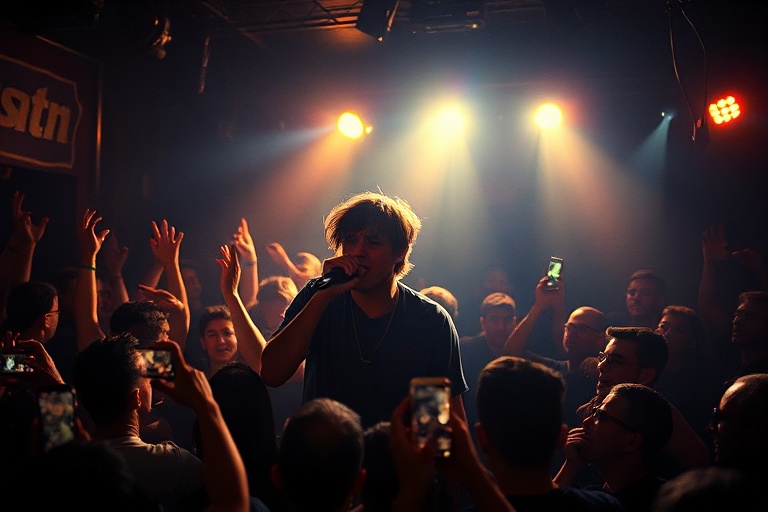
His live shows are a testament to this cross-generational appeal. Tree’s concerts are less about polished production and more about raw energy, with audiences often participating in chants, dances, and even staged interventions. His 2022 “FUNeral Tour” sold out arenas across the U.S. and Europe, demonstrating that his brand of chaos resonates with a wide demographic.
What’s Next for Oliver Tree?
As of 2024, Tree shows no signs of slowing down. He has hinted at new music, teasing snippets on social media and releasing sporadic singles like “I Hate You” and “FUNeral.” Fans speculate that his next album could push his sound even further into uncharted territory, possibly incorporating more live instrumentation or even venturing into full-blown experimental electronic music.
Beyond music, Tree has expressed interest in expanding into other creative ventures, including film and fashion. His aesthetic—part clown prince, part rock star—would translate well to the big screen, and his flair for design could make him a compelling collaborator in the fashion world. Whether these ambitions come to fruition remains to be seen, but it’s clear that Tree is not content to be defined by a single medium.
For now, Oliver Tree remains a fascinating enigma: part musician, part performance artist, part internet phenomenon. His unwillingness to conform to expectations has made him both a cult favorite and a mainstream success. In an era where authenticity is often performative, Tree’s artistry feels refreshingly unfiltered. Whether he’s headlining festivals or dropping surreal memes, one thing is certain—Oliver Tree is here to stay.
For more on the evolution of alternative music, explore our Music category. To dive deeper into the intersection of music and internet culture, check out our Culture section.