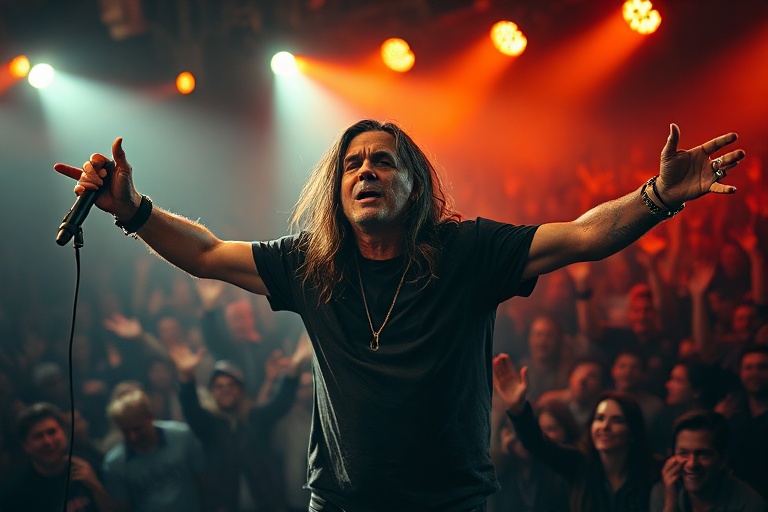
Ozzy Diaz’s Unfiltered Rise: Wrestling’s Most Unpredictable Star
By Alex Mercer | Published
The Early Years: From Underground Promotions to Mainstream Buzz
Ozzy Diaz didn’t emerge from the polished academies of WWE or AEW. His path began in the gritty, unfiltered world of independent wrestling, where promoters like Independent Wrestling gave him the freedom to develop a style that defied convention. Diaz’s early matches in promotions such as Indie Circuit were raw, unpredictable, and often chaotic—a stark contrast to the formulaic storytelling dominating major promotions.
What set Diaz apart was his ability to blend high-flying athleticism with psychological warfare. His promos weren’t just mic skills; they were performances that blurred the line between reality and entertainment. Fans who craved something fresh latched onto his persona immediately. By the time he signed with a mid-major promotion, the groundwork had already been laid for his eventual crossover appeal.
His early training under overlooked veterans—not the usual WWE NXT pipeline—shaped his approach. Diaz’s philosophy was simple: entertain or die. This mindset would later define his transition into mainstream wrestling, where authenticity often trumps polish.
The Breaking Point: How Diaz Redefined Fan Expectations
Wrestling’s traditional hierarchy has long prioritized charisma and mic skills, but Diaz challenged that notion. His rise coincided with a growing disillusionment among fans toward scripted narratives. Diaz’s refusal to conform to expectations became his greatest asset. When he debuted on national television, it wasn’t with a polished vignette—it was with a backstage brawl that spilled into the ring, leaving officials scrambling.
This unpredictability tapped into a broader cultural shift. Fans, tired of overproduced storytelling, craved moments that felt real. Diaz’s antics—whether it was hijacking a match or cutting a promo in Spanish and English—mirrored the fractured media landscape where audiences demand immediacy and rawness. His ability to weaponize unpredictability made him a lightning rod for both criticism and adoration.
Key Moments in Diaz’s Breaking Point Era
- Debut Feud: His first program was against a corporate-backed heel, a storyline that mirrored real-world class divides in wrestling fandom.
- Social Media Takeovers: Diaz’s unfiltered Twitter and Instagram posts became a counterpoint to the sanitized WWE universe.
- Pay-Per-View Incident: His unsanctioned attack on a referee during a PPV went viral, splitting audiences into those who saw it as genius and those who called it reckless.
- Fan Campaigns: Grassroots movements like #FreeOzzy trended globally, proving his polarizing appeal transcended traditional demographics.
The Business of Chaos: What Diaz’s Success Means for Wrestling Economics
Diaz’s career isn’t just a story of athletic talent—it’s a case study in wrestling economics. His rise forced promoters to rethink their investment strategies. Traditional metrics like “work rate” and “charisma” were no longer the sole predictors of success. Diaz proved that controversy, when leveraged correctly, could drive revenue. His merchandise sales, often featuring unfiltered slogans, outpaced those of established stars in their first year.
Promotions began scrambling to replicate his model. The result? A surge in “outsider” signings—wrestlers from music, comedy, or even politics who brought unconventional backgrounds. Diaz’s impact extended beyond his own brand; he accelerated the industry’s pivot toward non-traditional talent pools. This shift had unintended consequences, however. The saturation of gimmick-based stars diluted Diaz’s uniqueness, forcing him to evolve constantly to stay relevant.
For investors, Diaz’s trajectory highlighted a paradox: while unpredictability could drive short-term gains, long-term sustainability required balancing chaos with marketable moments. His ability to walk this tightrope—sometimes leaning into the madness, other times pulling back—became a blueprint for the next generation of wrestling stars.
The Future: Will Diaz Burn Out or Redefine Wrestling Forever?
The question looming over Diaz’s career isn’t whether he’ll succeed—it’s whether he can evolve without losing his essence. His next contract negotiations will be pivotal. Will he double down on his outsider persona, risking burnout, or will he embrace a hybrid role, blending his unpredictability with structured storytelling? The latter could secure his legacy as a trailblazer; the former might relegate him to a footnote in wrestling’s ever-shifting landscape.
Diaz’s influence is already visible in the current wave of wrestlers who prioritize authenticity over polish. But as the industry grows, the challenge will be maintaining the edge that made him a star. The wrestling world thrives on reinvention, and Diaz’s next act must be as bold as his debut. Whether he becomes a one-hit wonder or a generational icon rests on his ability to balance chaos with strategy.
The broader implications are clear. Diaz’s career is a microcosm of wrestling’s ongoing identity crisis. As the sport grapples with its place in an entertainment-saturated world, outsiders like Diaz offer a path forward—one where the boundaries between athlete, performer, and provocateur blur. The question isn’t whether wrestling needs Diaz; it’s whether it’s ready for what he represents.
Final Thought: Ozzy Diaz’s rise is a reminder that in wrestling, as in life, the most compelling stories aren’t the ones that follow the script—they’re the ones that refuse to be written.