Redistricting Explained: How Maps Shape Political Power
Understanding Redistricting: The Foundation of Fair Representation
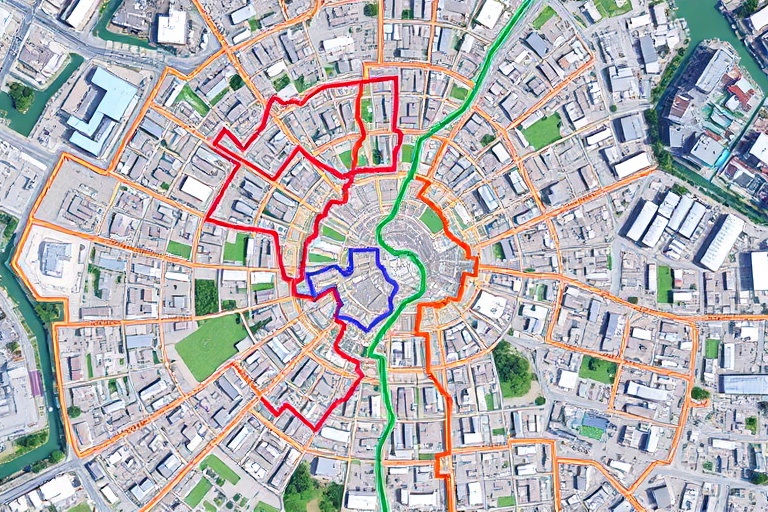
Redistricting is the process of redrawing the boundaries of electoral districts to reflect changes in population. These adjustments occur after each decennial census, ensuring that legislative bodies accurately represent their constituents. The goal is straightforward: maintain equal representation by preventing any single district from becoming disproportionately large or small.
This practice is not merely administrative; it shapes political power. When districts are drawn, they influence which communities gain or lose influence in government. In the United States, for example, redistricting determines the balance of power in Congress, state legislatures, and local governments. The stakes are high, and the process is often contentious, with political parties and interest groups vying for advantage.
The U.S. Constitution mandates redistricting to ensure “one person, one vote.” This principle, established by the Supreme Court in the 1964 case Reynolds v. Sims, requires districts to be roughly equal in population. Without this safeguard, urban areas could be diluted, giving rural regions disproportionate power. Yet, despite its legal necessity, redistricting remains one of the most divisive aspects of American democracy.
The Mechanics of Redistricting: Who Draws the Lines?
In most states, redistricting is handled by the legislature, where the majority party typically controls the process. This can lead to gerrymandering, the practice of manipulating district boundaries to favor one political party or group. Gerrymandering takes two primary forms: “packing” and “cracking.” Packing concentrates voters of one party into a few districts, while cracking spreads them thinly across many districts to dilute their influence.
Some states have sought to reduce partisan bias by adopting independent or bipartisan redistricting commissions. These bodies aim to remove politics from the process, though their effectiveness varies. For instance, California’s Citizens Redistricting Commission, created in 2010, has been praised for producing more competitive districts. However, even these systems face challenges, such as legal disputes over fairness and accusations of bias in map-drawing.
The following outlines the redistricting process in most U.S. states:
- Data Collection: Census data is used to determine population shifts.
- Drafting Maps: Legislators or commissions propose new district boundaries.
- Public Comment: Residents and advocacy groups can weigh in on proposed changes.
- Final Approval: Maps are adopted, often after legal challenges or revisions.
- Implementation: New districts take effect in the next election cycle.
Critics argue that even with public input, the process remains opaque. Transparency is a recurring issue, as closed-door negotiations often exclude marginalized communities. Without robust oversight, redistricting can exacerbate inequality, particularly for racial and ethnic minorities.
The Impact of Redistricting on Communities and Politics
Redistricting doesn’t just affect elections—it reshapes power dynamics. Historically, gerrymandering has been used to suppress minority voting rights. The Voting Rights Act of 1965 aimed to counter this by requiring certain states to preclear redistricting plans with the federal government. However, a 2013 Supreme Court decision weakened these protections, leading to renewed legal battles over discriminatory maps.
For example, in North Carolina, a 2016 redistricting plan was struck down for racial gerrymandering. The court ruled that lawmakers had used race as the predominant factor in drawing two congressional districts, diluting the voting power of Black residents. This case highlighted how redistricting can either empower or marginalize communities, depending on who controls the process.
Redistricting also influences political polarization. When districts are drawn to favor one party, incumbents face weaker general election competition. This often leads to more extreme candidates winning primaries, as they cater to the party’s base rather than a broader electorate. The result is a Congress increasingly divided along ideological lines, with fewer incentives to compromise.
Beyond national politics, redistricting affects local governance. City councils and school boards rely on fair district maps to ensure diverse representation. In some cases, gerrymandered districts have led to legal challenges over whether they violate state constitutions. For instance, a Pennsylvania court ruled in 2018 that the state’s congressional map was an unconstitutional partisan gerrymander, ordering a redraw.
Controversies and Reforms: Can Redistricting Be Fixed?
The redistricting process is fraught with controversy, but reform efforts are underway. Some states have adopted algorithms or nonpartisan criteria to guide map-drawing. Others use citizen-led commissions to depoliticize the process. However, resistance from entrenched political interests often stifles these changes.
One promising reform is the use of independent redistricting commissions, as seen in states like Arizona and Michigan. These commissions, composed of citizens rather than legislators, aim to create fairer maps. Research suggests that such systems reduce gerrymandering and increase electoral competition. Yet, even these models face legal challenges, with critics arguing they usurp legislative authority.
Another approach is to make redistricting more transparent. Some states now require public hearings and digital tools to visualize proposed maps. For example, Dave’s Locker’s Politics section covers how advocacy groups use data to expose gerrymandering. Transparency alone won’t eliminate bias, but it can pressure lawmakers to act responsibly.
Legal battles are also reshaping redistricting. The Supreme Court has ruled that partisan gerrymandering may be unconstitutional, though it has yet to set a clear standard for what constitutes an illegal map. Until federal guidelines are established, states will continue to grapple with the balance between fairness and political strategy.
Ultimately, redistricting reform requires both structural changes and public engagement. Voters must demand accountability, and lawmakers must prioritize fairness over partisan gain. Without these shifts, the cycle of gerrymandering will persist, undermining the very principle of representative democracy.
Looking Ahead: The Future of Redistricting
As technology advances, so do the tools for and against fair redistricting. Data science now plays a critical role in drawing district maps, with algorithms capable of optimizing for compactness or competitiveness. However, these tools can also be weaponized to entrench partisan advantage. The challenge lies in harnessing technology for equity rather than manipulation.
Public awareness is another key factor. Initiatives like Dave’s Locker’s Education section educate voters on how redistricting affects their communities. When citizens understand the process, they can advocate for change and hold officials accountable. Grassroots movements, such as the push for independent commissions, demonstrate the power of collective action.
The redistricting landscape will continue to evolve, shaped by legal rulings, technological innovation, and public demand. What remains clear is that fair representation is not a given—it requires vigilance, reform, and a commitment to democratic principles. As the next round of redistricting approaches in 2030, the stakes could not be higher.
For now, the debate over redistricting underscores a fundamental truth: democracy is not self-sustaining. It demands active participation, scrutiny, and reform to ensure that every voice is heard and every vote counts.