rs-28 sarmat
The RS-28 Sarmat: Russia’s Next-Gen Nuclear Deterrent in Global Perspective
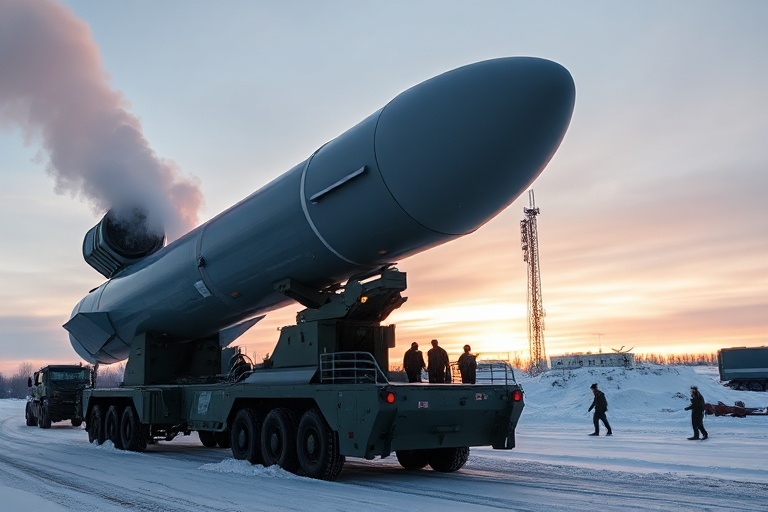
The RS-28 Sarmat, often referred to by its NATO reporting name Satan 2, represents one of the most advanced intercontinental ballistic missiles (ICBMs) in the world today. Developed by Russia’s Makeyev Rocket Design Bureau, this liquid-fueled heavy ICBM has been designed to replace the aging R-36M2 Voevoda missiles, which have served as a cornerstone of Russia’s nuclear triad for decades. With a reported range exceeding 18,000 kilometers and the ability to carry multiple independently targetable warheads, the Sarmat is not just a technological marvel—it is a strategic asset with profound implications for global security.
The missile’s development began in the early 2000s, but it gained renewed attention following repeated tests and official statements from Russian authorities. Its first successful test launch took place in April 2022, signaling Moscow’s commitment to modernizing its nuclear arsenal amid evolving geopolitical tensions. As nations reassess their defense postures, the Sarmat has become a focal point in discussions about deterrence, arms control, and the future of strategic stability.
Technical Capabilities and Strategic Role
The RS-28 Sarmat stands out due to several key features that enhance its combat effectiveness. Unlike previous generations of Russian ICBMs, the Sarmat is designed to evade missile defense systems through a combination of high-speed maneuvers, unpredictable flight trajectories, and the deployment of decoys. Its payload capacity allows it to carry up to 16 heavy warheads or a mix of warheads and hypersonic glide vehicles, significantly increasing its destructive potential.
One of the most notable innovations is the missile’s ability to fly over the South Pole, a tactic intended to exploit gaps in current missile defense networks. This capability complicates interception efforts for systems like the U.S. Ground-Based Midcourse Defense (GMD), which are primarily optimized for attacks from northern routes. Additionally, the Sarmat’s liquid-fueled engine, while less efficient than solid-fueled alternatives, provides greater flexibility in targeting and payload customization.
The missile’s deployment is expected to strengthen Russia’s second-strike capability—the ability to retaliate after a nuclear attack. In a geopolitical landscape where nuclear deterrence remains a critical component of national security strategies, the Sarmat reinforces Russia’s position as a major player in global arms negotiations. Its introduction also prompts neighboring countries, particularly those in Europe and Asia, to reassess their own defense strategies and potential responses.
Geopolitical Implications and Diplomatic Reactions
The RS-28 Sarmat has triggered a spectrum of reactions across the international community. Western analysts view the missile as a direct challenge to existing arms control agreements, including the New START treaty, which limits the number of deployed strategic nuclear warheads for the U.S. and Russia. While Moscow has stated that the Sarmat complies with the treaty’s provisions, its advanced capabilities raise concerns about a potential arms race.
In Europe, the missile’s deployment has intensified debates about NATO’s collective defense strategy. Countries like Poland and the Baltic states have called for increased investment in missile defense systems and enhanced deterrence measures. Meanwhile, Russia has framed the Sarmat as a necessary response to what it perceives as a growing threat from NATO expansion and U.S. missile defense deployments in Eastern Europe.
In Asia, the missile’s development has drawn attention from China, which is rapidly expanding its own nuclear arsenal. While Beijing has not directly commented on the Sarmat, its military modernization efforts suggest a strategic calculus that accounts for emerging threats from both Russia and the United States. The Sarmat’s introduction could further complicate efforts to establish regional security frameworks in the Asia-Pacific, where tensions over territorial disputes and military buildups continue to escalate.
The missile has also sparked discussions within the United Nations and other multilateral forums. Critics argue that the Sarmat undermines global non-proliferation efforts, while proponents contend that it is a legitimate response to perceived security threats. The debate underscores the delicate balance between maintaining deterrence and avoiding destabilizing arms races—a challenge that has defined nuclear diplomacy since the Cold War.
Cultural and Symbolic Significance
Beyond its technical and strategic dimensions, the RS-28 Sarmat carries significant cultural and symbolic weight in Russia. The missile’s nickname, Satan 2, evokes a sense of raw power and historical continuity with its predecessor, the R-36M, which was dubbed Satan during the Cold War. This naming convention reflects a deliberate strategy to reinforce Russia’s image as a formidable military power capable of defending its sovereignty.
The Sarmat has also become a symbol of Russian technological resilience, particularly in the face of international sanctions and economic pressures. State media outlets frequently highlight the missile’s development as evidence of Russia’s ability to innovate despite external constraints. This narrative resonates with a domestic audience that views military modernization as a source of national pride.
Globally, the Sarmat has entered popular culture as a subject of both fascination and fear. It has been featured in documentaries, news analyses, and even fictional portrayals of future conflicts. The missile’s imposing presence in military parades and propaganda materials serves as a reminder of Russia’s nuclear arsenal’s role in shaping international relations.
Future Outlook and Potential Challenges
The deployment of the RS-28 Sarmat is likely to have long-term consequences for global security architecture. While Russia has emphasized the missile’s defensive purpose, its advanced capabilities could trigger a new wave of arms modernization among other nuclear-armed states, including the United States, China, and potentially North Korea. The risk of miscalculation or unintended escalation remains a persistent concern in an era where technological advancements outpace diplomatic solutions.
Several challenges could hinder the Sarmat’s full operational deployment. Technical hurdles, such as reliability testing and integration with existing command-and-control systems, may delay its widespread fielding. Additionally, economic constraints could force Russia to prioritize other military programs, given the substantial costs associated with developing and deploying such advanced systems.
On the diplomatic front, the Sarmat complicates efforts to revive arms control negotiations. The expiration of the New START treaty in 2026 looms large, and the introduction of new missile systems like the Sarmat makes it increasingly difficult to reach a comprehensive agreement. Meanwhile, non-nuclear states may grow more vocal in their criticism of the world’s nuclear powers, potentially leading to renewed calls for disarmament.
For now, the RS-28 Sarmat remains a potent symbol of both technological achievement and geopolitical tension. Its development underscores the enduring role of nuclear weapons in international relations, even as the world grapples with climate change, cyber warfare, and other modern threats. As nations navigate this complex landscape, the Sarmat serves as a stark reminder of the delicate balance between security and stability.
For further insights into global defense strategies, explore our Technology section, where we analyze the latest advancements in military technology and their broader implications. To understand the historical context of nuclear deterrence, visit our Politics category for in-depth coverage of arms control and geopolitical dynamics.