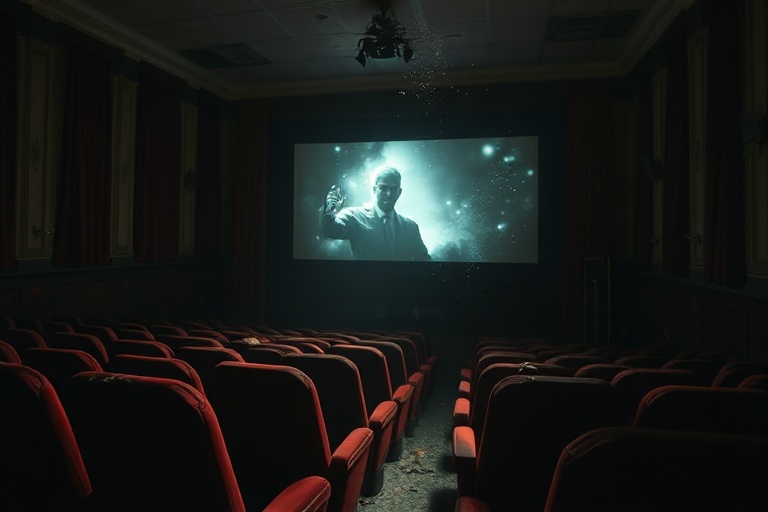
Secret Cinema: How Immersive Film Experiences Are Redefining Storytelling
Across London’s industrial backstreets and Berlin’s abandoned warehouses, a new form of cinematic storytelling is unfolding. Secret Cinema, an experiential film event that blends live performance, elaborate sets, and audience participation, has quietly transformed from a niche London experiment into a global cultural force. What began as a small-scale project in 2007 has since captivated millions worldwide, proving that cinema can be more than passive observation—it can be an immersive journey.
The concept challenges traditional moviegoing by removing the fourth wall entirely. Instead of sitting in a darkened theater, audiences become active participants, navigating through meticulously designed environments that reflect the film’s themes. Whether it’s dodging stormtroopers in a Star Wars homage or wandering through a dystopian Blade Runner slum, the experience blurs the line between spectator and spectacle.
The Origins: From London to the World
Secret Cinema was founded by Fabien Riggall in 2007, initially as a guerrilla film event in London. The first iteration, a screening of 28 Days Later, took place in an abandoned factory, setting the template for future productions. The early events were raw, experimental, and often under-the-radar, relying on word-of-mouth and social media to spread their appeal.
By 2011, Secret Cinema had gained enough traction to stage a production of Drive, which drew thousands of attendees and caught the attention of mainstream media. The event’s success led to expansions into other genres, including Back to the Future, Casino Royale, and Ghostbusters. Each production pushed the boundaries of what immersive cinema could be, incorporating live actors, interactive props, and even weather effects to enhance the atmosphere.
Today, Secret Cinema operates in multiple cities, including Los Angeles, Paris, and Tokyo, adapting its formula to local cultures while maintaining its core ethos of surprise and immersion. The organization has also collaborated with major studios, proving that even Hollywood recognizes the value of experiential storytelling.
How Secret Cinema Works: Design, Participation, and Surprise
A Secret Cinema event is less a screening and more a meticulously crafted alternate reality. Here’s how it typically unfolds:
- Mystery Invitation: Attendees receive cryptic invitations—sometimes just a single image or a short video—with little context about the film or the experience. The secrecy is intentional, building anticipation and intrigue.
- Physical Transformation: The venue is completely redesigned to match the film’s aesthetic. For a Star Wars event, a warehouse might become a Mos Eisley cantina; for a Twin Peaks homage, a forest clearing could be transformed into the show’s eerie town.
- Live Interaction: Actors roam the space, engaging with the audience and driving the narrative forward. This can include everything from scripted performances to improvised interactions, making each experience unique.
- Interactive Elements: Attendees are often given tasks or props—perhaps a Walkman for a Back to the Future event or a map for a Mission: Impossible mission. These elements encourage exploration and deepen immersion.
- Final Screening: The film itself is usually the climax of the experience, played in a space that enhances its emotional impact. The audience watches from within the recreated world, surrounded by the film’s imagery and themes.
The result is an event that lingers in the memory long after the final credits roll. Unlike traditional cinema, which prioritizes passive viewing, Secret Cinema demands active participation, turning every attendee into a co-creator of the experience.
The Cultural Impact: Why Immersive Cinema Resonates
Secret Cinema’s success reflects broader cultural shifts in how audiences engage with media. In an era of algorithm-driven content and fleeting digital interactions, the desire for tangible, memorable experiences has grown. Immersive events like Secret Cinema offer something rare: a sense of community and shared wonder.
This trend isn’t limited to Secret Cinema. Around the world, similar concepts have emerged, from escape rooms that challenge problem-solving skills to interactive theater productions like Sleep No More, which invites audiences to wander freely through a multi-story narrative. Even theme parks have embraced this ethos, with attractions like Disney’s Star Wars: Galaxy’s Edge offering fully realized worlds to explore.
Yet Secret Cinema distinguishes itself through its focus on film—a medium that has historically been about passive consumption. By reimagining cinema as a participatory event, it challenges the notion that movies are merely products to be passively consumed. Instead, they become living, breathing experiences that challenge, delight, and surprise.
The format has also proven adaptable to different cultures. In Japan, for example, Secret Cinema has incorporated elements of kawaii culture and anime aesthetics, while in Paris, it has leaned into the city’s love of surrealism and avant-garde art. This adaptability ensures that the experience feels fresh, no matter where it takes place.
The Future of Secret Cinema: Challenges and Opportunities
As Secret Cinema continues to expand, it faces both opportunities and challenges. One of the biggest hurdles is scalability. The level of detail and live interaction that defines Secret Cinema is difficult to replicate on a mass scale. Striking a balance between exclusivity and accessibility will be key to its long-term success.
Another challenge is the risk of overexposure. As the concept gains popularity, there’s a danger that the magic of secrecy could fade. Secret Cinema has already experimented with hybrid models, such as offering smaller, more intimate events alongside its larger productions. This tiered approach could help maintain the sense of exclusivity that draws audiences in.
Despite these challenges, the future looks bright. Secret Cinema’s recent collaborations with major studios suggest that immersive experiences are becoming a staple of modern entertainment. As technology advances, we may see even more innovative integrations, from augmented reality enhancements to AI-driven interactive narratives.
For now, Secret Cinema remains a testament to the power of surprise and immersion. In a world where digital content often feels ephemeral, it offers something tangible—a memory of a night when the ordinary became extraordinary.
A Final Thought
Secret Cinema proves that cinema is not just about watching—it’s about experiencing. Whether you’re a die-hard film buff or simply someone looking for a night of adventure, immersive cinema offers a refreshing alternative to the traditional moviegoing experience. As the format continues to evolve, one thing is certain: the best stories are no longer confined to the screen.