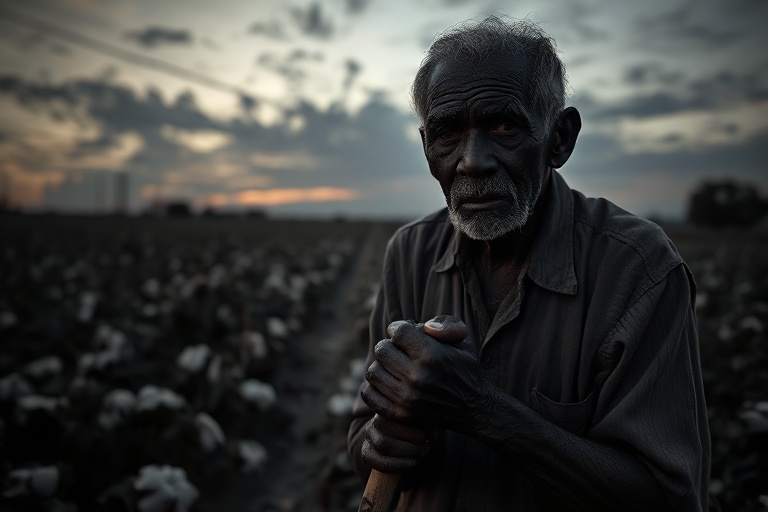
The Historical Brutality of Transatlantic Slavery
Slavery is not merely a dark chapter of history—it is a foundational wound that shaped economies, cultures, and societies across centuries. The transatlantic slave trade, which forcibly transported an estimated 12.5 million Africans between the 15th and 19th centuries, was one of the most systematic and dehumanizing institutions ever constructed. Unlike previous forms of slavery, this system was predicated on race, stripping individuals of their identities, languages, and families to fuel the machinery of colonial empires.
European powers, including Portugal, Spain, Britain, France, and the Netherlands, competed to dominate the trade. The journey from West Africa to the Americas, known as the Middle Passage, was a nightmare of cramped conditions, disease, and death. Mortality rates during the voyage often exceeded 20%, with some ships losing half their human cargo. Those who survived faced a life of unpaid labor under brutal conditions, building wealth for others while their own communities were left in ruins.
The economic engine of slavery extended beyond plantations. It financed industrial revolutions, bankrolled universities, and underwrote the rise of global capitalism. The stolen labor of enslaved people created the sugar, cotton, and tobacco industries that powered Western economies. Yet, the psychological and social costs were immeasurable. Families were torn apart. Generations were denied education and opportunity. The scars of this era persist in systemic inequalities today.
Modern Forms of Exploitation and Their Roots
While chattel slavery was officially abolished in most nations by the late 19th century, its legacy lives on in subtler but equally destructive forms. Human trafficking, forced labor, and debt bondage are contemporary manifestations of the same dehumanizing logic. According to the International Labour Organization, over 40 million people worldwide are trapped in modern slavery today, generating an estimated $150 billion in illegal profits annually.
These practices often target marginalized groups—migrants, women, and children—who lack legal protections or economic alternatives. In some regions, entire communities are trapped in cycles of poverty that can be traced back to colonial-era land dispossession and labor exploitation. The global supply chains that deliver cheap goods to Western markets frequently rely on exploitative labor, from cobalt mines in Congo to garment factories in Bangladesh.
What connects past and present forms of slavery is the denial of agency. In both eras, individuals are treated as commodities, their humanity secondary to profit. The racial hierarchies constructed during the transatlantic slave trade continue to justify discrimination, justifying the exclusion of certain groups from economic and political power.
The Global Supply Chain and Its Hidden Costs
The modern economy thrives on efficiency, but this often comes at a human cost. Consider the following ways exploitation persists:
- Forced Labor in Agriculture: Migrant workers in the U.S., Italy, and Thailand often face coercion, wage theft, and unsafe conditions to harvest crops that end up in global food supply chains.
- Debt Bondage in South Asia: Millions in India, Pakistan, and Nepal are trapped in generational debt, working to repay loans they will never escape.
- Child Labor in Mining: In the Democratic Republic of Congo, an estimated 40,000 children work in cobalt and copper mines, vital for electronics production.
- Sex Trafficking Networks: Exploitative systems prey on vulnerable individuals, often luring them with false promises of jobs or education.
Legal and Cultural Responses to Slavery’s Legacy
Efforts to address slavery’s legacy have taken various forms, from reparations debates to cultural reckonings. In 2021, the U.S. House of Representatives passed H.R. 40, a bill to study reparations for descendants of slavery, though its path to becoming law remains uncertain. Meanwhile, nations like France and the Netherlands have begun returning looted artifacts to former colonies, acknowledging the cultural theft that accompanied physical enslavement.
Culturally, movements like Black Lives Matter have forced a confrontation with historical narratives. Museums and educational curricula are slowly incorporating more accurate depictions of slavery, moving beyond sanitized versions that glorify slaveholders. Documentaries, novels, and films—such as 12 Years a Slave and Roots—have played a crucial role in humanizing the enslaved and exposing the brutality of the system.
However, resistance persists. In the U.S., debates over critical race theory and the teaching of slavery’s true history have become political flashpoints. Some argue that acknowledging slavery’s horrors is divisive, while others insist that truth is necessary for healing. Globally, former colonial powers often resist reparations claims, citing statutes of limitations or arguing that modern citizens should not be held accountable for historical crimes.
Why Acknowledging Slavery Matters Today
The refusal to fully confront slavery’s legacy is not merely an academic oversight—it has tangible consequences. Economic disparities between Black and white Americans, for instance, are directly linked to the denial of land ownership, education, and generational wealth accumulation after emancipation. The racial wealth gap in the U.S. is staggering: The median white household holds 10 times the wealth of the median Black household, a disparity that reflects centuries of systemic exclusion.
On a global scale, the underdevelopment of many African nations can be traced to colonial extraction and the disruption of local economies. While countries like Nigeria and Kenya are experiencing growth, much of their wealth flows to foreign investors rather than benefiting local populations. This cycle of dependency is a direct legacy of slavery and colonialism.
Moreover, the psychological trauma of slavery has been passed down through generations. Studies show that descendants of enslaved people exhibit higher rates of stress-related illnesses, a phenomenon known as historical trauma. This underscores the need for holistic approaches to healing, including mental health support and community-based initiatives.
Ultimately, slavery is not just a historical event—it is an ongoing process of exploitation that adapts to new forms. Addressing its legacy requires more than symbolic gestures; it demands systemic change. This includes policy reforms, economic justice, and a commitment to truth-telling. Only by confronting the past can societies move toward a more equitable future.
For further reading on related topics, explore Culture and Politics sections on Dave’s Locker.