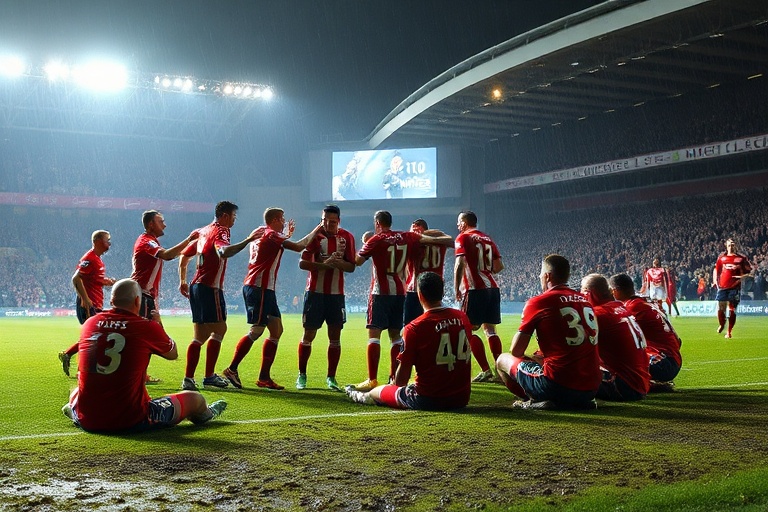
Sunderland vs Man United: Historic Rivalry Beyond Football
Sunderland vs Man United: A Historic Rivalry Beyond the Pitch
The clash between Sunderland and Manchester United is more than just a football match. It’s a collision of industrial heritage, working-class pride, and the shifting economic landscapes of northern England. These two clubs, separated by just 120 miles, have spent over a century defining what it means to represent a region, its people, and its evolving identity.
While Manchester United has grown into a global brand with commercial dominance, Sunderland remains a club deeply tied to its roots. This contrast alone makes their encounters fascinating beyond the scoreboard. Fans on both sides don’t just watch football—they participate in a cultural narrative that reflects broader social and economic changes across Britain.
The Origins: Two Clubs Born from Industry and Community
Sunderland AFC was founded in 1879, emerging from the shipbuilding and coal industries that powered northeast England during the Industrial Revolution. The club’s early years were defined by local pride and working-class ambition. Sunderland won three league titles in the late 19th century, becoming one of England’s first football powerhouses.
Manchester United, originally Newton Heath, was formed in 1878 by railway workers. By the 1950s, under Matt Busby, the club evolved from a regional team into a national symbol of post-war resilience and ambition. The Munich Air Disaster in 1958 cemented United’s place in British sporting folklore, transforming it into a club of global significance.
Their first competitive meeting came in 1892, when Sunderland defeated Newton Heath 4-1 in the Football Alliance. Since then, the rivalry has seen over 160 league encounters, with Manchester United holding a clear historical advantage. Yet, for Sunderland fans, the pride comes not from quantity, but from the rare moments when their team has risen above its underdog status.
Cultural Identity: What These Clubs Represent
Manchester United’s global appeal is undeniable. With over 650 million fans worldwide and commercial partnerships spanning the globe, it represents the modern, market-driven face of football. The club’s story is one of success, glamour, and global influence—often at odds with its working-class origins.
Sunderland, in contrast, remains a club of local identity. The Stadium of Light, with its 49,000 capacity, echoes with chants that carry the accent and dialect of Wearside. The club has faced financial struggles, ownership controversies, and multiple relegations, yet its fanbase remains fiercely loyal. Sunderland’s identity is rooted in resilience—a reflection of the city’s own struggles with industrial decline and economic regeneration.
This contrast has led to a narrative where Sunderland is often seen as the “authentic” club, while Manchester United is portrayed as the “commercial” one. Yet both narratives are simplifications. Manchester United’s working-class roots remain central to its mythology, and Sunderland’s global fanbase—spread across Australia, Ireland, and beyond—shows its identity is not confined to geography.
Key Matches That Defined the Rivalry
The history between these two clubs includes several defining moments that go beyond mere results. These matches have shaped perceptions, fueled rivalries, and often reflected the broader social climate of their regions.
- 1973 FA Cup Final: Sunderland pulled off one of the biggest upsets in English football history, defeating Leeds United (who were managed by Don Revie, a former Sunderland player) 1-0. This victory remains a cornerstone of Sunderland’s proudest achievements and is often cited in debates about the club’s legacy.
- 1992 League Cup Final: Manchester United defeated Sunderland 1-0, marking one of the early signs of Alex Ferguson’s dominance. This was a match where the growing gap between the clubs began to show—United were on their way to becoming a dynasty, while Sunderland were still fighting for survival.
- 2014 Playoff Final: Sunderland faced Crystal Palace in the Championship playoff final, a match that indirectly affected Manchester United’s fortunes. Sunderland’s victory secured their Premier League status, while Manchester United’s struggles under David Moyes made headlines. The timing amplified the contrast between the two clubs’ trajectories.
- 2016 League Cup Quarter-Final: Sunderland defeated Manchester United 2-1 at the Stadium of Light, a result that symbolized a rare moment of parity. With United under Jose Mourinho and Sunderland still in the top flight, the win was celebrated as a statement of intent from Wearside.
These matches reveal more than just football results. They reflect the shifting fortunes of northern England—from industrial powerhouses to regions adapting to deindustrialization and global competition.
The Global Perspective: How International Fans View the Rivalry
While the rivalry is deeply rooted in northern England, its influence extends globally. Manchester United’s global fanbase often sees matches against Sunderland as part of a broader narrative of dominance. For international fans, Sunderland represents the underdog—a club with a proud history but limited resources.
In countries like Malaysia, Nigeria, and the United States, Sunderland supporters often emphasize the club’s working-class roots and community spirit. These fans see themselves as part of a “Sunderland family,” a term frequently used in fan culture to describe the club’s emotional connection to its supporters.
Manchester United’s global fanbase, meanwhile, often views matches against Sunderland as a chance to assert dominance. The club’s commercial success has turned it into a symbol of global football culture, with matches broadcast to millions in Asia, Africa, and the Americas. Yet even among United’s global following, there is an acknowledgment of Sunderland’s authenticity—a club that feels “real” in a sport often criticized for losing touch with its roots.
The rivalry also highlights the cultural differences in how football is consumed worldwide. In the UK, the match is framed as a clash of identities. Internationally, it’s often seen through the lens of David vs Goliath—a smaller club challenging a global giant. This dual perception adds depth to the rivalry, making it resonate far beyond the pitch.
Conclusion: More Than a Football Match
The Sunderland vs Manchester United rivalry is a microcosm of broader social and economic changes. It reflects the decline of traditional industries, the rise of global commercial football, and the enduring power of local identity. For fans on both sides, the matches are about more than points—they are about pride, history, and what it means to represent a place.
As football continues to evolve, with clubs increasingly owned by billionaires and broadcast globally, the Sunderland-Man United rivalry remains a reminder of football’s roots. It’s a story of working-class communities, industrial heritage, and the unbreakable bond between a club and its people.
Whether in victory or defeat, Sunderland and Manchester United continue to write a narrative that transcends sport. It’s a story of identity, resilience, and the enduring power of football to reflect the soul of a region.
For fans, the next match is always more than a game. It’s a chance to affirm what their club means to them—and to the world.
Follow all the latest updates on Sports at Dave’s Locker, where we cover the stories behind the scores.