The Symbolic Significance of the Black Rod in Global Traditions
The black rod stands as one of the most recognizable ceremonial objects in parliamentary and royal traditions worldwide. Its presence in legislative chambers from London to Canberra underscores a shared heritage of governance rooted in symbolism and protocol. More than a decorative staff, the black rod embodies authority, continuity, and the delicate balance between ceremony and function in systems of power.
Historically, ceremonial rods have appeared across cultures as emblems of office and discipline. In medieval Europe, mace-bearers accompanied monarchs and nobles to assert their authority and maintain order during assemblies. Over time, these evolved into specialized rods, each adapted to the cultural and political context of its time. The black rod, in particular, became synonymous with the Sergeant-at-Arms and the preservation of parliamentary decorum.
The Origins of the Black Rod in the British Parliament
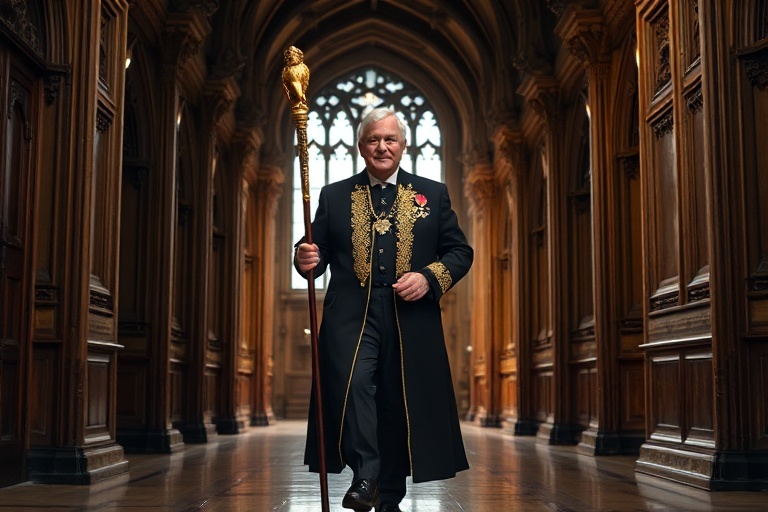
The origins of the black rod trace back to 15th-century England, where it first appeared as a symbol of the Sergeant-at-Arms, the officer responsible for maintaining order within the House of Lords. The original rod was black, often topped with a golden lion, reflecting both solemnity and regal authority. It was not merely a tool of enforcement but a visual reminder of the Crown’s presence in legislative proceedings.
By the 17th century, the role of the black rod expanded. It became a key element in the State Opening of Parliament, where the Gentleman Usher of the Black Rod delivers the royal summons to the House of Commons. This ritual, still observed today, symbolizes the independence of the House of Commons from the monarch, even as it acknowledges the sovereign’s constitutional role. The act of knocking on the door of the Commons and being denied entry—until invited—underscores centuries of constitutional evolution and the careful delineation of power.
Black Rod in Commonwealth Parliaments: A Shared Legacy
The influence of the British black rod extends far beyond the Palace of Westminster. In Commonwealth nations, including Canada, Australia, and New Zealand, variations of the ceremonial rod serve as enduring symbols of parliamentary tradition. Each nation has adapted the symbol to reflect its own constitutional identity, yet the core elements remain consistent: authority, continuity, and ceremonial precision.
In Canada, the Black Rod is carried during the Opening of Parliament and plays a central role in the Speech from the Throne. The Canadian version is often made of ebony with a silver lion finial, blending British heritage with local craftsmanship. Similarly, in Australia, the Black Rod is used in the Senate to summon members to hear the Governor-General’s speech, reinforcing the bicameral structure of government.
These rituals, while rooted in colonial history, have evolved into expressions of national identity. They remind citizens of the enduring nature of democratic institutions, even as political landscapes shift. The black rod thus serves as a bridge between past and present, linking modern governance to its ceremonial roots.
Cultural Interpretations and Modern Relevance
Beyond its political function, the black rod carries cultural weight. It appears in literature, film, and art as a metaphor for authority and tradition. In Shakespeare’s Richard II, the king’s reliance on symbols like the rod reflects the fragility of power. In contemporary media, the black rod often symbolizes the unyielding nature of institutions in times of change.
Yet the black rod is not without controversy. Critics argue that such symbols perpetuate outdated hierarchies and obscure the democratic process behind layers of ceremony. Some modern parliaments have re-evaluated their use, opting for more inclusive rituals that reflect contemporary values. Still, the black rod endures as a potent emblem of continuity in an era of rapid transformation.
How the Black Rod Works in Parliamentary Procedure
The black rod’s role in parliamentary procedure is both symbolic and functional. It is typically carried by the Sergeant-at-Arms, who is responsible for maintaining order and enforcing the rules of the chamber. During sessions, the rod may be placed at the table or held by the officer as a visual cue to members.
One of its most critical functions occurs during the State Opening of Parliament. The Gentleman Usher of the Black Rod approaches the House of Commons to summon MPs to the Lords chamber. The door to the Commons is ceremonially shut in his face, symbolizing the independence of the lower house. Only after being formally invited does he enter, delivering the royal message. This ritual, repeated annually, is a living demonstration of constitutional balance.
In some parliaments, the black rod is also used during impeachment proceedings or to call members to order during disruptions. Its presence alone often suffices to restore decorum, underscoring the power of symbol over force.
The Craftsmanship Behind the Black Rod
The creation of a black rod is a meticulous process, blending craftsmanship with tradition. Typically crafted from ebony or black-stained hardwood, the rod is often inlaid with silver or gold at the finial, which may take the form of a lion, crown, or other emblematic figure. The materials and design are chosen not only for durability but for their resonance with historical precedent.
Many rods are hand-carved by specialist artisans, some of whom work within parliamentary workshops or royal manufactories. The process can take months, involving intricate engraving, polishing, and sometimes the incorporation of heraldic elements specific to the nation or institution. This level of detail ensures that each rod is unique, yet unmistakably part of a larger tradition.
Preservation is also key. Some rods date back centuries and are stored under controlled conditions to prevent deterioration. Their care reflects the reverence with which institutions hold their ceremonial objects—a recognition that these symbols are not relics, but active participants in governance.
Why the Black Rod Still Matters Today
In an age of digital governance and remote voting, the black rod may seem like a quaint anachronism. Yet its continued use speaks to something deeper: the human need for ritual and symbolism in structures of power. These objects ground abstract concepts like authority and justice in tangible form, making them accessible to citizens and participants alike.
The black rod also serves as a reminder of the slow, deliberate nature of constitutional development. Unlike laws passed in days or policies announced in hours, the endurance of the black rod reflects generations of refinement and adaptation. It is a physical link to the past, yet it functions actively in the present.
Moreover, in multicultural societies, the black rod can prompt reflection on shared heritage and evolving identities. While it originated in a specific historical context, its presence in diverse parliaments invites dialogue about tradition, adaptation, and the future of governance.
As parliaments around the world continue to modernize, the black rod remains a constant—adapting without losing its essence. It is not just a piece of wood or metal, but a living symbol of the enduring tension between tradition and progress.
For those interested in the intersection of ceremony and power, the black rod offers a compelling lens through which to view history, culture, and the mechanics of democracy. It reminds us that governance is not only about policy, but about meaning—meaning that is woven into every ritual, every gesture, and every symbol, including the silent, upright presence of the black rod.