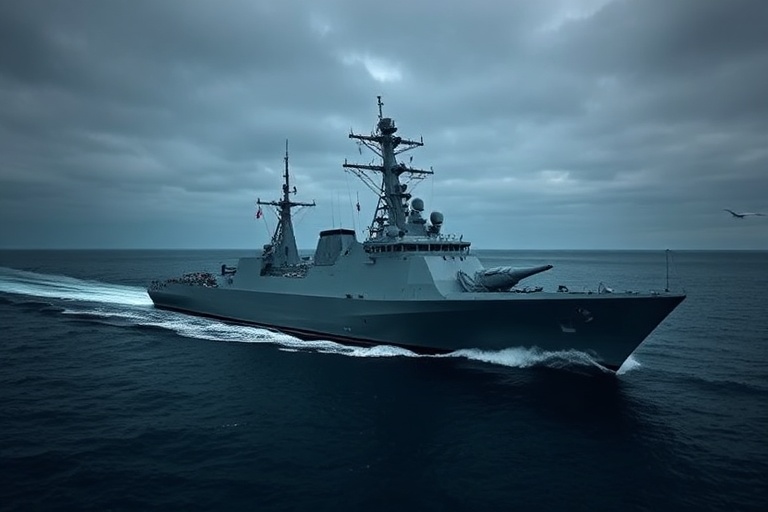
type 31 frigate
The Type 31 Frigate: A New Chapter in Global Naval Power
The Type 31 frigate represents more than just a new warship for the British Royal Navy. It signals a strategic pivot in how modern navies balance cost, capability, and adaptability. Designed as a flexible, modular platform, the Type 31 aims to fill a critical gap between high-end destroyers and smaller patrol vessels. Its development reflects broader trends in naval procurement: affordability without sacrificing operational relevance.
From a global perspective, the Type 31 isn’t just a British project. It’s part of a wave of mid-tier frigates emerging from Europe to Asia, each tailored to meet regional security demands. These ships are built for presence, not just power—patrolling vast maritime zones, supporting allies, and deterring aggression without the price tag of a guided-missile cruiser. The Type 31’s design philosophy mirrors this shift: lean, exportable, and built for endurance.
The Genesis of a Modern Warship
Launched in 2017 under the UK’s National Shipbuilding Strategy, the Type 31 program was born from necessity. The Royal Navy’s aging Type 23 frigates needed replacement, but spiraling costs threatened to leave a capability gap. Enter the Type 31: a £250 million per ship solution that prioritizes speed of delivery and lifecycle affordability. Unlike its predecessor, the Type 31 isn’t chasing stealth or supercavitating propulsion. It’s a practical, adaptable platform designed to be upgraded over time.
Key to this approach is the adoption of a “spiral development” model. The ship’s core systems—like the combat management suite and propulsion—are standardized, but modular payloads allow for rapid reconfiguration. Need anti-submarine capability? Add a towed sonar array. Focus on maritime security? Swap out the mission bay for unmanned systems. This flexibility ensures the Type 31 can evolve alongside emerging threats, from drone swarms to cyber intrusions.
Industry collaboration has been central to the project. Babcock International leads the design, while firms like BAE Systems and Thales contribute critical systems. The result is a ship that blends off-the-shelf technology with bespoke British engineering—a balance that could make it an attractive export for nations wary of high-cost defense programs.
A Global Benchmark for Affordable Naval Power
The Type 31 isn’t operating in a vacuum. Similar mid-tier frigates are reshaping naval power dynamics worldwide. Consider the following comparative examples:
- FREMM (France/Italy): A multi-role frigate family known for its versatility, with variants serving in anti-air, anti-submarine, and land-attack roles. The FREMM’s success has led to sales to Morocco, Egypt, and the U.S. (as the Constellation-class).
- MEKO A-200 (Germany): A modular design philosophy that allows customization for different navies, including South Africa and Portugal. Its adaptability has made it a favorite for nations seeking a balanced fleet.
- Admiral Gorshkov-class (Russia): While more heavily armed, these frigates showcase how modularity can extend a ship’s lifespan. Russia’s focus on hypersonic missiles contrasts with the Type 31’s emphasis on modular payloads.
- Inhauma-class (Brazil): A smaller, simpler frigate designed for coastal defense, proving that even budget-conscious navies can maintain a credible presence.
What sets the Type 31 apart is its cost-to-capability ratio. At £250 million per hull, it undercuts the FREMM’s estimated £500 million price tag while offering comparable systems. This affordability could make it a game-changer for smaller navies looking to modernize without breaking the bank. The UK’s Royal Navy, for instance, plans to field eight Type 31s by the mid-2030s—a fleet size that would have been unthinkable with traditional high-cost frigates.
The cultural impact of such ships extends beyond military strategy. In an era where naval power is increasingly about presence rather than outright dominance, the Type 31 embodies a shift toward “soft deterrence.” By deploying these ships to contested regions like the South China Sea or the Arctic, nations can assert influence without triggering full-scale arms races. This approach resonates with countries balancing budget constraints against geopolitical ambitions.
Challenges and Future Prospects
No warship program is without hurdles, and the Type 31 is no exception. Supply chain disruptions, rising material costs, and the complexities of integrating new technologies could delay delivery. The first ship, HMS Active, is slated for 2027, but history suggests naval projects rarely stick to schedule.
Another challenge lies in the ship’s armament. Critics argue that the Type 31’s current weaponry—a 127mm main gun, Sea Ceptor missiles, and 30mm guns—is underpowered compared to peers like the FREMM. However, the modular design allows for future upgrades, including hypersonic missiles or directed-energy weapons. The question is whether the Royal Navy will prioritize these enhancements as budgets tighten.
Globally, the Type 31’s success could hinge on its export potential. The UK government has explicitly targeted international sales, positioning the frigate as a “global combatant.” Nations like Poland, Indonesia, and even Australia (which already operates Type 23s) have expressed interest. If the Type 31 can secure even a handful of export orders, it will validate the UK’s strategy of combining military capability with economic pragmatism.
For the Royal Navy, the Type 31 is a litmus test. Can a mid-tier frigate deliver the operational flexibility needed to counter modern threats? Early trials suggest yes. The ship’s advanced automation reduces crew requirements, freeing up personnel for other missions. Its hybrid propulsion system—combining diesel and electric power—cuts fuel costs, a critical advantage in an era of rising energy prices. And its ability to operate alongside unmanned systems positions it as a cornerstone of the UK’s future fleet architecture.
Beyond the Battlegroup: The Type 31’s Broader Role
The Type 31’s influence extends beyond traditional naval warfare. In an era where maritime security is increasingly linked to climate change, piracy, and cyber threats, the frigate’s adaptability makes it a versatile tool. Consider its potential roles:
- Disaster Response: The Type 31’s large mission bay can be repurposed to carry humanitarian aid, medical supplies, or disaster relief teams. After a typhoon or earthquake, such a ship could deliver critical support faster than land-based alternatives.
- Environmental Monitoring: Equipped with sensors and drones, the Type 31 could patrol for illegal fishing, oil spills, or marine pollution. This aligns with the UK’s push to position itself as a leader in ocean conservation.
- Training and Diplomacy: As a flagship for naval diplomacy, the Type 31 can conduct joint exercises with allied nations, from NATO partners to emerging maritime powers in Africa and Southeast Asia. These engagements foster trust and interoperability.
- Space and Cyber Integration: The ship’s systems are designed to interface with satellites and unmanned platforms. This allows it to act as a node in a broader network of sensors, linking air, land, sea, and cyber domains.
The Type 31’s cultural significance also lies in its symbolism. In an age where military budgets are scrutinized, the ship represents a bet on innovation over tradition. It’s a rejection of the idea that naval power must come at an unsustainable cost. Instead, it embraces a philosophy of “good enough” capability—sufficient to deter aggression, project presence, and adapt to future challenges.
This approach mirrors broader shifts in global defense. Countries like Japan and South Korea are investing in modular, multi-role ships to counter China’s expanding naval footprint. Even the U.S. Navy, though focused on high-end platforms like the DDG-1000 Zumwalt-class, is exploring smaller, cheaper ships for distributed lethality. The Type 31 fits neatly into this ecosystem—a bridge between the industrial age of battleships and the digital age of unmanned systems.
Conclusion: A Fleet for the Future
The Type 31 frigate may lack the headline-grabbing features of a supercarrier or a stealth destroyer, but its impact could be just as profound. By prioritizing affordability, adaptability, and modularity, it offers a blueprint for the next generation of naval vessels. For the Royal Navy, it’s a chance to rebuild a fleet decimated by budget cuts and delayed programs. For allied nations, it’s an opportunity to modernize without sacrificing capability.
As geopolitical tensions rise and naval budgets tighten, the Type 31’s success will depend on more than just its technical specs. It must prove that a mid-tier frigate can deliver operational excellence without breaking the bank. If it succeeds, the Type 31 could redefine what it means to be a modern warship—not just in the UK, but around the world. In an era where naval power is as much about presence as it is about firepower, the Type 31 may well be the ship that defines the future.