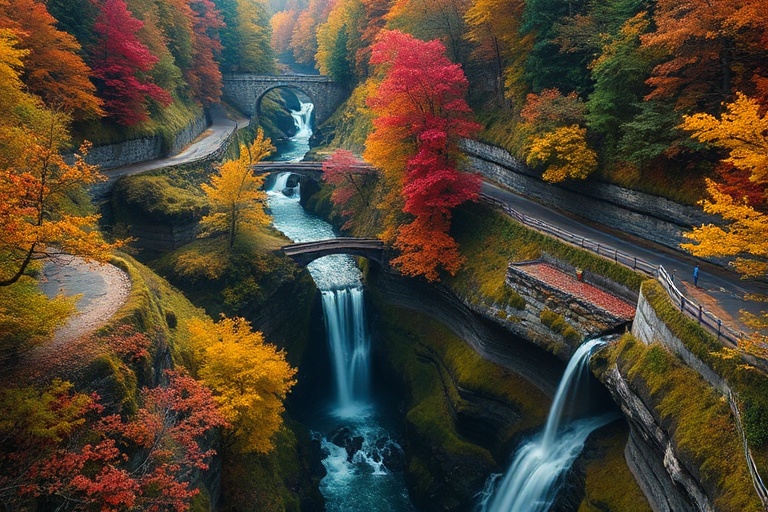
Watkins Glen: A Hidden Gem Carved by Time and Water
Nestled in the heart of New York’s Finger Lakes region, Watkins Glen State Park is a natural wonder that has captivated visitors for generations. Carved over millennia by glaciers and rushing water, the park’s iconic gorge features 19 waterfalls cascading through a winding ravine of stone bridges, tunnels, and stone staircases. What began as a modest tourist attraction in the late 19th century has grown into a globally recognized destination, drawing over half a million visitors annually.
The park’s origins trace back to the Ice Age, when glacial movement shaped the valleys and hills of the Finger Lakes. Water from Glen Creek, fed by nearby Seneca Lake, began carving the soft shale and sandstone layers, creating the dramatic gorge we see today. Indigenous peoples, including the Seneca Nation, revered this land long before European settlers arrived. Their oral histories speak of the land’s spiritual significance, a connection that persists in the park’s preservation efforts.
The Evolution of a Tourist Icon
Watkins Glen’s transformation from a local curiosity to an international attraction began in earnest during the Gilded Age. In 1863, local entrepreneur H.C. Warfield began promoting the gorge as a tourist destination, constructing wooden walkways to provide safe access to its most stunning features. By the 1880s, the Glenwood Hotel had been built nearby, catering to wealthy visitors who arrived by train—a testament to the era’s fascination with nature as both spectacle and escape.
The early 20th century brought further development. The Civilian Conservation Corps (CCC) played a pivotal role during the Great Depression, building the stone bridges, staircases, and trails that still define the park today. Their work not only improved accessibility but also ensured the preservation of the gorge’s delicate ecosystem. By the 1930s, Watkins Glen had cemented its reputation as a must-see natural attraction in the Northeast.
In 2014, the park was designated a National Natural Landmark, recognizing its geological significance. This status has helped protect the gorge while allowing controlled tourism to flourish. Today, visitors from across the United States—and increasingly from Europe and Asia—flock to Watkins Glen to witness its beauty firsthand.
A Global Destination with Local Roots
Watkins Glen’s appeal extends far beyond its geological wonders. The park is a microcosm of how natural attractions become cultural touchstones. For many Americans, it represents the quintessential summer road trip: a journey through rolling hills, vineyards, and charming small towns. For international travelers, it offers a glimpse into the unspoiled beauty of the American Northeast, a contrast to the urban landscapes of their home countries.
The park’s influence can be seen in various forms of media. From postcards in the early 20th century to Instagram posts today, Watkins Glen has been immortalized in countless images. It has also inspired artists and writers, including landscape painters of the Hudson River School and contemporary photographers who seek to capture its ever-changing light and shadow.
Watkins Glen is also a hub for outdoor recreation, attracting hikers, rock climbers, and even adventure sports enthusiasts. The nearby Watkins Glen International racetrack, home to NASCAR’s Go Bowling at The Glen, adds a motorsport dimension to the area’s appeal. This blend of natural beauty and adrenaline-fueled activity creates a unique tourist experience that few other destinations can match.
Preservation and the Future of Watkins Glen
Maintaining a balance between tourism and conservation is an ongoing challenge for Watkins Glen State Park. Foot traffic, erosion, and environmental degradation are constant concerns. Park officials have implemented measures such as timed entry reservations during peak seasons and strict trail regulations to mitigate damage. Educational programs, including guided hikes and interpretive signage, help visitors understand the importance of preserving the gorge’s delicate ecosystem.
Climate change poses another threat. Rising temperatures and shifting precipitation patterns could alter the flow of Glen Creek, potentially affecting the waterfalls and rock formations. Conservationists are monitoring these changes closely, advocating for policies that prioritize sustainability without stifling tourism.
The park’s future also depends on its ability to adapt to modern expectations. Younger generations, accustomed to interactive and immersive experiences, may seek more than just a scenic walk. In response, park authorities are exploring augmented reality tours and digital storytelling to enhance visitor engagement while preserving the park’s natural integrity.
Visiting Watkins Glen: What to Expect
For those planning a visit, Watkins Glen offers a range of experiences. The Gorge Trail, the park’s crown jewel, stretches 1.5 miles and descends 600 feet into the ravine, passing 19 waterfalls along the way. The South Rim and Indian Trails offer quieter alternatives for those seeking solitude or panoramic views. Seasonal changes bring different charms: spring’s rushing waters, summer’s lush greenery, autumn’s fiery foliage, and winter’s icy stillness.
Practical tips for visitors include:
- Arriving early, especially on weekends and holidays, to avoid crowds.
- Wearing sturdy shoes, as the trails can be steep and slippery.
- Bringing water and snacks, as dining options within the park are limited.
- Exploring nearby attractions, such as Seneca Lake’s wineries or the charming town of Watkins Glen itself.
The park’s proximity to other Finger Lakes attractions, including Ithaca’s waterfalls and Corning’s glass museums, makes it an ideal stop on a broader regional tour. Whether you’re a seasoned hiker, a casual sightseer, or simply someone in search of tranquility, Watkins Glen offers an experience that resonates across cultures and generations.
A Lasting Legacy
Watkins Glen State Park is more than just a collection of waterfalls and trails—it is a testament to the power of nature and humanity’s enduring relationship with it. From its Indigenous roots to its modern-day status as a conservation success story, the park embodies the delicate balance between preservation and accessibility. As climate change and tourism pressures continue to evolve, Watkins Glen stands as a reminder of what can be achieved when we prioritize both wonder and responsibility.
For those who visit, the experience is often described as transformative. There’s something about standing beneath a cascading waterfall, surrounded by ancient stone and the sound of rushing water, that puts life’s challenges into perspective. In an age where digital distractions dominate, Watkins Glen offers a rare opportunity to reconnect with the natural world—and with ourselves.
Whether you’re drawn by the park’s geological marvels, its cultural significance, or the simple joy of a well-spent afternoon outdoors, Watkins Glen delivers an experience that lingers long after the visit is over.