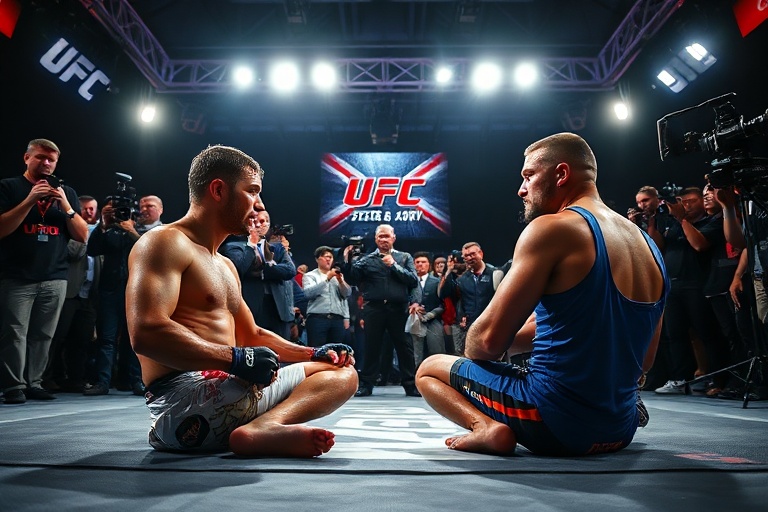
The UFC post-fight press conference isn’t just another media obligation—it’s a global stage where champions become storytellers, rivals become allies, and the raw emotion of combat lingers long after the final bell. These events, broadcast across continents, transcend sport. They become cultural touchpoints where victory speeches, mic’d-up moments, and unexpected showmanship collide with international scrutiny.
Unlike traditional press conferences in boxing or wrestling, the UFC’s format blends accessibility with spectacle. Fighters walk in tired but charged, often still wearing fight gear, while journalists from Tokyo to Toronto pepper them with questions. The stakes are different here. It’s not just about analyzing performance—it’s about preserving legacy, shaping perceptions, and sometimes, sparking new rivalries.
The Anatomy of a UFC Press Conference
Every UFC post-fight press conference follows a rhythm as predictable as it is charged. First comes the champion or victor, draped in a UFC towel or wearing their shorts, stepping into a room packed with media from outlets like ESPN, MMA Fighting, and Japan’s Sports Hochi. Cameras flash. Microphones are thrust forward. The fighter’s demeanor sets the tone—sometimes humble, sometimes defiant, often a mix of both.
The structure is straightforward:
- Initial Statements: Fighters are given two to three minutes to address the audience. These aren’t scripted speeches, but they’re rarely off-the-cuff. Most have prepared remarks, especially champions defending belts or rivals settling scores.
- Q&A Session: Journalists—often seasoned MMA reporters—ask pointed questions. “How did you neutralize his wrestling?” “Are you calling out anyone next?” Fighters respond with varying degrees of candor. Some deflect. Others lean into the moment.
- Cultural Translation: For international audiences, these moments are subtitled or recapped in multiple languages. A fighter’s joke about a judge’s scorecard in Las Vegas becomes a viral clip in Rio or Moscow within hours.
- Exit Stage Left: The fighter exits, often to a flurry of follow-up questions from podcasters and influencers who missed the formal briefing.
What makes this ritual fascinating isn’t the format—it’s the humanity. In an era of algorithm-driven content, the UFC press conference remains one of the last places where athletes speak freely, without AI-generated filters or PR spin doctors dictating every word.
Global Reach, Local Flavors
The UFC’s expansion into new markets—Singapore, Abu Dhabi, Poland—has transformed post-fight press conferences into global cultural artifacts. When Islam Makhachev defended his lightweight title in 2023 in Abu Dhabi, the press conference wasn’t just in English and Arabic—it was broadcast live on Dubai TV and streamed on local platforms like OSN. The crowd included fans wearing kanduras and abayas, a visual reminder that MMA is no longer an American export, but a worldwide language.
In Japan, where MMA has deep roots, post-fight conferences take on a more formal tone. Fighters bow deeply, speak with measured respect, and rarely engage in trash talk. This reflects the cultural emphasis on humility and honor. When Khamzat Chimaev fought in Yokohama in 2022, his press conference was broadcast on Fuji TV, with commentators translating his brash speech into polite Japanese. The contrast between his swagger and the cultural expectation created a fascinating tension—one that resonated with both Western and Eastern audiences.
Meanwhile, in Brazil, the press conference becomes a festival. Fighters like Charles Oliveira or Amanda Nunes arrive to cheers, often surrounded by teammates wearing their country’s colors. Journalists ask about training in the favelas, family sacrifices, and the weight of carrying a nation’s hopes. The emotional tone is high, the language passionate—even when interpreters struggle to keep up.
When Words Become Weapons
Not all UFC post-fight press conferences are about celebration. Some are battlegrounds of their own. The mic is as dangerous as the octagon when rivals use the platform to reignite feuds or issue challenges.
Consider the 2021 press conference before the rematch between Jorge Masvidal and Nate Diaz. Masvidal, already controversial for his post-fight celebration in their first fight, arrived wearing a shirt that read “Champagne Poppin’” and taunted Diaz with a bottle of rosé. Diaz, never one to back down, responded by calling Masvidal a “clown.” The exchange wasn’t just about hype—it fueled a pay-per-view buyrate that surpassed expectations.
These verbal duels aren’t limited to English-speaking fighters. In 2020, Petr Yan and Aljamain Sterling squared off at a press conference in Moscow. Yan, the Russian bantamweight champion, spoke in Russian while Sterling, an American, responded in English. The misunderstanding led to Sterling walking out mid-Q&A—a moment that fueled months of trash talk and ultimately led to their title fight.
What emerges is a paradox: the UFC press conference is supposed to clarify narratives, but often, it complicates them. Fighters contradict themselves. Promoters interject. Reporters push for drama. And in the end, the story grows—sometimes beyond the actual fight itself.
The Digital Afterlife: How Press Conferences Live Online
In the 24-hour news cycle, the UFC post-fight press conference doesn’t end when the last journalist leaves the room. Within minutes, clips are edited, captioned, and posted across social platforms. A fighter’s stumble over a question becomes a TikTok trend. A coach’s side-eye becomes a meme. A cultural quip—like Jon Jones calling someone “a bum”—becomes a hashtag.
The UFC itself has embraced this digital echo. Highlights from press conferences are packaged into “UFC Embedded” style clips, shared on Instagram Reels, YouTube Shorts, and even Weibo in China. These snippets are designed to go viral, driving traffic to pay-per-view events and merchandise.
But the digital spread also exposes the UFC to scrutiny. When fighters make insensitive comments or jokes that don’t translate well, the backlash spreads faster than the original clip. A press conference in 2022 where a fighter made a remark about a rival’s weight sparked a petition for disciplinary action. The UFC issued a public apology within hours—proof that in the digital age, the press conference’s impact isn’t confined to the room.
This duality—local authenticity and global virality—makes the UFC post-fight press conference one of the most dynamic rituals in modern sports. It’s not just a debrief. It’s a dialogue between cultures, a showcase of personality, and sometimes, a spark that ignites the next rivalry.
A Lasting Legacy
The UFC post-fight press conference may seem like a minor event compared to the spectacle of a championship fight. But in a sport where every second is analyzed, every punch counted, and every decision dissected, these briefings offer something rare: a glimpse behind the curtain. They remind us that fighters are people—proud, flawed, passionate, and unpredictable.
As the UFC continues to grow, these press conferences will evolve. They may become more scripted. They may integrate VR or live audience participation. But one thing is certain—they will remain a cornerstone of the sport’s culture. Because in a world of instant replays and AI highlights, the human voice still matters most.
And when the lights dim and the cameras turn off, the real work begins—not just for the fighters, but for the stories they leave behind.
For more on MMA culture and analysis, visit our Sports section.
Explore deeper insights into combat sports trends and athlete profiles on Analysis.