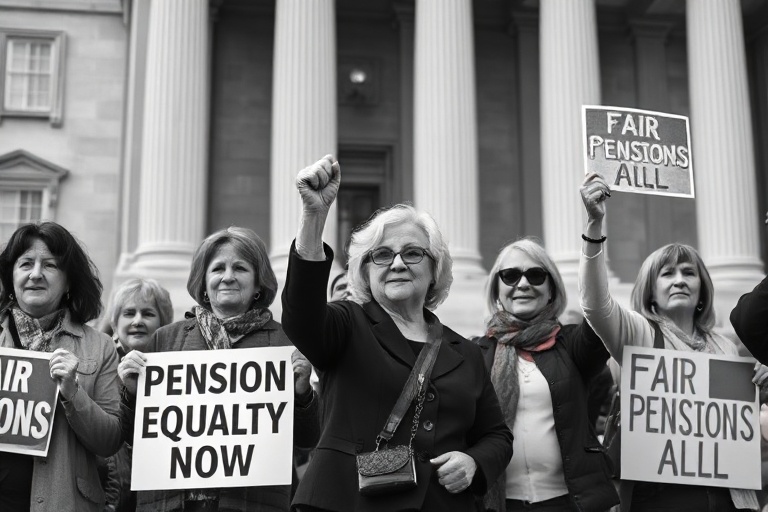
The issue of state pension inequality has long plagued women in the UK, particularly those born in the 1950s. These women, affected by the 1995 Pensions Act, have faced significant delays to their retirement age without adequate notice or support. The fight for justice has galvanized grassroots movements, legal challenges, and public awareness campaigns. This is not just about numbers; it is about dignity, financial security, and the right to plan for one’s future.
The injustice stems from a change in the law that gradually increased the state pension age for women from 60 to 65. While the government argued this was necessary for financial sustainability, the implementation lacked transparency. Many women received little to no warning, leaving them scrambling to adjust their retirement plans. The emotional and financial toll has been profound, with some women forced to work well into their 60s or face poverty in old age.
The Roots of Pension Inequality
The 1995 Pensions Act was the first major step toward addressing gender disparities in pension ages. However, the transition was poorly communicated. Women born between April 6, 1950, and April 5, 1955, were particularly hard hit, as their state pension age was raised from 60 to 65 over a decade. The change disproportionately affected women who had spent years caring for children or elderly relatives, often with limited career opportunities.
Campaign groups like Women Against State Pension Inequality (WASPI) emerged in response, demanding compensation for the lack of notice. Their argument is clear: the government should have provided a longer transition period, allowing women to adjust their savings and retirement plans. Without this buffer, many faced financial hardship, relying on benefits or working longer than anticipated.
The issue is not just about money; it is about trust. The Department for Work and Pensions (DWP) has faced criticism for its handling of the situation. A 2019 report by the Parliamentary Ombudsman found that the DWP failed to communicate the changes effectively, leaving women in the dark. This lack of transparency has fueled anger and a sense of betrayal among those affected.
Legal Battles and Political Responses
The fight for justice has taken many forms, from legal challenges to political lobbying. In 2021, a group of WASPI women took their case to the High Court, arguing that the DWP’s failure to notify them properly was unlawful. While the court ruled against them, the case highlighted the systemic issues at play. The legal system, they argued, was not equipped to address the emotional and financial damage caused by the pension age changes.
Politically, the issue has divided opinion. Some MPs have called for compensation, while others argue that the changes were necessary to align pension ages with rising life expectancy. The debate has exposed deeper questions about how society values women’s work—both paid and unpaid. After decades of unequal pay and career opportunities, pension inequality feels like another blow for women who have already sacrificed so much.
The government’s response has been mixed. In 2022, Chancellor Rishi Sunak announced a £1.1 billion support package for some WASPI women, but campaigners dismissed it as inadequate. The money, they argued, did not account for the full financial impact of the pension age changes. The fight continues, with WASPI pushing for a full inquiry and fairer compensation.
The Human Cost of Pension Inequality
The effects of pension inequality are not just financial; they are deeply personal. Many women who expected to retire at 60 found themselves working into their late 60s, often in physically demanding jobs. Others relied on state benefits or family support to make ends meet. The stress of financial insecurity has taken a toll on mental health, with some women reporting anxiety and depression.
One woman, speaking to BBC News, described how she had to postpone her retirement to care for her elderly mother. “I had planned to retire at 60, but suddenly I had to keep working,” she said. “It’s not just about the money; it’s about the time I lost with my family.” Stories like hers underscore the human cost of pension inequality—a cost that cannot be measured in pounds and pence.
Broader Implications and the Path Forward
The pension inequality debate raises important questions about how society values women’s contributions. Unpaid care work—whether for children or elderly relatives—has long been undervalued in economic terms. The state pension system, which relies on years of National Insurance contributions, disproportionately penalizes those who take career breaks. This is not just a women’s issue; it is a societal one.
Reforms are urgently needed to address these structural inequalities. One solution could be to introduce a more flexible pension system that accounts for unpaid care work. Another could be to extend the transition period for future pension age changes, ensuring that no one is left in the dark. The government must also improve its communication strategies, ensuring that any future changes to pension policy are clearly and transparently conveyed.
Campaigners are also calling for a full public inquiry into the handling of the 1995 Pensions Act. Such an inquiry could provide a clearer picture of the damage caused and pave the way for meaningful compensation. Until then, the fight for justice continues, with women across the UK demanding fairness and dignity in retirement.
Key Takeaways
- The 1995 Pensions Act raised the state pension age for women from 60 to 65, disproportionately affecting those born in the early 1950s.
- Lack of proper notice and communication from the DWP left many women financially vulnerable and emotionally distressed.
- Campaign groups like WASPI have fought for compensation and a fairer transition, with mixed results so far.
- The issue highlights broader inequalities in how unpaid care work is valued in the pension system.
- Reforms, including better communication and flexible pension policies, are needed to prevent similar injustices in the future.
For more on pension reforms and financial justice, explore our Finance and Politics sections.
Conclusion
The fight for pension equality is far from over. While the government has taken some steps to address the issue, campaigners argue that more needs to be done. The emotional and financial toll on women affected by the pension age changes cannot be overstated. This is not just about money; it is about justice, dignity, and the right to a secure retirement.
The broader implications of pension inequality extend beyond individual stories. They reflect deeper societal failures to value women’s contributions—both in the workplace and at home. Until these structural issues are addressed, the fight for fairness will continue. For now, women across the UK remain united in their demand for justice, refusing to let their later years be defined by financial insecurity and broken promises.