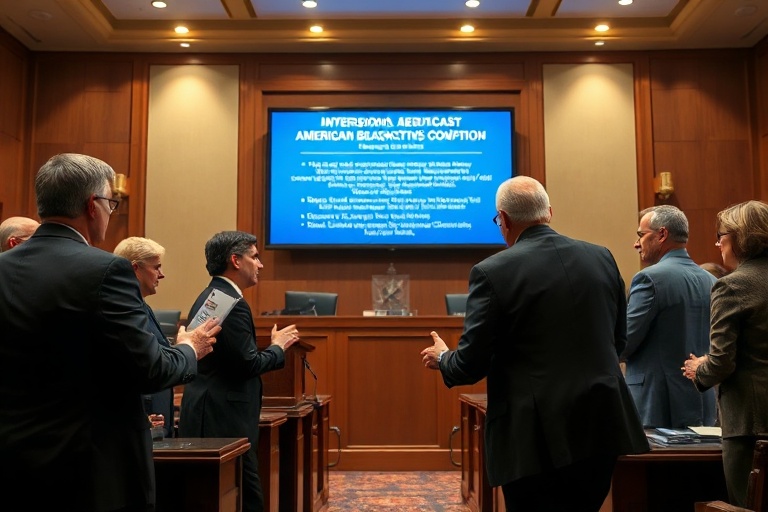
Understanding the ABC vs. FCC First Amendment Dispute
The recent legal clash between ABC News and the Federal Communications Commission (FCC) has ignited discussions far beyond American courtrooms. At its core, this dispute revolves around the boundaries of free speech, regulatory authority, and the role of media in shaping public perception. While the case originated in the United States, its implications resonate globally, particularly in countries grappling with similar tensions between government oversight and journalistic independence.
The FCC, tasked with regulating interstate and international communications by radio, television, wire, satellite, and cable, has faced scrutiny over its enforcement practices. ABC News, on the other hand, has argued that certain regulatory actions threaten its ability to report freely on matters of public interest. This tension highlights a broader question: How can governments balance regulatory oversight with the fundamental right to free expression?
The Origins of the Conflict
The dispute traces back to a 2022 ABC News report that examined the FCC’s handling of broadcast license renewals. The investigation alleged inconsistencies and potential favoritism in the agency’s decision-making process. ABC’s reporting suggested that certain broadcasters received preferential treatment, raising concerns about transparency and accountability within the FCC.
In response, the FCC issued a formal complaint against ABC, accusing the network of broadcasting misleading information. The agency argued that the report undermined public trust in its regulatory functions. This back-and-forth escalated into a legal battle, with ABC challenging the FCC’s authority to penalize journalists for their reporting.
The case gained traction as media watchdogs and legal scholars weighed in. Some argued that the FCC’s actions amounted to retaliatory censorship, while others contended that regulatory bodies must have the power to correct false or harmful narratives. The debate underscores a fundamental divide: Should regulators prioritize accountability or preserve the integrity of investigative journalism?
First Amendment Implications
The First Amendment of the U.S. Constitution protects freedom of speech and the press, but its application in the digital age remains a contentious issue. Courts have historically sided with media organizations when government actions appear to suppress reporting. However, the ABC vs. FCC case introduces new complexities.
One key argument from ABC’s legal team is that the FCC’s complaint constitutes an unconstitutional prior restraint on speech. Prior restraint refers to government actions that prevent speech before it occurs, a practice the Supreme Court has generally frowned upon. If the FCC succeeds in penalizing ABC, critics warn, it could set a dangerous precedent for other government agencies seeking to control media narratives.
Legal experts point to past rulings, such as Near v. Minnesota (1931), which established that prior restraint is unconstitutional except in rare circumstances, such as national security threats. The ABC case forces a reckoning with modern media dynamics, where social media and 24-hour news cycles blur the lines between reporting and commentary.
The Global Perspective: Media Freedom Under Pressure
While this dispute is unfolding in the U.S., its echoes are felt worldwide. Countries like Hungary, Turkey, and India have seen governments tighten control over media through regulatory laws and licensing powers. In some cases, journalists face fines, imprisonment, or forced shutdowns for reporting on sensitive topics.
In Europe, the balance between media freedom and regulatory oversight is equally fraught. The European Union’s Digital Services Act, for example, aims to curb disinformation but has sparked concerns about overreach. Meanwhile, in Brazil, recent changes to media laws have drawn criticism from organizations like Reporters Without Borders, which argue that such measures stifle dissent.
ABC’s case serves as a cautionary tale for journalists globally. It highlights the risks of working in an environment where regulatory power can be wielded against the press. For media organizations, the lesson is clear: Vigilance is necessary to protect not just their own rights, but the broader principle of a free and independent press.
Potential Outcomes and Long-Term Impact
The resolution of this dispute could shape the future of media regulation in the U.S. and beyond. If ABC prevails, it may embolden other networks to challenge regulatory actions more aggressively. Conversely, a victory for the FCC could embolden governments to assert greater control over media content under the guise of accountability.
For the public, the stakes are equally high. A free press is the cornerstone of democracy, ensuring transparency and holding power to account. If regulatory bodies can penalize journalists for their reporting, the public’s access to critical information may diminish. This could erode trust in institutions and fuel misinformation.
Regardless of the outcome, the ABC vs. FCC case is a bellwether for the media landscape. It forces a reckoning with the role of regulators, the limits of free speech, and the responsibilities of journalism in an era of polarization.
What’s Next for Media and Regulation?
As the legal battle continues, media organizations are taking note. Many are reassessing their strategies for covering regulatory agencies, weighing the risks of investigative reporting against the potential consequences. Some are turning to legal safeguards, while others are exploring alternative platforms to disseminate their work.
For regulators, the challenge is to adapt to a rapidly changing media environment. The rise of streaming services, podcasts, and social media has complicated traditional broadcast regulations. The FCC’s authority, designed for a pre-digital era, may need to evolve to address modern realities.
One possible solution is greater transparency. If the FCC were to publish clear guidelines for its enforcement actions, it could reduce perceptions of bias and foster public trust. Similarly, media organizations could benefit from clearer ethical standards to distinguish between reporting and opinion.
Ultimately, the ABC vs. FCC dispute is more than a legal tussle—it’s a test of democratic values. The outcome will reverberate through courtrooms, newsrooms, and living rooms, shaping the future of free expression for generations to come.
Key Takeaways for Journalists and Regulators
For journalists, the case underscores the importance of thorough fact-checking and legal preparedness. Investigative reporting remains vital, but it must be conducted with an eye toward potential legal challenges. Collaboration with media lawyers and advocacy groups can provide critical support.
For regulators, the dispute highlights the need for balance. While oversight is necessary, it must not stifle the free flow of information. Engaging with media organizations to establish clear, fair guidelines could prevent future conflicts.
As technology continues to reshape communication, the lessons from this case will only grow more relevant. The fight for media freedom is far from over, but it is a fight worth having.