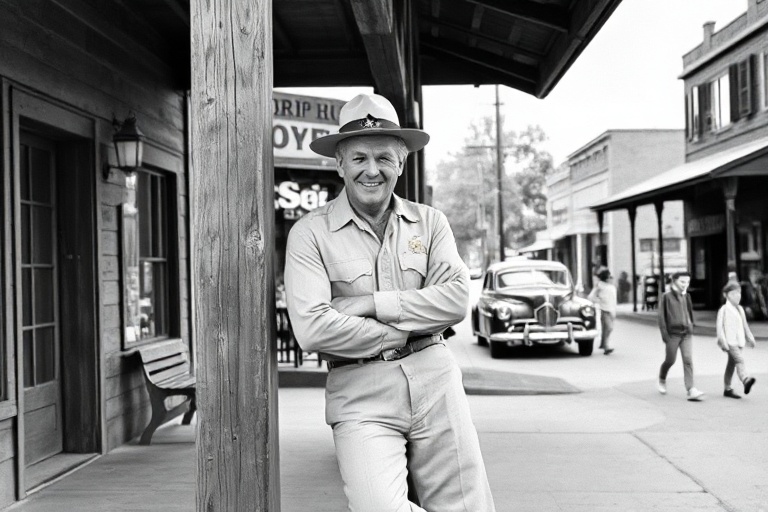
Andy Griffith wasn’t just an actor; he was a cultural architect who shaped how America saw itself in the 20th century. With a warm baritone voice, an unmistakable Southern drawl, and an everyman charm, Griffith became synonymous with the idealized small-town values of Midwestern and Southern life. His most famous role as Sheriff Andy Taylor in The Andy Griffith Show (1960–1968) didn’t just entertain—it crafted a blueprint for wholesome entertainment that still influences television today.
Griffith’s career stretched across six decades, from his early days as a monologist to his later work as a dramatic actor in films like A Face in the Crowd (1957). Yet it was his portrayal of the wise, patient, and slightly mischievous sheriff of Mayberry that cemented his legacy. This character wasn’t just a fictional creation; he was an aspirational figure who embodied the virtues of integrity, community, and quiet leadership.
The Making of Mayberry: How Griffith Crafted an Idealized America
Mayberry, North Carolina, was more than a fictional town—it was a carefully constructed vision of what America could be. Griffith, along with creator Sheldon Leonard and writers like Richard Linke and Danny Thomas, designed Mayberry as a place where problems were solved with common sense, where neighbors looked out for each other, and where authority figures like Andy Taylor were respected but never feared. This wasn’t an accident; it was a deliberate rejection of the cynicism that had settled into American culture after World War II.
The show’s premise was simple: Sheriff Taylor, a widower raising his young son Opie, navigates the quirks of small-town life with patience and humor. But beneath the surface, The Andy Griffith Show was a commentary on modernity itself. In an era of Cold War tensions, civil rights struggles, and rapid technological change, Mayberry offered a comforting alternative—a world where progress didn’t mean abandoning tradition.
Griffith’s Andy Taylor wasn’t just a lawman; he was a philosopher in a deputy’s uniform. His lessons to Opie—whether about honesty, hard work, or the importance of listening—were delivered with a mix of firmness and warmth that resonated with audiences. This approach made the show more than just a sitcom; it became a moral guide for generations of viewers.
Beyond Mayberry: Griffith’s Range as an Actor and Performer
While Griffith’s legacy is forever tied to Mayberry, his career was far more varied. Before he became America’s favorite sheriff, he was a stand-up comedian and recording artist. His 1953 comedy album What It Was, Was Football—a humorous take on a Southern man’s first exposure to the sport—became a surprise hit, selling over a million copies. This project showcased Griffith’s knack for storytelling and his ability to connect with audiences through humor and authenticity.
Griffith’s dramatic chops were on full display in Elia Kazan’s A Face in the Crowd (1957), where he played Lonesome Rhodes, a charismatic but manipulative TV personality. The role was a stark contrast to Andy Taylor, proving Griffith’s versatility. His performance as Rhodes—a character who could charm and corrupt in equal measure—earned critical acclaim and demonstrated Griffith’s depth as an actor. This duality—balancing comedy and drama, warmth and cynicism—defined his career.
In the 1970s and 1980s, Griffith returned to television in new roles, including the legal drama Matlock (1986–1995), where he played defense attorney Ben Matlock. The show capitalized on his ability to play authoritative yet approachable characters, proving that audiences still trusted him as a moral compass. Griffith’s later work reinforced the idea that he wasn’t just a one-hit wonder; he was an actor who understood the power of storytelling to shape perceptions.
The Cultural Legacy of Andy Griffith: Why Mayberry Still Matters
Andy Griffith’s influence extends far beyond reruns on TV Land. His portrayal of Andy Taylor helped redefine the role of fathers on television. Unlike the bumbling dads of earlier sitcoms or the stern patriarchs of the 1950s, Andy Taylor was a nurturing yet firm figure who led by example. This model of fatherhood—kind but not weak, wise but not infallible—became a template for future TV dads, from Full House’s Danny Tanner to Modern Family’s Phil Dunphy.
Griffith’s impact on American values is also evident in the way Mayberry became a cultural shorthand for small-town authenticity. In an era where urbanization and globalization were rapidly changing the country, Mayberry offered a nostalgic vision of community. This wasn’t naive idealism; it was a deliberate choice to emphasize what was good about American life. Griffith and his collaborators understood that television had the power to shape collective memory, and they used it to create a place where people wanted to live.
The show’s humor, rooted in misunderstandings and gentle satire, also paved the way for later comedies like The Office and Parks and Recreation. While those shows embraced a more cynical tone, they shared Griffith’s focus on character-driven humor and workplace dynamics. Mayberry’s influence can even be seen in modern streaming hits like Ted Lasso, where the optimism and heart of the show are still palpable.
Griffith’s Enduring Appeal: Lessons for Today’s Media Landscape
In today’s fractured media landscape—where outrage often trumps nuance and division is more profitable than unity—Andy Griffith’s career offers a valuable lesson. His success wasn’t based on shock value or controversy; it was built on the power of relatability. Griffith understood that audiences crave authenticity, even in fiction. Whether he was playing a sheriff, a lawyer, or a football fan, he made characters feel real by grounding them in humanity.
Griffith’s work also highlights the importance of consistency in branding. For nearly 60 years, he was associated with trustworthiness and decency, qualities that became part of his public persona. In an era where celebrities are often defined by their scandals or controversies, Griffith’s legacy reminds us that integrity can be just as powerful as fame.
For modern creators, Griffith’s career is a masterclass in balancing commercial appeal with artistic integrity. He never compromised his values for the sake of ratings, and yet The Andy Griffith Show was one of the highest-rated programs of its time. This suggests that audiences don’t always want edginess—they want honesty, warmth, and a sense of stability.
Key Takeaways from Andy Griffith’s Career
Andy Griffith’s career offers several lessons for both artists and audiences. Here are some of the most important:
- Authenticity resonates: Griffith’s ability to make characters feel real—whether in comedy or drama—stemmed from his commitment to authenticity. Audiences trusted him because he never seemed like he was performing a role; he was living it.
- Small-town values have universal appeal: Mayberry wasn’t just a Southern town; it was a universal symbol of community, loyalty, and simplicity. Griffith’s portrayal of these values made them relatable to audiences across the country.
- Versatility is power: From comedy albums to dramatic films to legal dramas, Griffith proved that an actor’s range can keep them relevant for decades. His ability to shift between genres made him a lasting figure in entertainment.
- Leadership comes in many forms: Andy Taylor wasn’t a traditional hero, but his quiet leadership—guided by wisdom and empathy—made him a role model. Griffith’s portrayal of this type of authority influenced how we see father figures, bosses, and even political leaders on screen.
Andy Griffith passed away in 2012, but his legacy lives on in reruns, streaming services, and the hearts of those who grew up with Mayberry. More than just a television icon, he was a cultural custodian who reminded America of its better qualities. In a time when media often emphasizes division and cynicism, Griffith’s work is a testament to the enduring power of kindness, community, and good old-fashioned storytelling.
For those looking to explore more about classic television and its cultural impact, check out our Entertainment and Culture sections on Dave’s Locker. These pages dive deeper into the shows and figures that shaped modern media.