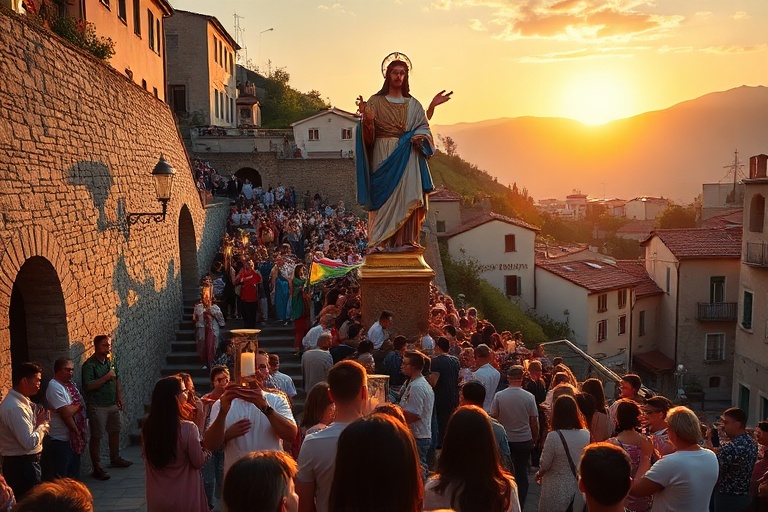
ascension day
Ascension Day marks a pivotal moment in Christian tradition, commemorating the moment Jesus Christ ascended to heaven after his resurrection. Observed 40 days after Easter Sunday, this event holds deep spiritual significance for millions across different denominations and cultures. While rooted in religious history, Ascension Day has evolved into a day of reflection, community gatherings, and even public holidays in some countries.
The observance blends ancient rituals with modern interpretations, creating a unique tapestry of traditions. From solemn church services to vibrant processions, communities worldwide honor this occasion in distinct ways. Understanding its global reach reveals how a single religious event can shape cultural practices, national holidays, and even local economies.
The Biblical and Historical Roots of Ascension Day
According to Christian scripture, particularly the New Testament books of Luke and Acts, Jesus gathered his disciples after his resurrection and led them to the Mount of Olives. There, he blessed them before ascending bodily into heaven. This event, known as the Ascension, is described in Acts 1:9-11, where two angels appear and assure the disciples of Christ’s eventual return.
The early Christian church began observing Ascension Day in the 4th century, though the exact date varied until standardization in the 6th century. By the Middle Ages, it became a major feast day in Western Christianity, often marked by processions, fasting, and special church services. Theological debates also emerged during this period about the nature of Christ’s ascension and its implications for salvation history.
In Eastern Orthodox traditions, Ascension Day is part of a larger Paschal season that includes Easter and Pentecost. The 40-day period between Easter and Ascension mirrors the time Jesus spent with his disciples after his resurrection, emphasizing continuity between his earthly ministry and heavenly glorification.
Key Differences in Observance Across Denominations
While Ascension Day is universally recognized in Christianity, its observance varies significantly:
- Roman Catholicism: Celebrated with a holy day of obligation, meaning Catholics are required to attend Mass. Churches often hold special evening vigils.
- Protestantism: Observed with varied intensity—some denominations treat it as a major feast, while others focus more on Pentecost, which follows 10 days later.
- Eastern Orthodoxy: Celebrated 40 days after Easter, with processions reenacting the disciples’ journey to the Mount of Olives. Iconography plays a central role in worship.
- Anglicanism: Retains the day as a principal feast, often marked by choral services and the singing of the Magnificat in honor of Mary, mother of Jesus.
These differences reflect broader theological distinctions, such as the emphasis on sacraments in Catholicism versus the Protestant focus on scripture alone. Yet, regardless of denomination, Ascension Day remains a unifying moment in the Christian calendar.
Ascension Day Around the World: Traditions and Public Observances
Ascension Day is not just a religious observance—it has woven itself into the cultural fabric of many nations. In some countries, it is a public holiday, while in others, it sparks unique local traditions that blend faith with community life.
Countries Where Ascension Day Is a Public Holiday
Several predominantly Christian nations recognize Ascension Day as a national holiday, allowing people to attend church services and spend time with family:
- Germany: Known as Christi Himmelfahrt, it is a public holiday in most states. The day is also associated with Father’s Day celebrations, where groups of men embark on hikes carrying beer kegs—a tradition that has sparked both humor and debate.
- Netherlands: Celebrated as Hemelvaartsdag, it includes a national holiday and public events like the Bevrijdingsdag (Liberation Day) festivals, which commemorate the end of World War II.
- Belgium: Observed in the Flemish and Walloon regions, with parades and religious processions in cities like Bruges and Liège.
- Indonesia: Despite being a Muslim-majority country, Ascension Day is a public holiday due to its significance for the Christian minority. Churches hold special services, and some regions feature cultural performances.
In these countries, Ascension Day often intersects with national identity, historical memory, and interfaith relations. For example, in the Netherlands, the holiday’s secular and religious dimensions coexist, reflecting the nation’s pluralistic society.
Unique Cultural Celebrations
Beyond official holidays, Ascension Day inspires creative and localized traditions that highlight cultural diversity:
- Switzerland: In some alpine villages, children dress in white robes and walk in processions, symbolizing the purity of Christ’s ascent. The day is also marked by folk music and traditional dances.
- Norway: Known as Kristi himmelfartsdag, Norwegians often celebrate with outdoor activities, as the holiday falls during a season of mild weather. Hiking and picnics are common, blending the sacred with the natural world.
- Lebanon: A country with a significant Christian population, Ascension Day features processions in historic cities like Beirut and Zahlé. The day is also an opportunity for interfaith dialogue, as Muslim communities often participate in cultural events.
- Caribbean Islands: In former Dutch colonies like Curaçao, Ascension Day is celebrated with music festivals and religious services, reflecting the islands’ diverse cultural heritage.
These traditions demonstrate how a shared religious event can adapt to local customs, creating a rich tapestry of global observances. Whether through solemn worship or joyful celebration, Ascension Day fosters a sense of connection among diverse communities.
Theological and Cultural Significance of Ascension Day Today
In contemporary discourse, Ascension Day is often examined not just for its historical and religious meaning but also for its relevance in modern society. Theologians and cultural critics alike explore how this ancient event resonates with contemporary questions about faith, science, and human existence.
One of the most debated aspects of Ascension Day is its literal interpretation versus symbolic understanding. While some Christians take the biblical account of Jesus’ bodily ascension literally, others view it as a metaphor for spiritual transcendence or the disciples’ transformation after Christ’s resurrection. This debate reflects broader tensions between literalist and liberal interpretations of scripture.
The day also raises questions about the intersection of religion and science. For instance, how do modern astronomers reconcile the idea of a physical ascension with our understanding of the universe? Some theologians argue that the event should be seen as a theological truth rather than a scientific claim, allowing room for both faith and reason.
Ascension Day in Art and Literature
Artists and writers have long been inspired by the Ascension, producing works that capture its drama and mystery. Renaissance painters like Rembrandt and Titian depicted the scene with vivid detail, emphasizing the emotional weight of the moment. In literature, the Ascension has been referenced in works by authors such as Dante and Milton, who explored its theological implications.
Today, modern artists continue to reinterpret the Ascension in ways that speak to contemporary audiences. For example, filmmaker Martin Scorsese referenced the Ascension in The Last Temptation of Christ, sparking both praise and controversy. These artistic explorations ensure that the story of the Ascension remains alive in popular culture.
The Role of Ascension Day in Interfaith Dialogue
Ascension Day also serves as a bridge between faiths, particularly in multicultural societies. In countries like Canada and Australia, interfaith organizations use the occasion to foster dialogue between Christians, Jews, and Muslims, who share common themes of ascension and spiritual elevation. For example, the Jewish holiday of Shavuot, which occurs around the same time, commemorates the giving of the Torah—a moment of divine revelation that parallels the Ascension’s theme of spiritual ascent.
By highlighting these connections, Ascension Day becomes more than a religious observance; it becomes a catalyst for understanding and cooperation among different faith communities.
How to Observe Ascension Day in a Modern Context
For those looking to engage with Ascension Day in meaningful ways, there are numerous approaches—whether through traditional religious practices or modern reinterpretations. Here are some ways to observe the day:
- Attend a Church Service: Many churches offer special services that include hymns, scripture readings, and sermons focused on the Ascension. Denominations like Catholicism and Anglicanism have rich liturgical traditions for the day.
- Participate in a Procession: Some communities hold public processions reenacting the disciples’ journey to the Mount of Olives. These events often feature banners, music, and communal prayer.
- Explore Art and Music: Visit a museum or listen to classical or contemporary music inspired by the Ascension. Works like Handel’s Messiah or paintings in the Vatican Museums can provide a deeper appreciation of the day’s themes.
- Engage in Acts of Service: Reflecting the disciples’ mission, many churches and organizations use Ascension Day as an opportunity for charity. Volunteering or donating to a cause can honor the spirit of the day.
- Host a Gathering: In secular or multicultural settings, Ascension Day can be marked with a meal or discussion about its significance. Inviting friends of different faiths can spark meaningful conversations.
For those outside the Christian tradition, Ascension Day offers a chance to learn about a pivotal event in religious history and its cultural impact. Even a simple act of reading the biblical account or watching a documentary can provide insight into its enduring legacy.
A Day of Reflection and Hope
Ascension Day stands as a testament to the enduring power of religious tradition in an ever-changing world. Whether observed through solemn worship, vibrant processions, or quiet reflection, it invites people to consider themes of hope, transcendence, and community. In an era where digital connectivity often overshadows spiritual reflection, Ascension Day reminds us