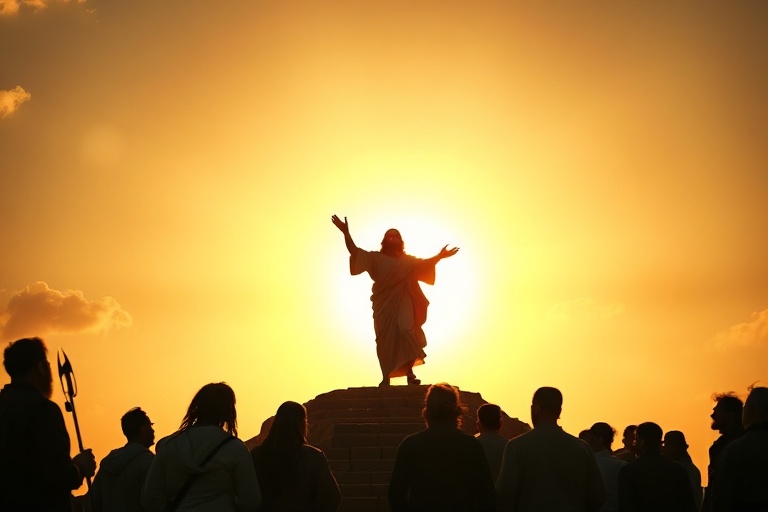
Ascension Day: History, Meaning, and Modern Observances
The observance of Ascension Day holds deep significance in Christian tradition, marking a pivotal moment in the life of Jesus Christ. Celebrated 40 days after Easter Sunday, this holy day commemorates the moment when Jesus ascended into heaven, as described in the New Testament. While its religious roots remain central, Ascension Day has also evolved into a day of reflection and community gatherings for many.
The Biblical Foundation of Ascension Day
Ascension Day traces its origins to the New Testament accounts of Jesus’ final days on Earth. According to the Gospel of Luke and the Acts of the Apostles, Jesus spent 40 days after His resurrection appearing to His disciples, teaching them about the Kingdom of God. The ascension itself is described in Acts 1:9:
“After he said this, he was taken up before their very eyes, and a cloud hid him from their sight.”
This event is not merely a conclusion to Jesus’ earthly ministry but a transition point that underscores His divine authority and the promise of the Holy Spirit’s coming at Pentecost. The 40-day period between Easter and Ascension Day mirrors other significant biblical timelines, such as the flood in Genesis or Moses’ time on Mount Sinai, reinforcing its theological weight.
Regional Variations in Observance
While Ascension Day is universally recognized in Christian liturgical calendars, its observance varies across denominations and cultures. In Western Christianity, particularly within Catholic and Protestant traditions, it is a Holy Day of Obligation, meaning Catholics are required to attend Mass. In Eastern Orthodox churches, the feast is known as the Feast of the Ascension and is celebrated with particular solemnity, often including processions and the blessing of fields.
In some European countries, Ascension Day has taken on additional cultural meanings. For example:
- Netherlands: The day is marked by public holidays and is traditionally a time for family outings, cycling trips, and outdoor festivals. Some communities hold kite-flying competitions, symbolizing the ascent to heaven.
- Germany: Known as “Christi Himmelfahrt,” it is a public holiday in most states. In Bavaria, it coincides with Father’s Day, where groups of men embark on hiking trips often accompanied by beer and traditional foods.
- France: The day is observed with religious services, but it also marks the beginning of the “Ascension Bridge” (Pont de l’Ascension), a long weekend that many use for short vacations.
Ascension Day in Contemporary Context
In an increasingly secular world, Ascension Day’s religious observance has diminished in some regions, yet it remains a culturally significant date. For many communities, particularly in Europe, the day retains its status as a public holiday, allowing families to gather and participate in local traditions. In countries where it is not a public holiday, such as the United States, observance is primarily confined to churches, with services often scheduled on the following Sunday to accommodate working schedules.
Theological discussions around Ascension Day have also evolved. Modern scholars often emphasize its connection to Christ’s ongoing presence in the world through the Church. Pope Francis, in a 2018 homily, described the ascension as “the culmination of Jesus’ mission on Earth” but also a reminder that “the Church is called to continue Christ’s work in the world.” This perspective shifts the focus from a purely historical event to an ongoing spiritual reality.
Theological Significance and Modern Relevance
Ascension Day carries several key theological themes that remain relevant today. First, it affirms Jesus’ divine authority and His role as the mediator between God and humanity. The ascension is not just an ending but a transition that paves the way for the Holy Spirit’s descent at Pentecost, which empowers the early Church to spread the Gospel.
Second, the ascension underscores the hope of eternal life. For believers, it serves as a reminder that earthly life is not the ultimate reality; rather, there is a heavenly hope that transcends temporal struggles. This message resonates particularly in times of crisis or uncertainty, offering a framework for understanding suffering and loss.
Finally, the ascension challenges the Church to action. As Jesus departs physically, He commissions His followers to be His witnesses “to the ends of the earth” (Acts 1:8). This call to mission remains central to Christian identity, inspiring both local outreach and global missions.
Practical Ways to Observe Ascension Day
For those looking to observe Ascension Day in a meaningful way, there are several traditions and practices to consider, whether within a religious context or as a personal reflection.
- Attend a Church Service: Many churches hold special services on Ascension Day, featuring readings from Acts 1, hymns about Christ’s ascension, and sermons on its theological significance. Check local listings for Catholic, Orthodox, or Protestant services.
- Read and Reflect: Spend time reading the accounts of Jesus’ ascension in Luke 24:50-53 and Acts 1:6-11. Consider journaling about what this event means for your faith or personal journey.
- Engage in Acts of Service: Emulate the early Church’s mission by serving others. This could involve volunteering, donating to a charity, or simply reaching out to someone in need.
- Family and Community Gatherings: If Ascension Day is a public holiday in your area, use the time to connect with loved ones. Host a meal, organize a nature walk, or participate in local festivities.
- Symbolic Acts: Some traditions include symbolic acts such as planting a tree or flying a kite to represent the ascent to heaven. These gestures can serve as tangible reminders of the day’s spiritual themes.
For those interested in exploring Christian traditions further, Dave’s Locker Culture offers articles on religious observances and their cultural intersections. Additionally, Dave’s Locker History provides deeper context on how Christian holidays have evolved over time.
Conclusion: A Day of Transition and Hope
Ascension Day stands as a bridge between the resurrection of Jesus and the birth of the Church. It is a day that invites reflection on divine authority, eternal hope, and the call to mission. While its observance may look different across cultures and traditions, its core message remains a source of inspiration for millions.
In a world often marked by division and uncertainty, the themes of Ascension Day—ascension, authority, and mission—offer a counter-narrative of hope and purpose. Whether observed through religious services, family gatherings, or personal reflection, the day challenges individuals to look beyond the immediate and embrace a broader vision of faith and community.
As societies continue to evolve, Ascension Day reminds us that some traditions endure because they speak to timeless truths. It is not merely a historical event but a living reality that continues to shape the lives of believers and communities around the world.