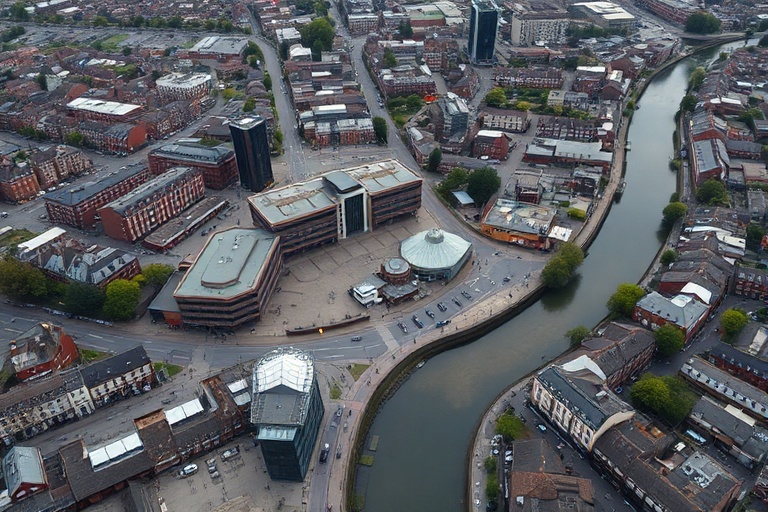
Bury Metropolitan Borough Council, like many local authorities across the UK, is grappling with a perfect storm of financial constraints and housing shortages. The council’s recent struggles reflect broader systemic issues that threaten the stability of communities in Greater Manchester. While Bury’s problems are not unique, they highlight the urgent need for reform in how local governments manage resources and deliver essential services.
The Financial Freefall: How Did Bury Council Reach This Point?
Bury Council’s financial woes have been years in the making. Years of austerity measures, reduced central government funding, and increased demand for services have left the council in a precarious position. In 2023, Bury Council announced a £12.5 million budget gap, forcing it to implement drastic cost-cutting measures. These included redundancies, service reductions, and delays in infrastructure projects.
One of the most controversial decisions was the proposed closure of several public libraries and leisure centers. Residents protested, arguing that these cuts disproportionately affect vulnerable populations. The council defended its actions, citing the need to prioritize statutory services like social care and waste collection. Yet, critics contend that the council has failed to explore alternative revenue streams or lobby effectively for additional funding.
The financial strain is not merely a local issue. Local authorities across England are facing similar pressures, as revealed by a 2023 government report. The report highlights a 30% reduction in central government grants to local councils since 2010, exacerbating the funding crisis. Bury Council’s situation, therefore, is a microcosm of a national problem.
Key Factors Contributing to Bury’s Financial Crisis
- Austerity policies: Years of reduced funding from Westminster have left councils with fewer resources to address growing needs.
- Increased demand for services: An aging population and rising poverty levels have stretched social care and housing services to their limits.
- Inefficient resource allocation: Critics argue that Bury Council has been slow to adapt to changing financial landscapes, relying too heavily on outdated funding models.
- Political gridlock: Disputes between local leaders and central government have delayed critical funding agreements.
The Housing Crisis: A Growing Divide in Bury
Bury’s housing crisis has reached alarming levels, with homelessness rates climbing and affordable housing becoming increasingly scarce. The council’s own data shows a 40% increase in homelessness applications over the past five years. Meanwhile, the average house price in Bury has risen by 25% since 2020, pricing out many first-time buyers.
One of the most pressing issues is the lack of social housing. Bury Council has long relied on private developers to build affordable homes, but these efforts have fallen short. Many new developments are priced beyond the reach of low-income families, leaving a critical gap in the housing market. The council’s recent Housing Strategy 2024 aims to address this by increasing the supply of council housing and introducing stricter affordability criteria for new developments. However, progress has been slow, and the backlog of applicants for social housing continues to grow.
The housing crisis is not just a Bury problem—it’s a regional and national issue. Manchester’s surrounding boroughs are also struggling with similar challenges, as demand for housing outpaces supply. The Greater Manchester Combined Authority has acknowledged the problem, pledging to build 30,000 new homes by 2038. Yet, without significant investment and policy changes, these targets may remain out of reach.
Public Backlash and Political Fallout
Bury Council’s handling of its financial and housing crises has drawn sharp criticism from residents, activists, and opposition politicians. Protests have erupted over the proposed closure of public facilities, with some activists accusing the council of prioritizing short-term savings over long-term community well-being. Meanwhile, local councillors from opposition parties have called for greater transparency and accountability, alleging that the council’s leadership has failed to engage adequately with residents.
In response, Bury Council has launched public consultations and community engagement initiatives. However, many residents remain skeptical, citing a history of broken promises and delayed responses. The council’s Labour-led administration has defended its decisions, arguing that difficult choices are necessary to avoid bankruptcy. Yet, the political fallout is undeniable—public trust in local government is eroding.
This erosion of trust is not unique to Bury. Across the UK, local councils are facing declining confidence, as highlighted by a IPPR report. The report found that only 34% of respondents trust their local council to make the right decisions, down from 42% in 2019. The report attributes this decline to a combination of financial mismanagement, poor communication, and a lack of tangible improvements in key services.
What’s Next for Bury Council?
The road ahead for Bury Council is fraught with challenges, but there are potential pathways to recovery. One immediate priority must be securing additional funding. This could involve lobbying central government for increased grants, exploring public-private partnerships, or applying for specialized funding programs aimed at addressing housing and social care needs.
Another critical step is reforming the council’s approach to financial management. This could include adopting more flexible budgeting practices, investing in digital transformation to improve efficiency, and fostering greater collaboration with neighboring authorities to share resources and best practices.
On the housing front, Bury Council must accelerate its efforts to increase the supply of affordable homes. This could involve revisiting its planning policies to incentivize developers to build more low-cost housing, as well as exploring innovative solutions like modular construction and community land trusts.
Finally, the council must rebuild public trust through transparency and engagement. This means not only listening to residents’ concerns but also demonstrating tangible progress in addressing the issues that matter most to them. Regular updates on financial recovery efforts and housing projects could go a long way toward restoring confidence.
Potential Solutions for Bury Council
- Secure additional funding: Lobby for increased central government grants, explore public-private partnerships, and apply for specialized funding programs.
- Reform financial management: Adopt flexible budgeting practices, invest in digital transformation, and collaborate with neighboring authorities to share resources.
- Accelerate affordable housing projects: Revisit planning policies to incentivize low-cost housing, explore modular construction, and support community land trusts.
- Rebuild public trust: Increase transparency through regular updates, engage residents in decision-making processes, and deliver tangible improvements in key services.
Bury Council’s struggles are a stark reminder of the pressures facing local governments in an era of austerity and rising demand. While the challenges are significant, they are not insurmountable. With strategic planning, political will, and community collaboration, Bury Council can navigate its way back to stability. The question remains: Will it rise to the occasion, or will the crisis deepen?
For now, residents are watching closely, hoping for meaningful change rather than more empty promises.
Explore More on Dave’s Locker
To learn more about local government challenges and solutions, visit our News and Analysis sections.