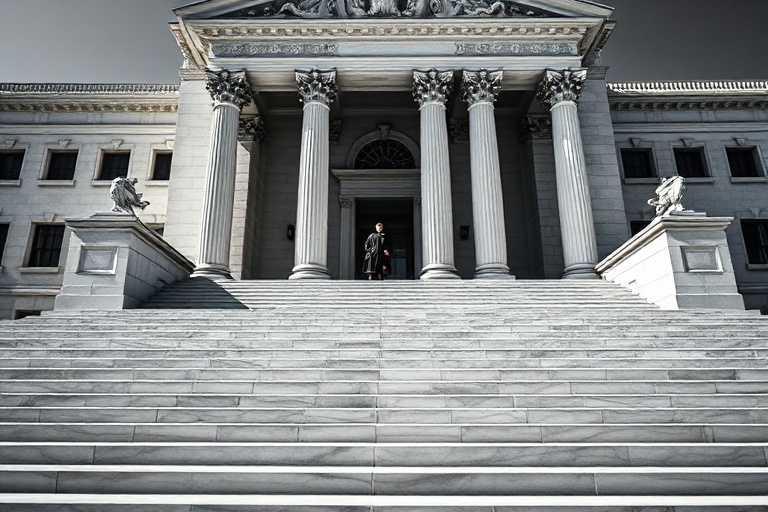
Virginia Supreme Court: Power, Rulings, and Legal Impact Explained
The Virginia Supreme Court stands as the highest tribunal in the Commonwealth, wielding significant influence over the state’s legal landscape. Established in 1779, it is one of the oldest appellate courts in the United States, with a history deeply intertwined with Virginia’s political and social development. Unlike federal courts, the Virginia Supreme Court operates under the state constitution, shaping everything from criminal justice to civil rights through its rulings. Its decisions often set precedents that resonate far beyond Virginia’s borders, making it a critical institution in American jurisprudence.
With a docket that includes constitutional questions, high-stakes civil appeals, and criminal cases, the court’s role extends beyond mere dispute resolution. It serves as a guardian of legal consistency, ensuring that lower courts apply state laws uniformly. For legal professionals, policymakers, and citizens alike, understanding the court’s structure, authority, and recent rulings provides insight into the trajectory of Virginia’s legal system. This article explores the court’s composition, its key functions, and the implications of its most consequential decisions.
The Structure and Jurisdiction of the Virginia Supreme Court
The Virginia Supreme Court consists of seven justices, including a chief justice who presides over the court. Justices are appointed by the General Assembly and serve 12-year terms, a system designed to insulate them from political pressures. The court’s jurisdiction is primarily appellate, meaning it reviews decisions from lower courts rather than trying cases de novo. Its authority covers a broad range of legal matters, though it does not have the power to rule on federal constitutional issues—a domain reserved for the U.S. Supreme Court.
Key areas under the court’s purview include:
- Criminal appeals: The court hears appeals from convictions in felony cases, including capital punishment sentences. Its rulings can affirm, reverse, or remand cases for retrial.
- Civil disputes: High-value contracts, property rights, and tort claims often reach the court when lower courts issue conflicting interpretations of state law.
- Administrative law: The court reviews decisions from state agencies, ensuring that regulations are applied fairly and within the bounds of legislative intent.
- Bar disciplinary actions: The court oversees ethical violations by attorneys, a role that underscores its commitment to maintaining professional standards.
Unlike trial courts, the Virginia Supreme Court does not hear witness testimony or admit new evidence. Instead, it focuses on legal arguments presented by attorneys, examining whether lower courts erred in their application of the law. This appellate nature emphasizes the court’s role as a final arbiter of legal interpretation rather than a fact-finder.
Recent Landmark Rulings and Their Legal Ripples
In recent years, the Virginia Supreme Court has issued several rulings that have reshaped state law and sparked national conversations. One of the most consequential cases involved In re: Lee (2022), which addressed the constitutionality of a state law permitting the use of electronic monitoring for certain offenders. The court upheld the law but imposed stricter guidelines on its implementation, balancing public safety with individual privacy rights. The decision drew attention from legal scholars and advocacy groups, who viewed it as a compromise between reformist and conservative perspectives.
Another pivotal ruling came in Fairfax County School Board v. Doe (2023), where the court clarified the limits of local governments’ authority to regulate speech in public schools. The case arose after a school board attempted to ban certain books deemed controversial. The justices ruled that such decisions must align with the First Amendment, reinforcing the principle that censorship cannot be justified by subjective moral or political concerns. This decision has been cited in similar cases across the country, highlighting Virginia’s role in shaping free speech jurisprudence.
The court also tackled a contentious issue in Commonwealth v. Jones (2021), which examined the admissibility of digital evidence in criminal trials. The case centered on whether law enforcement could access a defendant’s smartwatch data without a warrant. The court ruled that such access constitutes a search under the Fourth Amendment, requiring probable cause. This decision has had a ripple effect in other states, prompting lawmakers to re-examine privacy protections in the digital age.
The Court’s Role in Shaping Virginia’s Legal and Political Landscape
The Virginia Supreme Court does not operate in a vacuum; its rulings often reflect and influence the state’s broader legal and political climate. For instance, the court’s decisions on redistricting and voting rights have intersected with ongoing debates about gerrymandering and electoral fairness. In League of Women Voters v. Virginia State Board of Elections (2020), the court struck down a redistricting plan that critics argued diluted minority voting power. The ruling forced lawmakers to redraw district maps, a process that remains politically fraught.
The court’s composition also plays a critical role in its direction. Governors and the General Assembly have historically appointed justices with distinct judicial philosophies, from strict textualists to more pragmatic interpreters. This diversity ensures that the court considers a range of perspectives, though it can also lead to sharp divisions in closely watched cases. For example, the 2023 decision in Martin v. Virginia Department of Transportation split the court 4-3, with the majority emphasizing judicial restraint while the dissent argued for a more expansive interpretation of state constitutional protections.
Beyond its legal duties, the court engages in public outreach to demystify its work. Programs like the Justice for a Day initiative allow high school students to observe oral arguments, fostering civic education. The court also publishes annual reports detailing its caseload and outcomes, providing transparency for legal practitioners and the public. This commitment to openness is particularly important given the court’s power to shape the lives of Virginians in profound ways.
Challenges and Controversies Facing the Virginia Supreme Court
Despite its storied history, the Virginia Supreme Court faces modern challenges that test its resilience and relevance. One persistent issue is the perception of bias, particularly in cases involving partisan interests. For example, critics have questioned whether the court’s rulings in election-related cases favor the party in power. While the court has taken steps to address these concerns—such as adopting a code of judicial conduct—skepticism persists among advocacy groups and political observers.
Another challenge is the court’s growing backlog of cases. In 2023, the court received over 2,000 filings, a number that has steadily increased in recent years. This surge has raised concerns about delays in justice, particularly for criminal defendants awaiting appeals. The court has responded by streamlining its procedures and increasing the use of technology, but the backlog remains a pressing issue. Some legal experts argue that the solution may require legislative action, such as expanding the court’s size or providing additional resources to the judiciary.
Controversy has also arisen over the court’s role in interpreting the Virginia Constitution. Unlike the U.S. Constitution, the state’s founding document includes provisions that are more expansive in areas like education and environmental rights. Some justices have argued for a more dynamic interpretation of these provisions, while others advocate for a strict textual approach. This debate reflects broader national conversations about the proper role of state courts in safeguarding civil liberties.
Why the Virginia Supreme Court Matters Beyond State Lines
The Virginia Supreme Court’s influence extends beyond the Commonwealth, serving as a bellwether for legal trends across the nation. Its rulings on issues like digital privacy, free speech, and election law often resonate in other state courts, particularly those grappling with similar challenges. For instance, the court’s decision in Commonwealth v. Jones has been cited in cases from California to Massachusetts, where judges have cited it to justify stricter warrant requirements for digital evidence.
The court’s approach to constitutional interpretation also offers a model for states seeking to balance tradition with innovation. Virginia’s blend of historic precedent and forward-looking jurisprudence provides a template for how courts can adapt to modern realities without abandoning foundational principles. Legal scholars and policymakers from across the country frequently study the court’s decisions, particularly those that address emerging technologies or shifting social norms.
For those interested in exploring Virginia’s legal landscape further, resources like Dave’s Locker News and Law & Justice sections offer in-depth coverage of the court’s work and its broader implications. Whether you’re a legal professional, a student, or simply a curious citizen, understanding the Virginia Supreme Court is essential to grasping the forces shaping justice in America today.
Conclusion
The Virginia Supreme Court remains a cornerstone of the state’s legal system, its decisions echoing through courtrooms and legislative chambers far beyond Richmond. From its historic roots to its modern challenges, the court embodies the tension between tradition and progress, stability and change. Its rulings on everything from digital privacy to voting rights underscore the court’s pivotal role in defining the boundaries of justice in Virginia and beyond.
As the court navigates an era of rapid technological and social transformation, its ability to uphold the rule of law while adapting to new realities will be tested. For now, it stands as a testament to the enduring power of the judiciary—a reminder that the principles of fairness, equity, and constitutional fidelity are not relics of the past but living commitments for the future.