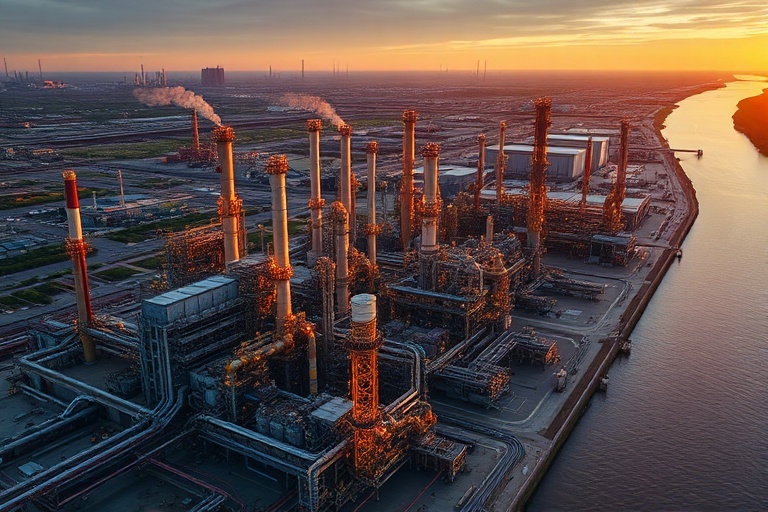
Long operating as a key player in the Gulf Coast’s energy landscape, the Chalmette Refinery has shaped local industry while sparking ongoing debates about its environmental impact. Situated just east of New Orleans in St. Bernard Parish, the facility has been a cornerstone of regional employment and fuel production for decades. Its presence reflects broader tensions between economic necessity and ecological responsibility that define energy conversations in Louisiana.
The Refinery’s History and Industrial Significance
The Chalmette Refinery traces its origins to 1909, when Standard Oil of New Jersey—later known as ExxonMobil—established the facility. Over the years, it evolved into one of the largest and most sophisticated refineries in the United States, with a processing capacity exceeding 130,000 barrels of crude oil per day. This scale has made it a vital contributor to national fuel supplies, particularly during periods of high demand or supply disruption.
Its location in the Mississippi River industrial corridor offers strategic advantages. The refinery benefits from proximity to shipping lanes, pipelines, and a skilled labor force drawn from the surrounding Gulf Coast region. This infrastructure has helped maintain operational efficiency and cost competitiveness, reinforcing the refinery’s role in supporting regional and national energy security.
Key Milestones in the Refinery’s Development
- 1909: Standard Oil of New Jersey opens the refinery in Chalmette, Louisiana.
- 1980s: The facility undergoes modernization to improve efficiency and reduce emissions.
- 2005: Hurricane Katrina causes significant damage, halting operations temporarily.
- 2015: PBF Energy acquires the refinery, investing over $1 billion in upgrades.
- 2020: The refinery announces plans to convert to renewable diesel production.
Economic Impact on the Greater New Orleans Area
The Chalmette Refinery is more than an industrial site—it’s an economic anchor for St. Bernard Parish and the New Orleans metropolitan area. At peak operation, it employs over 600 workers directly, with thousands more jobs supported indirectly through supply chains, transportation, and local businesses. Payrolls from the refinery contribute millions annually to the regional economy, supporting schools, healthcare, and public services.
Beyond direct employment, the facility stimulates commerce in surrounding communities. Local vendors provide maintenance, logistics, and safety services, while nearby ports and rail terminals benefit from increased shipping activity. The refinery also contributes substantially to parish tax revenues, funding essential infrastructure and community programs.
“Refineries like Chalmette are economic lifelines in Louisiana,” said a local economist. “They don’t just refine oil—they refine prosperity for entire communities.”
However, the refinery’s economic benefits are not without trade-offs. While it provides high-wage jobs, many positions require specialized training, limiting accessibility for some residents. Additionally, the cyclical nature of the energy industry means employment levels can fluctuate with oil prices and market demand.
Environmental Record and Regulatory Scrutiny
The Chalmette Refinery has faced persistent scrutiny over its environmental practices. Like many large-scale refineries, it operates under a complex web of federal, state, and local regulations designed to control emissions, wastewater discharge, and hazardous waste. Over the years, it has been cited for multiple violations, including excess emissions during startup and shutdown procedures, and releases of volatile organic compounds.
In 2021, the U.S. Environmental Protection Agency (EPA) fined the refinery $1 million for Clean Air Act violations dating back to 2015. The settlement required upgrades to pollution control systems and stricter monitoring protocols. These incidents highlight ongoing challenges in balancing industrial output with environmental stewardship.
Notable Environmental Incidents
- 2010: Refinery linked to elevated benzene levels in nearby residential areas; residents reported health symptoms.
- 2017: Flare malfunction causes visible smoke plume, prompting community complaints and state investigation.
- 2020: Chemical spill into stormwater system detected; cleanup efforts initiated within 48 hours.
- 2022: EPA identifies excess sulfur dioxide emissions during routine inspections.
Community advocacy groups have long demanded greater transparency and stronger enforcement. Organizations like the Louisiana Bucket Brigade have installed air quality monitors near the refinery, sharing real-time data with residents to document pollution trends. These efforts have increased public awareness and pressured regulators to act.
Modernization and the Shift Toward Renewables
In a notable pivot, PBF Energy—the current owner—has begun transforming the Chalmette Refinery into a hybrid facility capable of producing both traditional fuels and renewable diesel. This transition aligns with broader industry trends as companies seek to reduce carbon footprints and comply with state and federal climate goals.
The $1 billion modernization project includes installing hydrogenation units and feedstock pretreatment systems designed to process renewable feedstocks like soybean oil and animal fats. Once fully operational, the facility could produce up to 12,000 barrels per day of renewable diesel, significantly lowering lifecycle greenhouse gas emissions compared to petroleum-based fuels.
This shift reflects a strategic response to market pressures and regulatory expectations. California’s Low Carbon Fuel Standard and federal renewable fuel mandates have created financial incentives for refiners to diversify. By investing early, PBF aims to secure a competitive advantage while maintaining operational relevance in a changing energy landscape.
Challenges in the Renewable Transition
- Feedstock Availability: Sourcing sufficient volumes of sustainable feedstocks at competitive prices remains a challenge.
- Infrastructure Upgrades: Retrofitting existing units for dual operation requires significant engineering and capital.
- Regulatory Uncertainty: Evolving policies at state and federal levels create risk for long-term planning.
- Community Acceptance: Some residents remain skeptical about the refinery’s commitment to reducing pollution.
Despite these hurdles, the transition represents a potential model for other aging refineries seeking to remain viable in a decarbonizing economy. Success could redefine the Chalmette Refinery’s legacy—not just as a polluter, but as a bridge between fossil-based and sustainable energy systems.
Looking Ahead: The Future of Chalmette Refinery
The Chalmette Refinery stands at a crossroads. With its renewable diesel initiative underway and regulatory compliance under increased scrutiny, its next decade will likely determine whether it can reconcile industrial legacy with environmental responsibility. The outcome will influence not only St. Bernard Parish but also similar communities across the Gulf Coast grappling with the energy transition.
For local leaders, the refinery remains a double-edged sword—essential to economic stability yet entangled in environmental controversies. Meanwhile, residents continue to voice concerns about air quality and public health, demanding stronger protections and accountability.
PBF Energy’s commitment to modernization offers cautious optimism. If successful, the refinery could demonstrate how traditional industrial sites can adapt, survive, and even lead in a cleaner energy future. Yet the path forward is uncertain, and the stakes remain high for both the environment and the economy.
One thing is clear: the story of the Chalmette Refinery is far from over. As global energy systems evolve, so too will the challenges and opportunities facing this iconic facility.
For more on energy and industrial developments in the Gulf Coast, visit our News and Business & Energy sections.