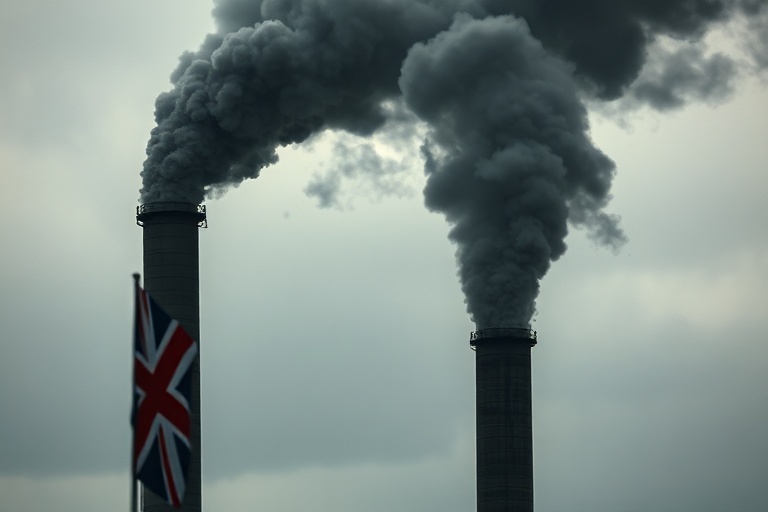
China’s Warning Over British Steel Nationalization Exposes Global Risks
In a rare public intervention, China’s state-owned steel giant Baowu Group has issued a stark warning about the potential nationalization of British Steel, a move that could reshape global steel markets and rekindle debates over strategic industrial control. The warning, delivered through official channels and industry briefings, signals Beijing’s unease over the UK government’s growing scrutiny of foreign investment in critical infrastructure. While British Steel remains a relatively small player in the global market, its strategic location and historical significance make it a symbol of broader geopolitical tensions.
The Origins of British Steel’s Crisis
British Steel has faced financial instability for years, driven by volatile raw material costs, intense competition from Chinese producers, and inconsistent domestic demand. The company’s troubles intensified in 2019 when it entered a form of state-backed administration after failing to secure private financing. A consortium led by investment firm Greybull Capital took over operations, but the company continued to hemorrhage cash. By 2021, British Steel was placed into a company voluntary arrangement (CVA), a move that allowed it to restructure debts while continuing production.
Yet even this rescue effort proved insufficient. In 2023, British Steel was acquired by Jingye Group, a Chinese steelmaker with close ties to the Chinese government. The acquisition was hailed as a lifeline, injecting capital and stabilizing operations. However, the deal also placed British Steel under foreign ownership at a time when Western governments are increasingly wary of Chinese influence over strategic industries.
Key Factors Behind the Nationalization Warning
The warning from Baowu Group—reported by multiple industry insiders and corroborated by financial analysts—stems from several converging pressures:
- Geopolitical Tensions: Relations between the UK and China have deteriorated over issues including human rights, espionage concerns, and the UK’s alignment with U.S. export controls targeting Chinese technology firms.
- Supply Chain Vulnerabilities: Steel is a foundational material for defense, infrastructure, and manufacturing. Governments are increasingly reluctant to rely on foreign-controlled suppliers for critical inputs.
- Domestic Political Pressure: The UK government, facing calls from both Labour and Conservative MPs, has signaled it may intervene to protect domestic production capacity, particularly in regions like Scunthorpe, where British Steel operates a major plant.
- Precedent Setting: The nationalization of British Steel could set a precedent for other foreign-owned firms operating in the UK, especially in energy, defense, and technology sectors.
What Nationalization Would Mean for Global Steel Markets
If the UK government moves to nationalize British Steel, the immediate impact would ripple across the steel industry and beyond. Steel prices, already volatile due to fluctuating demand in construction and automotive sectors, could spike due to supply uncertainty. The UK’s steel industry, though diminished from its peak, still supports tens of thousands of jobs and contributes billions to GDP. A forced takeover would likely trigger legal challenges from Jingye Group, potentially leading to prolonged disputes in international arbitration courts.
On the global stage, the move would be interpreted as a protectionist signal, potentially prompting retaliatory measures from China. Beijing has already shown willingness to use economic leverage in disputes with Australia, Canada, and the EU. A nationalization could accelerate decoupling trends, as Western firms reconsider partnerships with Chinese state-linked entities.
For European steelmakers, already struggling with overcapacity and Chinese dumping practices, the nationalization could offer a temporary competitive advantage—if British Steel’s output is prioritized for domestic use. However, it could also trigger a subsidy race, with governments across Europe potentially increasing state support for their own steel sectors to prevent similar crises.
Broader Implications: Industrial Policy in an Era of Strategic Competition
The British Steel case is not an isolated incident. It reflects a larger shift in how governments view industrial ownership in sectors deemed vital to national security. The United States, under the Biden administration, has expanded the powers of the Committee on Foreign Investment in the United States (CFIUS) to block or unwind foreign acquisitions in semiconductors, AI, and biotech. The EU has introduced the Foreign Subsidies Regulation, allowing it to investigate and penalize companies that benefit from unfair state backing abroad.
In the UK, the National Security and Investment Act (2021) grants the government sweeping powers to block or impose conditions on foreign investments in 17 sensitive sectors, including advanced manufacturing and critical infrastructure. British Steel falls under this remit, and the government has already intervened in other cases, such as the attempted takeover of Newport Wafer Fab by a Chinese investor.
Yet the challenge lies in balancing national security with economic pragmatism. Steel is a globalized industry, with supply chains stretching across continents. While nationalization may secure jobs and production in the short term, it risks isolating the UK further in a world where trade barriers are rising. It also raises questions about the long-term viability of state ownership in a sector that requires constant investment and innovation—something historically weak in publicly run enterprises.
Looking Ahead: Possible Outcomes and Next Steps
As of now, the UK government has not confirmed whether it intends to nationalize British Steel. However, several scenarios are plausible:
- Compulsory Purchase with Compensation: The government could invoke its powers under the National Security and Investment Act to acquire British Steel, offering fair market value to Jingye Group. This would avoid outright expropriation while achieving strategic control.
- Public-Private Partnership: A new consortium involving UK-based investors and pension funds could take a majority stake, with the government providing loan guarantees or subsidies to stabilize operations.
- Forced Restructuring: British Steel could be broken up, with core assets sold to domestic buyers while non-core operations are wound down or sold off.
- Status Quo with Conditions: The government could allow Jingye to retain ownership but impose strict conditions on output, pricing, and technology transfers to mitigate national security risks.
Regardless of the path chosen, the decision will have consequences far beyond Scunthorpe. It will test the UK’s commitment to open markets amid rising protectionism. It will influence how China perceives the reliability of Western investment environments. And it will shape the future of global steel trade, already strained by overcapacity and geopolitical rivalry.
For workers, communities, and industries dependent on steel, the uncertainty is palpable. But the broader lesson is clear: in an era where supply chains are weaponized and industrial policy is increasingly politicized, no company—no matter its size—is immune to the winds of geopolitical change.
Conclusion: A Test for Industrial Sovereignty
The British Steel saga underscores a fundamental truth about the 21st-century economy: control over critical industries is no longer just an economic issue—it’s a geopolitical imperative. As governments reassess the balance between open markets and strategic autonomy, cases like British Steel will become more common. The question is not whether governments will intervene, but how they will do so without triggering a spiral of protectionism that harms everyone in the long run.
For now, all eyes are on London. The decision over British Steel will send a signal to Beijing, Brussels, and Washington alike. It will also determine whether the UK can carve out a third way—neither fully aligned with Western allies nor subservient to Chinese influence—in a world where economic power is increasingly wielded like a statecraft tool.
One thing is certain: the steel industry, once the backbone of industrial nations, is now at the heart of a new kind of economic conflict. And British Steel is just the beginning.
For deeper analysis on global industrial policies and their geopolitical impacts, visit our News and Analysis sections.