Croydon Council Elections 2026: Key Issues and Predictions
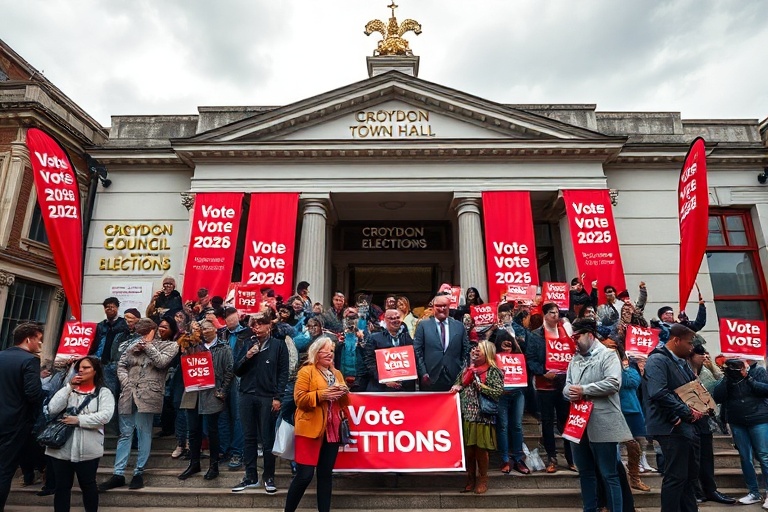
Croydon Council Elections 2026: A Preview of the Political Landscape
The Croydon Council elections of 2026 are shaping up to be one of the most closely watched local contests in the United Kingdom. As the borough continues to evolve—balancing economic recovery, housing pressures, and shifting demographics—the vote will serve as a microcosm of broader national trends in local governance. With London’s political dynamics under intense scrutiny, Croydon’s election could influence how other urban areas address similar challenges.
Local elections often reflect wider discontent or approval with national policies. In Croydon, where Labour currently holds a majority, the 2026 vote will test the party’s ability to maintain support amid rising living costs and public service demands. Meanwhile, the Conservatives, despite recent setbacks, are expected to mount a vigorous challenge, while smaller parties like the Greens and Liberal Democrats aim to capitalize on local issues.
The Key Issues Shaping the Campaign
Several pressing concerns dominate discussions ahead of the 2026 elections. Housing remains a critical issue, with demand for affordable accommodation far outstripping supply. The borough’s diverse population—home to one of London’s largest communities of Caribbean heritage—also brings unique cultural and economic priorities to the forefront. Public transport, youth unemployment, and the future of Croydon’s town centre, which has struggled since the decline of major retail chains, are equally vital.
Environmental policy has become a growing focus. Croydon’s younger voters, in particular, are pushing for stronger climate action, aligning with global movements like Extinction Rebellion. The council’s response to air quality, green spaces, and sustainable development will likely feature prominently in campaign rhetoric. Meanwhile, economic recovery post-pandemic remains uneven, with some areas thriving while others face persistent deprivation.
Safety and policing also loom large. Recent crime statistics have sparked debates over police visibility and community trust. The council’s role in funding youth services and mental health initiatives could become a pivotal point of contention.
Party Strategies and Candidate Profiles
Labour’s incumbency gives it a structural advantage, but that does not guarantee an easy path to victory. The party has emphasized its track record in education and social services, areas where it claims measurable progress. However, critics argue that bureaucratic inefficiencies have slowed delivery. The Conservatives, led by a new slate of candidates, are positioning themselves as champions of business growth and fiscal responsibility, targeting suburban and outer-borough voters.
The Liberal Democrats are focusing on localism, advocating for greater community involvement in decision-making. Their campaign is likely to resonate with residents disillusioned by top-down governance. The Green Party, meanwhile, is pushing for radical environmental reform, appealing to environmentally conscious voters across the borough.
Independent candidates are also making inroads, particularly in wards with strong community identities. These candidates often highlight hyper-local concerns that mainstream parties overlook, such as preserving heritage sites or opposing large-scale developments.
How Croydon Reflects Broader UK Trends
Croydon’s election is not an isolated event. It mirrors challenges faced by other post-industrial towns across the UK, from Manchester to Sunderland. The decline of traditional retail and manufacturing has left many areas grappling with economic stagnation. Local elections in such places often become referendums on national economic policy, with voters punishing parties perceived as out of touch.
London’s role as a political bellwether adds another layer of significance. If Labour loses ground in Croydon, it could signal broader erosion of support in urban centres ahead of the next general election. Conversely, a strong Conservative showing might embolden the party to push harder in similar boroughs.
The rise of populist sentiment across Europe and the US also casts a shadow over Croydon’s contest. While the UK’s political landscape remains more moderate, the undercurrents of discontent are palpable. Parties that can channel local frustrations without resorting to divisive rhetoric may gain the upper hand.
What to Watch on Election Night
The 2026 Croydon Council elections will be decided across 24 wards, each with distinct demographics and priorities. Key battlegrounds include:
- Addiscombe and Shirley West: A mix of affluent and working-class voters, often swinging between parties.
- Fieldway and New Addington: Areas with high demand for social housing and public services.
- Sanderstead and Warlingham: Conservative strongholds where Brexit-era politics still resonate.
- Broad Green and South Norwood: Diverse communities where Labour’s multicultural appeal is tested.
Turnout will be critical. In recent years, local elections have seen participation rates below 40%, with younger and marginalized voters often staying home. Campaigns targeting these groups—through digital outreach and grassroots organizing—could tip the balance in tight races.
Exit polls and early results from these wards will provide the first clues about the night’s outcome. If Labour retains control but with a reduced majority, it may prompt a leadership review. A Conservative surge could embolden Reform UK, the right-wing challenger, to push for further inroads in London.
Conclusion: A Test for Local Democracy
The Croydon Council elections of 2026 are more than a local contest—they are a reflection of Britain’s evolving political and social fabric. The results will shape the borough’s trajectory for years to come, influencing everything from school funding to housing policy. Beyond Croydon, the election offers insights into how urban communities navigate economic uncertainty and cultural change.
For voters, the choice is clear but complex: stability versus reform, continuity versus disruption. As campaigns intensify, the people of Croydon will decide whether their council remains a bastion of Labour’s urban dominance or becomes a testing ground for new political ideas. One thing is certain—the outcome will reverberate far beyond the borough’s borders.
For those interested in the intersection of local and global politics, our Politics section offers deeper analysis on how these dynamics play out across the UK and beyond. Meanwhile, Culture examines how Croydon’s diverse communities shape its identity in an era of rapid change.