david attenborough for kids
David Attenborough isn’t just a name in documentaries—he’s a gateway to the wonders of the natural world for generations of viewers, including children. With his soothing voice, boundless curiosity, and unmatched storytelling, Attenborough has introduced millions of young minds to the mysteries of wildlife, ecosystems, and the delicate balance of life on Earth. For kids, his work isn’t just educational; it’s an invitation to explore, question, and marvel at the planet we call home.
Why Attenborough Resonates with Young Audiences
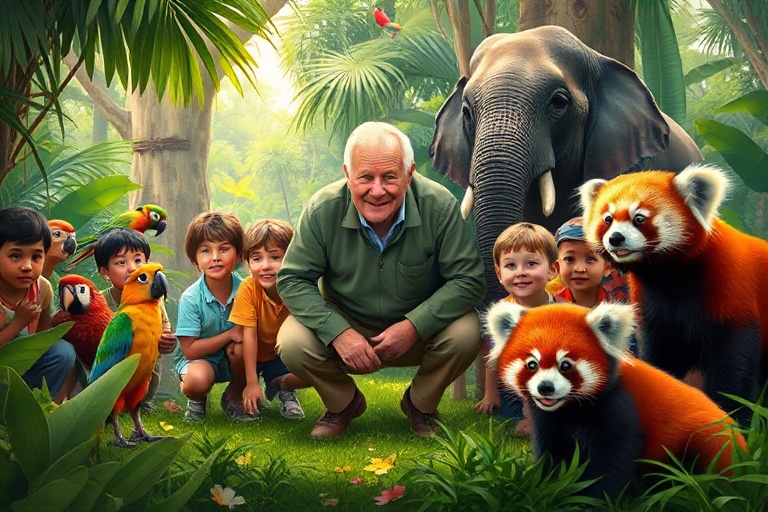
Attenborough’s appeal to children stems from his ability to make the unfamiliar feel intimate. Whether he’s crouching beside a gorilla family in Rwanda or narrating the life cycle of a butterfly in a British garden, his presence feels like that of a patient, enthusiastic guide. Kids don’t just learn facts from his documentaries—they develop a sense of wonder. His programs, such as Planet Earth and The Blue Planet, use stunning cinematography and relatable storytelling to turn science into adventure.
Research shows that early exposure to nature documentaries can foster environmental stewardship in children. Attenborough’s work doesn’t preach conservation; it simply shows the beauty of the natural world, leaving kids to draw their own conclusions about its importance. This approach aligns with educational theories that emphasize discovery over instruction, making his documentaries a perfect fit for curious young minds.
Key Traits That Make Attenborough Kid-Friendly
- Engaging Narration: His voice is calm yet engaging, making complex topics accessible without overwhelming listeners.
- Visual Storytelling: The sweeping landscapes and close-up shots of wildlife create a cinematic experience that captivates young viewers.
- Relatable Themes: Whether exploring deserts, oceans, or jungles, Attenborough connects each environment to a child’s sense of adventure.
- No Fear of Complexity: He doesn’t shy away from introducing scientific terms or ecological concepts, normalizing them as part of everyday learning.
Attenborough’s Most Kid-Friendly Documentaries
Not all of Attenborough’s work is suited for younger audiences, but several series stand out for their accessibility and excitement. These documentaries balance education and entertainment, making them ideal for family viewing.
For younger children, BBC’s Planet Dinosaur (2011) brings prehistoric creatures to life with dramatic reconstructions and a narrative style that feels like a grand adventure. Older kids will appreciate Blue Planet II (2017), which explores ocean depths with a mix of awe and scientific rigor. Meanwhile, Life in Cold Blood (2008) introduces the fascinating world of reptiles and amphibians, perfect for kids who love creatures that seem both alien and familiar.
These series share a common thread: they transform the natural world into a story, complete with heroes, villains, and unforgettable moments. For parents and educators, they serve as both entertainment and a tool for sparking conversations about science, conservation, and empathy for animals.
How Parents and Educators Can Use Attenborough’s Work
Incorporating Attenborough’s documentaries into a child’s learning routine doesn’t require a structured lesson plan. The key is to let the content inspire curiosity naturally. For example, watching Planet Earth II’s episode on cities can lead to discussions about urban wildlife, while The Green Planet (2022) might inspire a school project on plant life cycles.
For educators, Attenborough’s work offers a wealth of cross-curricular opportunities. Science teachers can use his narration to illustrate concepts like adaptation and ecosystems, while language arts classes might analyze his descriptive language. Even art teachers can draw inspiration from the vibrant imagery in his films.
Parents can take the learning further by pairing documentaries with hands-on activities. A trip to a local nature reserve after watching Our Planet (2019) can reinforce lessons about biodiversity. Similarly, a simple birdwatching session in the backyard becomes more meaningful when framed by Attenborough’s passion for the natural world.
Creating a Nature-Curious Generation
The broader implications of Attenborough’s influence on children extend beyond entertainment. In an age where screen time often replaces outdoor exploration, his documentaries serve as a bridge between digital and real-world experiences. Studies suggest that children who engage with nature-based media are more likely to develop a lifelong interest in conservation and outdoor activities.
Attenborough’s legacy also highlights the power of storytelling in education. His ability to weave scientific facts into compelling narratives demonstrates how learning can be both rigorous and fun. For kids, this means that science isn’t just a subject in school—it’s a story waiting to be told, with Attenborough as their guide.
“The question is, are we happy to suppose that our grandchildren may never be able to see an elephant except in a picture book?” — David Attenborough
This question, posed in The Living Planet (1984), underscores the urgency of environmental education. For today’s children, Attenborough’s work is more than a window into nature—it’s a call to action. By fostering a love for the natural world early on, his documentaries plant the seeds for future scientists, conservationists, and informed global citizens.
As streaming platforms continue to expand, Attenborough’s documentaries remain a staple for families seeking both education and entertainment. His voice has become synonymous with the magic of discovery, proving that the best stories aren’t just heard—they’re experienced.
For parents and educators looking to introduce children to the wonders of the natural world, Attenborough’s work offers a timeless starting point. It’s not just about watching a documentary; it’s about opening a door to a lifetime of curiosity and respect for the planet.
Explore more family-friendly content on Dave’s Locker Entertainment or dive deeper into educational resources on Dave’s Locker Education.