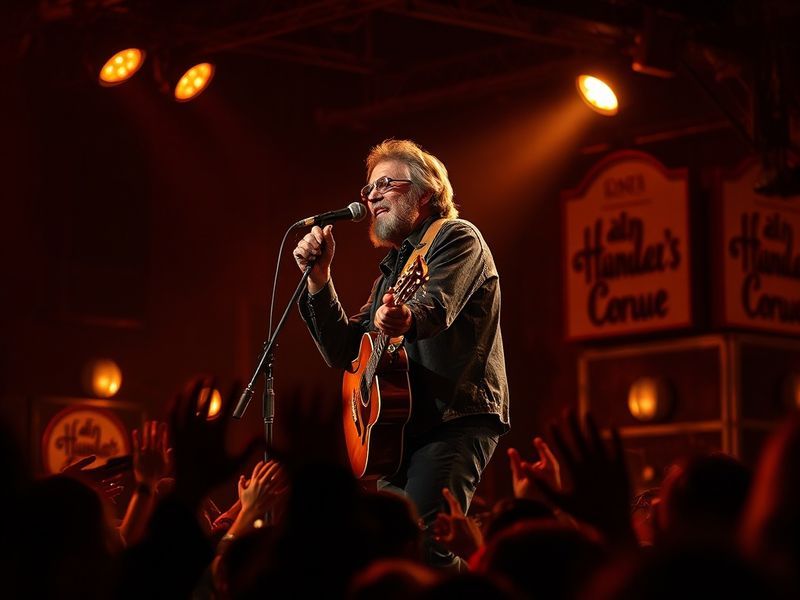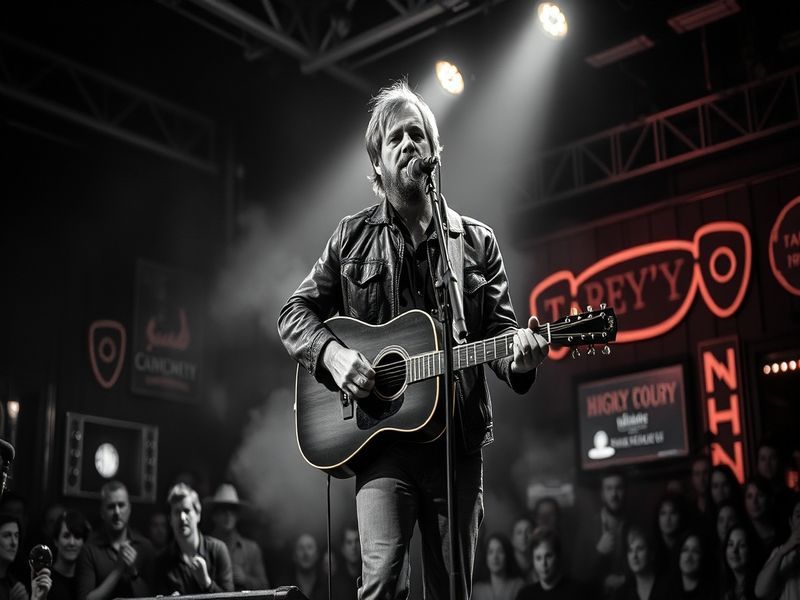
Sturgill Simpson’s career reads like a blueprint for artistic defiance in Nashville’s carefully constructed country music machine. With a gravel-voiced drawl and a willingness to dismantle genre conventions, Simpson has carved out a space where traditional country soul meets psychedelic experimentation. His music doesn’t just push boundaries—it erases them entirely, leaving behind a trail of confusion for industry gatekeepers and a devoted fanbase that spans far beyond the honky-tonk crowd.
Simpson’s rise wasn’t meteoric; it was deliberate, built on a foundation of raw talent, stubborn individualism, and an unshakable belief in his own vision. From his early days as a struggling songwriter to his Grammy-winning breakthrough, his journey reflects a rare authenticity in an era dominated by calculated trends and algorithm-driven hits.
From Bluegrass Roots to Genre-Bending Evolution
Born in Jackson, Kentucky, and raised in rural Ohio, Simpson’s musical roots trace back to bluegrass and Appalachian folk traditions. His early bands, like Sunday Valley and The Stray Grass, played the festival circuit with a sound rooted in tradition. But Simpson’s ambitions stretched beyond the confines of bluegrass’s nostalgic revivalism. By the time he released his debut solo album High Top Mountain in 2013, he was already experimenting with psychedelic textures and lyrical themes that felt more akin to Waylon Jennings’ outlaw spirit than modern country’s polished product.
The shift became undeniable with Metamodern Sounds in Country Music (2014), an album that critics hailed as a masterpiece of contemporary Americana. Produced by Dave Cobb—who also worked with Chris Stapleton and Jason Isbell—Simpson’s second record fused cosmic country with deep philosophical musings on love, freedom, and the human condition. Tracks like Living the Dream and It Ain’t All Flowers showcased a songwriter unafraid to blend Willie Nelson’s poetic wanderlust with the hypnotic grooves of Pink Floyd.
This wasn’t just another country album. It was a statement: Simpson wasn’t interested in pandering to radio formats or chasing streaming metrics. He wanted to make music that felt timeless, even if it defied categorization. The album’s title alone—Metamodern Sounds in Country Music—suggested a rejection of modern music’s obsession with irony and detachment in favor of something more visceral and real.
The Outlaw’s Paradox: Commercial Success Without Compromise
Simpson’s refusal to conform hasn’t hurt his career—it’s elevated it. Despite his music’s unconventional sound, he’s managed to achieve both critical acclaim and commercial success. His 2016 album A Sailor’s Guide to Earth earned him a Grammy for Best Country Album, a rare feat for an artist whose music resists easy classification. The record’s centerpiece, Brace for Impact (Live a Little), clocked in at over seven minutes, a length that would make most country radio programmers recoil. Yet, it became one of his most streamed tracks, proving that authenticity still has an audience.
What makes Simpson’s success remarkable is how he’s navigated an industry that often prioritizes formula over feeling. While other artists chase viral moments or TikTok trends, Simpson’s music feels like it exists outside of time. His 2019 album Sound & Fury leaned even further into psychedelia, with a full-band rock sound that recalled classic Southern rock and even hints of Led Zeppelin. The album’s accompanying animated film, directed by Simpson himself, further blurred the lines between music and visual art, creating an immersive experience that felt more like a Pink Floyd concert film than a country record.
Simpson’s ability to balance commercial viability with artistic integrity is a lesson for modern musicians. He’s managed to do so by leveraging a few key strategies:
- Control over his narrative: Simpson has always been the architect of his own sound, avoiding the industry’s pressure to conform to a specific image or genre.
- Visual storytelling: His music videos and films aren’t afterthoughts—they’re integral parts of the experience, adding layers to his already rich songwriting.
- Selective collaborations: While he’s worked with industry heavyweights like Dave Cobb and Dan Auerbach, Simpson ensures that every collaboration serves his vision, not the other way around.
- Direct fan engagement: Simpson has cultivated a loyal following through grassroots touring and unfiltered interactions with fans, bypassing traditional promotional machinery.
Beyond Country: Simpson’s Influence on Modern Americana
Simpson’s impact extends beyond country music. He’s part of a broader movement of artists—including Chris Stapleton, Tyler Childers, and Margo Price—who are redefining what Americana can be. These musicians share a commitment to authenticity, a willingness to embrace their regional identities, and a rejection of Nashville’s assembly-line approach to songwriting. Simpson, however, stands apart in his willingness to push boundaries even further, blending genres and eras with a fearlessness that feels almost anachronistic in today’s music landscape.
His 2021 album The Ballad of Dood and Juanita marked another evolution, this time leaning into a more stripped-down, narrative-driven sound reminiscent of classic country storytelling. The album’s concept—a tale of love, betrayal, and redemption set against the backdrop of the American West—showcased Simpson’s growth as a storyteller. It also proved that he could pivot without losing the essence of what makes his music unique.
Simpson’s influence can also be seen in the way he’s inspired a new generation of artists to embrace their quirks. Artists like Zach Bryan and Sierra Ferrell owe a debt to Simpson’s fearless approach to genre-blending. Even mainstream country stars like Morgan Wallen have cited Simpson as an influence, though their interpretations of his style often lack the same depth and originality.
What Simpson represents is a return to the idea of the artist as a true individual—not a product. In an era where music is increasingly manufactured for streaming algorithms and social media trends, Simpson’s career is a reminder that great art often comes from defiance rather than conformity.
The Future of Sturgill Simpson: What’s Next?
As Simpson continues to evolve, one question looms: Where does he go from here? At 45, he’s no longer the young upstart shaking up the industry. He’s a seasoned artist with a catalog of work that defies easy summation. His next move could go in several directions—perhaps deeper into psychedelia, or further into narrative-driven storytelling. He might even explore acting, given his foray into film with Sound & Fury.
What’s certain is that Simpson won’t rest on his laurels. He’s already hinted at new material, and his live shows remain a testament to his restless creativity. Fans can expect more surprises, more genre-defying experiments, and more of the raw, unfiltered music that has defined his career.
For those who’ve followed his journey, Simpson’s story is a testament to the power of artistic integrity. In a music industry obsessed with the next big thing, he’s remained true to himself—and in doing so, he’s become one of the most important artists of his generation.
Sturgill Simpson isn’t just a country musician. He’s a reminder that great art doesn’t always fit into boxes—and that the most lasting careers are built on defiance, not compliance.
Want to explore more artists who defy genre conventions? Check out our Music and Entertainment sections for more stories on boundary-pushing musicians.