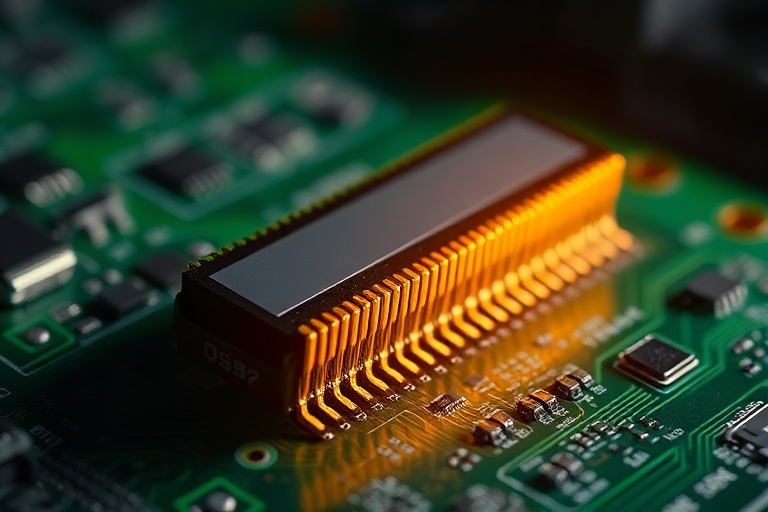
DRAM Stock Explained: Market Trends, Risks, and Investment Insights
What Is DRAM Stock and Why It Matters in 2024
Dynamic random-access memory, known as DRAM, remains one of the most critical components in computing. From smartphones to data centers, DRAM stock underpins the performance of nearly every digital device. As global demand for faster, more efficient memory solutions continues to grow, investors are increasingly focused on companies that produce DRAM and related semiconductor technologies.
In 2024, the DRAM market is undergoing significant transformation. Supply chain disruptions, geopolitical tensions, and rapid advancements in AI-driven applications are reshaping how companies approach production, pricing, and innovation. Understanding DRAM stock means looking beyond quarterly earnings—it requires a view of global semiconductor trends, technological evolution, and regional market dynamics.
The Role of DRAM in the Modern Tech Ecosystem
DRAM functions as short-term memory in computing devices. Unlike storage (like SSDs or HDDs), DRAM temporarily holds data that the processor needs immediate access to. This makes it essential for multitasking, gaming, video editing, and cloud computing. The performance of DRAM—measured in speed (MHz) and latency—directly affects user experience and system efficiency.
Major players like Samsung, SK Hynix, and Micron dominate the DRAM industry, collectively controlling over 90% of global production. These companies invest billions annually in research and development to increase density, reduce power consumption, and improve speed. As AI models and data centers expand, the demand for high-performance DRAM has surged. According to industry reports, the DRAM market is projected to reach $150 billion by 2027, driven by 5G rollouts, IoT devices, and edge computing.
The concentration of DRAM manufacturing in East Asia—particularly South Korea and Taiwan—has raised concerns about supply chain resilience. Geopolitical factors, including U.S.–China trade policies and tensions over semiconductor export controls, have forced companies to rethink their geographic strategies. Some firms are exploring manufacturing expansions in the U.S. and Europe, though high costs and talent shortages remain challenges.
Key Factors Driving DRAM Stock Performance
Investors tracking DRAM stock must monitor several key indicators. Pricing cycles, inventory levels, and technology transitions all influence market sentiment. DRAM prices are notoriously volatile, with periodic spikes during shortages and drops during oversupply. For example, in 2023, DRAM prices fell nearly 40% from their 2021 peak due to reduced demand from PC and smartphone markets.
Another critical factor is the shift toward advanced process nodes. Companies are transitioning from 10nm-class to 7nm and 5nm DRAM, enabling higher performance and lower power consumption. The adoption of High Bandwidth Memory (HBM), a specialized form of DRAM used in AI accelerators like NVIDIA’s H100 GPU, has also created new revenue streams. HBM demand is expected to grow at a compound annual rate of over 50% through 2028, according to TrendForce.
Regional demand patterns also play a role. While North America and Europe drive demand for high-end computing and AI infrastructure, Asia remains the largest consumer due to smartphone proliferation and gaming culture. Emerging markets in Southeast Asia and India are contributing to steady growth, particularly in mobile gaming and digital services.
- Supply Constraints: Limited production capacity and geopolitical barriers can tighten supply.
- Technological Leapfrogging: Transitioning to smaller nodes and HBM creates competitive advantages.
- End-Market Shifts: Demand from AI, cloud computing, and automotive sectors is rising.
- Trade Policies: Export controls and tariffs can disrupt global supply chains.
Global Market Trends and Regional Insights
The DRAM landscape is not uniform across regions. South Korea’s Samsung and SK Hynix lead in cutting-edge memory technology, while U.S.-based Micron focuses on high-performance computing and defense applications. Micron’s recent investments in advanced packaging and AI-optimized memory have positioned it as a key player in the U.S. CHIPS Act era.
In China, domestic companies like CXMT and Fujian Jinhua are attempting to reduce reliance on foreign DRAM suppliers. However, U.S. export restrictions have slowed their progress, highlighting the geopolitical dimension of the semiconductor industry. Meanwhile, European initiatives like the European Chips Act aim to boost local production, though results are likely years away.
Japan, once a dominant player in the 1990s, has seen its market share decline but remains influential in materials and equipment supply. Companies like Tokyo Electron and Shin-Etsu Chemical provide essential tools and chemicals used in DRAM fabrication. Their role underscores the interconnected nature of the global semiconductor ecosystem.
As for pricing, DRAM has entered a recovery phase in early 2024. After two years of decline, average selling prices are stabilizing due to balanced supply and demand. Analysts at IC Insights predict a modest 5% growth in DRAM revenue this year, supported by AI adoption and inventory restocking in the data center segment.
Investing in DRAM Stock: Risks and Opportunities
For investors, DRAM stocks offer both high reward potential and significant risk. The industry’s cyclical nature means periods of rapid growth can be followed by sharp corrections. Companies with diversified revenue streams—such as Micron’s focus on both DRAM and NAND flash—tend to be more resilient during downturns.
Another opportunity lies in companies involved in DRAM-related software and tools. Firms specializing in memory management, testing, and optimization are benefiting from the complexity of modern DRAM systems. For instance, Rambus provides interface IP and security solutions that enhance DRAM performance and reliability.
On the risk side, overcapacity remains a persistent threat. If demand from PCs or smartphones falters, DRAM prices could drop again. Additionally, geopolitical risks—such as potential conflicts in the Taiwan Strait or U.S. restrictions on chip equipment exports—could disrupt production and supply chains.
Investors should also consider environmental, social, and governance (ESG) factors. DRAM manufacturing is energy-intensive and uses hazardous chemicals. Companies investing in sustainable fabrication processes and reducing carbon footprints may gain long-term advantages as regulations tighten and consumer preferences shift.
For those interested in sector exposure, exchange-traded funds (ETFs) like the iShares Semiconductor ETF (SOXX) offer diversified access to DRAM and broader semiconductor companies. Alternatively, investing in foundry leaders like TSMC—critical to DRAM production—can provide indirect exposure.
The Future of DRAM: Beyond Traditional Memory
The next frontier for DRAM includes integration with other technologies. Hybrid memory cube (HMC) and stacked DRAM architectures are being developed to improve bandwidth and reduce latency. These innovations are crucial for next-generation AI models, autonomous vehicles, and real-time data processing.
Another trend is the rise of “compute express link” (CXL), a protocol that allows CPUs and accelerators to share memory more efficiently. CXL could reduce the need for dedicated DRAM in some systems, potentially altering demand patterns. Companies like Intel and AMD are leading the adoption of CXL-enabled platforms.
As quantum computing and neuromorphic chips advance, traditional DRAM may face competition from novel memory technologies like resistive RAM (ReRAM) and phase-change memory (PCM). While these alternatives are not yet mainstream, they represent long-term disruption risks to the DRAM industry.
For now, DRAM remains indispensable. Its role in enabling faster, more efficient computing ensures continued relevance. However, the industry must navigate supply chain vulnerabilities, technological transitions, and shifting global power dynamics to sustain growth.
Conclusion: Why DRAM Stock Deserves Your Attention
DRAM is more than a component—it’s the backbone of the digital economy. From powering smartphones in Lagos to enabling AI training in Silicon Valley, DRAM stock reflects the pulse of global technology demand. In 2024, the market is at a crossroads: balancing recovery with innovation while managing geopolitical and environmental challenges.
For investors, the sector offers high-risk, high-reward opportunities. Success depends on understanding cyclical trends, technological shifts, and regional dynamics. For tech enthusiasts and industry observers, DRAM represents a fascinating intersection of engineering, economics, and geopolitics.
As the world becomes increasingly digital, the companies that produce DRAM will shape the future of computing. Whether you’re an investor, engineer, or simply curious about technology, keeping an eye on DRAM stock is essential—because memory doesn’t just store data; it powers progress.