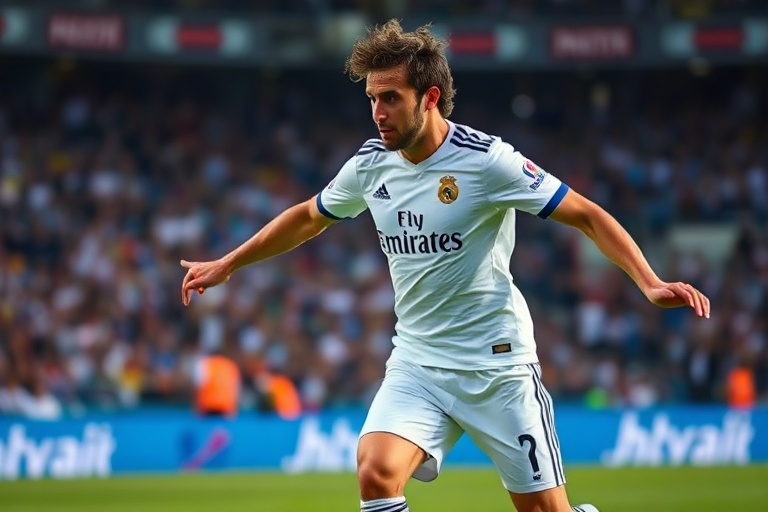
Eduardo Camavinga: The Midfield Maestro Shaping Football’s Future
From Refugee Camp to European Stardom
Eduardo Camavinga’s journey reads like a modern-day fairy tale, yet it’s rooted in hardship and resilience. Born in Miconje, Angola, in 2002, his family fled civil war when he was just two years old, seeking refuge in France. Growing up in Fougères, Brittany, Camavinga’s talent for football became evident early on. By age 11, he was already training with Rennes’ youth academy, where coaches quickly recognized his exceptional vision and technical ability.
The midfielder’s rise has been meteoric. He made his professional debut for Rennes at 16 years and 11 months, becoming the youngest player in Ligue 1 history to start a match. His performances caught the eye of Europe’s elite, and in 2021, Real Madrid secured his services for a reported €31 million—a fee that reflected his immense potential. At just 18, Camavinga became one of the youngest players to wear the iconic white shirt, joining a legacy of midfield maestros like Zinedine Zidane and Luka Modrić.
A Playing Style That Redefines Midfield Dynamics
Camavinga’s game is a blend of elegance and efficiency. Standing at 1.82 meters, his physicality allows him to dominate aerial duels, while his composure on the ball enables him to dictate play. What sets him apart, however, is his footballing intelligence. Whether playing as a deep-lying playmaker or a box-to-box midfielder, he reads the game with a maturity far beyond his years.
His passing accuracy—often exceeding 90% in key matches—mirrors the precision of veteran playmakers. Camavinga’s ability to transition defense into attack with a single pass has drawn comparisons to France’s World Cup-winning midfield trio of N’Golo Kanté, Paul Pogba, and Blaise Matuidi. Yet, his versatility extends further. He can slot into a double pivot, operate as a lone defensive midfielder, or even play as a makeshift center-back in pressing situations. This adaptability makes him invaluable in high-pressing systems like Real Madrid’s under Carlo Ancelotti.
Key Attributes of Camavinga’s Game
- Defensive Solidity: His 2.1 tackles per game in La Liga last season highlight his ability to break up opposition attacks.
- Progressive Passing: Over 85% of his passes find a teammate, with a high completion rate in the final third.
- Positional Flexibility: Capable of playing in multiple midfield roles, from deep to advanced positions.
- Leadership Presence: Despite his youth, he exhibits calm authority, often organizing defensive lines.
The Cultural Impact of a Global Footballer
Camavinga’s background transcends sport, making him a symbol of integration and opportunity. As a child of African immigrants in France, he embodies the country’s multicultural identity, a narrative that resonates in an era of rising nationalism. His success story challenges stereotypes about immigrants and footballers from non-traditional academies.
Beyond France, Camavinga represents a new wave of African talent nurtured in Europe. Players like him, who could have represented Angola, DR Congo, or Portugal (due to his dual heritage), choose France—a decision that underscores football’s power to redefine identity. His rise also highlights the scouting networks that now extend beyond traditional European powerhouses, with clubs like Real Madrid investing in academies across Africa.
Off the pitch, Camavinga’s humility and focus have endeared him to fans. In interviews, he often credits his family’s sacrifices, deflecting personal praise to emphasize collective success. This grounded approach contrasts with the flamboyance of some modern footballers, offering a refreshing narrative in an era dominated by social media personas.
Challenges and the Path Forward
Despite his rapid ascent, Camavinga faces challenges that will define his legacy. Injuries have occasionally disrupted his progress, including a calf strain in the 2022-23 season that limited his appearances. Consistency in big games remains a work in progress, as seen in Real Madrid’s Champions League struggles last term.
Yet, his potential is undeniable. With France’s 2026 World Cup cycle approaching, Camavinga is poised to become a cornerstone of Didier Deschamps’ midfield. The pressure to deliver in tournaments could accelerate his development, but it also risks stifling his natural game if expectations become too burdensome.
Long-term, Camavinga’s trajectory could mirror that of Paul Pogba—a prodigy who dominated youth football before becoming a world-class midfielder. Alternatively, he might carve his own path, potentially succeeding a legend like Luka Modrić in Madrid’s midfield. His contract, set to expire in 2027, will be a bellwether for his ambitions: Does he aim for a blockbuster move to a rival club, or does he prioritize silverware and legacy at the Santiago Bernabéu?
What’s Next for Camavinga?
- 2024 Euros: A strong tournament could cement his status as France’s next midfield general.
- Real Madrid’s Title Push: Winning La Liga and another Champions League would silence doubters.
- Ballon d’Or Aspirations: If he maintains his trajectory, he could enter the conversation by 2025.
- National Team Leadership: Deschamps may hand him the captain’s armband in the coming years.
A Legacy in the Making
Eduardo Camavinga’s story is still being written, but it already serves as a testament to talent, adaptability, and cultural significance in modern football. His journey from a refugee camp to the pinnacle of the sport offers more than just inspiration—it reflects the evolving narratives of globalization, identity, and excellence.
For young players watching from Fougères to Kinshasa, Camavinga proves that football remains the ultimate meritocracy. For clubs, he represents the future: a player who can anchor a team’s midfield while carrying the hopes of an entire nation. As he continues to grow, one thing is certain—football’s next great midfielder is already here, and his name is Eduardo Camavinga.