The Giro d’Italia isn’t just another race—it’s a spectacle of endurance, strategy, and Italian passion that has captivated fans for over a century. As the countdown begins for the 2026 edition, the cycling world is already buzzing with anticipation over what promises to be one of the most competitive and unpredictable editions in recent history.
The 2026 Giro will mark its 109th edition, a milestone that underscores its status as one of cycling’s three Grand Tours alongside the Tour de France and Vuelta a España. With the introduction of new regulations, a revamped route, and a fresh crop of talent, this year’s race is poised to redefine what it means to conquer the pink jersey.
The Route: A Test of Body and Mind
The Giro’s route is always a carefully crafted puzzle, designed to challenge riders in every discipline—from punishing climbs to high-speed sprints. For 2026, organizers have taken a bold approach, blending tradition with innovation.
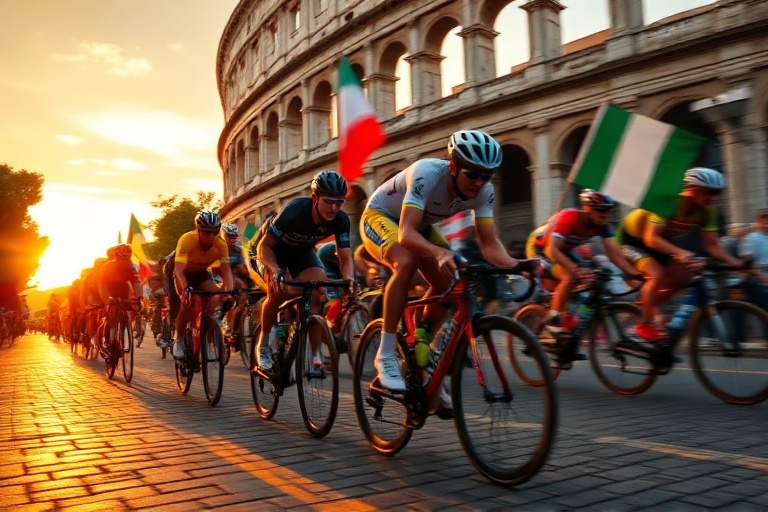
The race will kick off with a flat stage in Rome, a nod to the Giro’s historic roots and a chance for sprinters to make an early statement. From there, the peloton will face a grueling sequence of stages that includes three iconic climbs: the Stelvio, the Gavia, and the Mortirolo. These legendary ascents have broken champions and made legends, and 2026 will be no different.
What sets this year’s route apart is the inclusion of two individual time trials—one in the early stages and another in the final week. Time trials are the great equalizers, where pure power and aerodynamics can erase deficits built over weeks of racing. For riders like Tadej Pogačar and Jonas Vingegaard, who have dominated recent Grand Tours, these stages could be decisive.
The Giro has also embraced sustainability in 2026, with organizers pledging to reduce the race’s carbon footprint by 30%. This includes using electric support vehicles, minimizing plastic waste, and promoting local food sourcing along the route. It’s a small but meaningful step toward aligning one of cycling’s most storied events with modern environmental expectations.
Key Storylines to Watch
The 2026 Giro is shaping up to be a clash of generations, tactics, and rivalries. Here are the storylines that will dominate the headlines:
- Pogačar vs. Vingegaard: The Rematch
After Pogačar’s dominant win in the 2024 Giro and Vingegaard’s Tour de France victory later that year, all eyes will be on their head-to-head duel in 2026. The two have traded blows in recent Grand Tours, but the Giro’s punishing terrain could favor Pogačar’s explosiveness over Vingegaard’s steadier climbing. - The Rise of the Next Generation
Riders like Cian Uijtdebroeks, Juan Ayuso, and Lenny Martinez are poised to challenge the established order. The 2026 Giro could be the stage where the torch is officially passed to a new era of champions. - Defending Champion Geraint Thomas
Thomas enters the 2026 Giro as the reigning champion after his dramatic victory in 2025. Can he defend his title against a field that will be hungrier than ever, or will he become the latest in a long line of one-hit wonders? - Sprinters’ Redemption
After years of being overshadowed by climbers, sprinters will have their best chance in years to shine. The flat stages in Puglia and the Adriatic coast could see a showdown between Mathieu van der Poel, Jasper Philipsen, and Mark Cavendish’s heir apparent. - Weather’s Role in the Race
The Giro is notorious for its unpredictable weather, from snow on the Stelvio to scorching heat in Sicily. How teams adapt to these conditions could be the difference between glory and heartbreak.
The Broader Impact on Cycling
The Giro d’Italia is more than a race—it’s a cultural institution that shapes the sport’s future. The 2026 edition arrives at a pivotal moment for professional cycling, as the sport grapples with doping scandals, financial instability, and the challenge of staying relevant in an era of short-form entertainment.
One of the most significant developments in recent years has been the rise of Saudi-backed teams like Astana Qazaqstan and Soudal Quick-Step. While these teams bring financial stability and global exposure, they’ve also sparked debates about the sport’s ethical direction. The 2026 Giro will be a test of whether these teams can compete at the highest level without overshadowing the sport’s traditional values.
Technology is also playing an increasingly prominent role. From aerodynamic bike frames to real-time data analytics, teams are leveraging every tool to gain an edge. The 2026 Giro will see the debut of new UCI regulations allowing wider handlebars and disc wheelsets, changes that could reshape racing dynamics.
For fans, the Giro remains a gateway to the sport’s soul. Unlike the Tour de France, which can sometimes feel like a corporate spectacle, the Giro is deeply rooted in its host country’s culture. Italian cycling fans are among the most passionate in the world, and their support can turn a grim day in the Alps into a legendary victory.
Why the 2026 Giro Matters More Than Ever
The 2026 Giro arrives at a time when cycling is at a crossroads. After years of dominance by a handful of superteams, the peloton is more competitive than ever. The rise of young talent, the return of former champions, and the unpredictability of the route all point to a race that could go down to the wire.
For broadcasters and sponsors, the Giro offers a prime opportunity to showcase the sport’s global appeal. With races now streamed live on platforms like Dave’s Locker Sports, fans from around the world can follow every pedal stroke, making the Giro more accessible than ever.
The 2026 edition also serves as a reminder of why cycling endures. In an era of instant gratification, the Giro demands patience, suffering, and perseverance—qualities that resonate far beyond the sport itself. It’s a testament to the human spirit, a celebration of teamwork, and a spectacle of raw athleticism.
As the riders line up in Rome next May, the questions will be endless. Who will crack under pressure? Who will rise to the occasion? And who will etch their name into the Giro’s storied history? One thing is certain: the 2026 Giro d’Italia will deliver drama, heartbreak, and moments that will be remembered for generations.
For now, the countdown continues. The mountains await. The fans are ready. And the peloton is hungry.