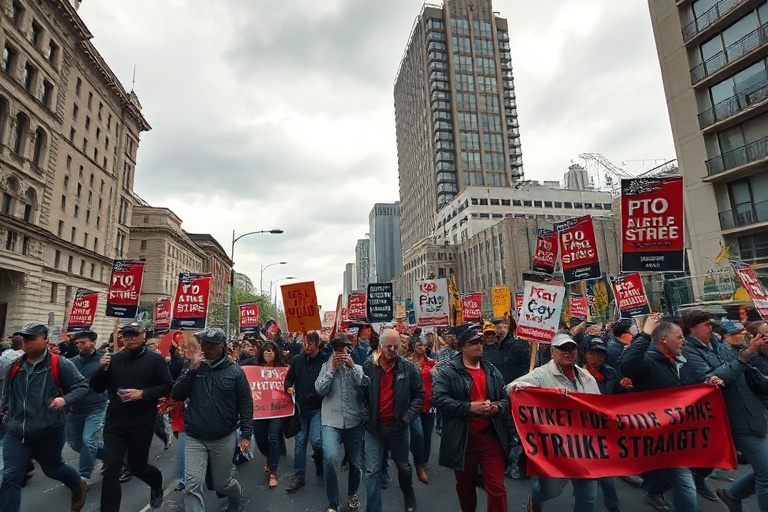
Strike action remains one of the most visible and contentious tools available to workers in their negotiations with employers. When collective bargaining fails to yield acceptable outcomes, employees may withdraw their labor to pressure management into concessions. This tactic, while disruptive, underscores the power dynamics inherent in labor relations. The frequency and scale of strikes have fluctuated over decades, influenced by economic cycles, labor laws, and societal attitudes toward work.
The Historical Roots of Strike Action
Strikes are not a modern invention. Their origins trace back centuries, with documented labor stoppages appearing in ancient Rome and medieval Europe. The Industrial Revolution, however, transformed strikes into a mass phenomenon. Workers in factories, mines, and shipyards—often enduring grueling conditions—began organizing to demand better pay, shorter hours, and safer environments. The Luddites in early 19th-century England, who smashed textile machinery to protest wage cuts, exemplify early labor resistance.
By the late 19th and early 20th centuries, strikes became central to the labor movement. The Haymarket Affair in 1886, the Pullman Strike in 1894, and the Flint Sit-Down Strike in 1936 all left indelible marks on labor history. These events did not merely disrupt industries; they reshaped legal frameworks and public perceptions of workers’ rights. The establishment of unions and the passage of laws like the Wagner Act in the United States (1935) formalized the right to strike, embedding it in the legal fabric of many nations.
Why Do Workers Strike?
At its core, strike action is a response to perceived injustices. Workers typically strike to address issues such as:
- Wage disputes: When inflation outpaces salary increases, employees may demand adjustments to maintain purchasing power.
- Working conditions: Hazardous environments, excessive hours, or inadequate safety measures can push workers to act.
- Benefits and job security: Strikes often target cuts to pensions, healthcare, or layoffs, particularly in industries facing restructuring.
- Union recognition: In some regions, workers strike to force employers to negotiate with their chosen representatives.
- Broader social issues: Strikes can also protest against government policies, corporate practices, or even global issues like climate change.
Recent examples highlight these motivations. In 2022, railway workers in the United Kingdom staged walkouts over pay disputes linked to the cost-of-living crisis. Similarly, teachers in the United States have repeatedly struck to demand higher wages and improved classroom resources. These actions reflect a growing frustration among workers who feel economic gains have disproportionately favored corporate profits over labor.
The Broader Implications of Strike Action
While strikes are often viewed through the lens of immediate labor disputes, their consequences ripple across economies and societies. The impact varies depending on the industry, scale, and duration of the strike, but several key effects are frequently observed:
- Economic disruption: Strikes in critical sectors—such as transportation, healthcare, or energy—can halt supply chains, delay services, and incur financial losses for businesses and governments. For instance, a 2023 strike by dockworkers in Los Angeles disrupted port operations, costing millions in delayed shipments.
- Political pressure: Strikes can sway public opinion and political agendas. In some cases, governments intervene to mediate disputes, as seen in France’s ongoing strikes against pension reforms. These actions force policymakers to confront issues they might otherwise ignore.
- Union solidarity: Successful strikes often strengthen union cohesion, encouraging more workers to join or form unions. Conversely, failed strikes can demoralize labor movements and embolden employers to resist future demands.
- Public perception: Strikes frequently polarize communities. Supporters may view them as necessary for justice, while critics argue they harm innocent parties, such as patients in hospitals or students in schools. Media coverage plays a pivotal role in shaping these narratives.
- Long-term labor trends: A wave of strikes can signal broader shifts in labor relations. The surge in strikes during the post-pandemic period, for example, reflects a growing willingness among workers to challenge traditional power structures.
The digital age has introduced new dimensions to strike action. Social media platforms allow workers to organize rapidly, share grievances globally, and garner international support. Platforms like Twitter and TikTok have been instrumental in amplifying strike voices, as seen during the 2021 wave of strikes by Amazon warehouse employees. However, this visibility also exposes strikers to scrutiny, misinformation, and legal challenges from employers.
Navigating the Future of Strikes
As labor markets evolve, so too will the nature of strike action. Several trends are likely to shape its future:
- Gig economy challenges: The rise of gig work complicates traditional strike models, as independent contractors often lack formal union protections. Efforts to organize gig workers, such as the 2020 strikes by food delivery drivers, highlight the need for innovative strategies.
- Legal and technological hurdles: Employers increasingly turn to anti-strike clauses, injunctions, or replacement workers to mitigate losses. Meanwhile, surveillance technologies can monitor strikers, raising ethical concerns about privacy and intimidation.
- Global solidarity: Workers in different countries are increasingly coordinating strikes to address multinational corporations. The 2022 wave of strikes across Europe and the U.S. demonstrated how interconnected labor movements can amplify their impact.
- Climate strikes: Environmental activism has merged with labor strikes, as seen in the global climate strikes led by groups like Fridays for Future. These actions underscore the intersection of economic and ecological justice.
For those observing from the outside, strike action can seem chaotic or even irrational. Yet, it remains a fundamental mechanism for challenging power imbalances. The right to strike is enshrined in international labor standards, such as the conventions of the International Labour Organization (ILO), which recognize its role in achieving social justice. However, the effectiveness of strikes depends on context—economic conditions, legal protections, and public sympathy all play critical roles.
Looking ahead, the labor landscape will likely see more strikes, driven by inflation, automation, and shifting worker expectations. The challenge for both employers and policymakers will be to address the root causes of discontent before they escalate into full-blown labor disputes. For workers, the calculus will involve weighing the risks of striking against the potential rewards of improved conditions. One thing is certain: as long as inequalities persist, so too will the impulse to resist.
Further Reading
For more insights into labor movements and worker rights, explore these related articles on Dave’s Locker News and Dave’s Locker Analysis.