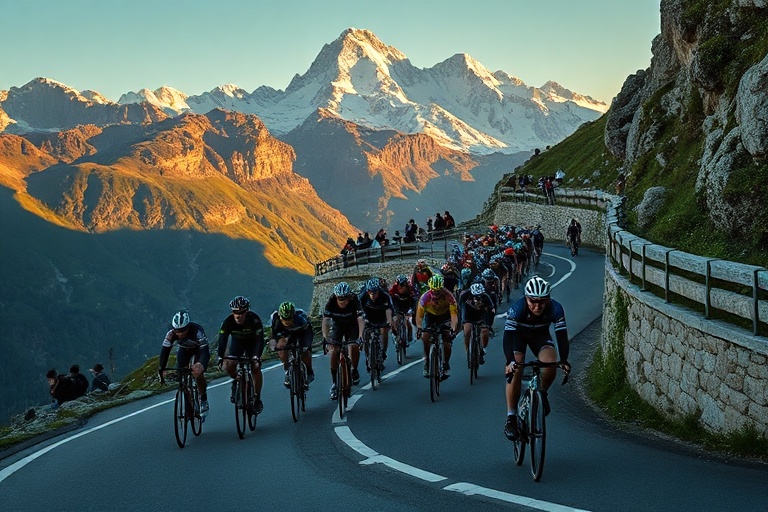
The Giro d’Italia stands as one of cycling’s most storied and grueling races, a three-week odyssey across some of Italy’s most breathtaking—and brutal—landscapes. Since its inception in 1909, the race has evolved from a nationalistic experiment into a global spectacle that tests the limits of human endurance while celebrating Italian culture, history, and landscape. More than just a sporting event, the Giro is a living narrative of perseverance, strategy, and national pride.
The Origins and Evolution of the Giro
The Giro d’Italia was born in 1909 as a response to the growing popularity of the Tour de France, which had launched just six years earlier. Italian newspaper La Gazzetta dello Sport, seeking to boost circulation and assert national pride, organized the first edition. The race was designed to be a test of stamina and will, with stages stretching from Milan to Naples and back—covering over 2,400 kilometers. It was a daring proposition in an era when long-distance cycling was still in its infancy.
Over the decades, the Giro has mirrored Italy’s own transformation—from a young nation recovering from war and political upheaval to a modern, globalized powerhouse. The race’s route has shifted with the times, reflecting economic changes, technological advancements, and even geopolitical tensions. The introduction of the Cima Coppi, named after legendary climber Fausto Coppi, in 1965 elevated the race’s prestige, honoring the highest point of each edition—a tribute to the mountain stages that define the Giro’s character.
Today, the Giro is the second most prestigious Grand Tour in cycling, after the Tour de France but ahead of the Vuelta a España. It remains a cornerstone of the sport, drawing the world’s best cyclists to tackle its iconic climbs, such as the Stelvio, Mortirolo, and Alpe d’Huez, each with its own legend and lore.
What Makes the Giro Unique
The Giro d’Italia is more than a race; it’s an experience. Its uniqueness stems from several key elements that set it apart from other Grand Tours:
- Route and Terrain: The Giro is infamous for its relentless climbs and unpredictable weather. Unlike the Tour de France, which often features flatter stages early in the race, the Giro typically throws riders into the mountains from the outset. The Dolomites, Apennines, and Alps provide a dramatic backdrop, while the final week in the north often decides the general classification with punishing ascents like the Passo dello Stelvio.
- Pink Jersey Tradition: The leader’s jersey, known as the Maglia Rosa, is one of cycling’s most iconic symbols. The color was chosen to honor the pink paper of La Gazzetta dello Sport, and wearing it carries immense prestige. Only a select few have held it for extended periods, with legends like Eddy Merckx, Bernard Hinault, and more recently, Tadej Pogačar and Primož Roglič, donning it in triumph.
- Cultural Integration: The Giro is deeply intertwined with Italian culture. Stages often pass through historic towns, medieval castles, and UNESCO World Heritage sites, offering a visual feast beyond the racing. The race also embraces local traditions, from food stops in Emilia-Romagna to tifosi (fans) lining the roads in Sicily or Lombardy, creating an atmosphere unlike any other in cycling.
- Unpredictability: The Giro is notorious for its surprises. Weather plays a pivotal role, with rain, snow, and wind often turning a seemingly straightforward stage into a calamity for the peloton. The race has seen dramatic breakaways succeed, defending champions crumble, and underdogs rise to the occasion. This unpredictability is part of its charm.
The Race’s Broader Impact
The Giro d’Italia is more than a sporting event; it’s an economic and cultural engine for Italy. Host towns and regions benefit from tourism spikes, with fans traveling to witness the race firsthand. Local businesses, from hotels to restaurants, see increased revenue, while the global broadcast audience—numbering in the hundreds of millions—showcases Italy’s beauty to the world.
Cycling’s popularity has surged in recent years, partly due to the visibility of races like the Giro. The rise of Italian talent, such as Vincenzo Nibali and Alberto Bettiol, has further fueled interest, inspiring a new generation of riders. The Giro also plays a role in promoting sustainability, with organizers increasingly focusing on eco-friendly initiatives, such as reducing plastic waste and promoting public transportation for fans.
Beyond economics, the Giro fosters a sense of national identity. For Italians, the race is a point of pride, a chance to celebrate their heritage and the landscapes that define their country. For international fans, it offers a gateway into Italian culture, from its cuisine to its art. The Giro, in many ways, is a rolling ambassador for Italy.
Memorable Moments and Legends
The Giro’s history is rich with drama, heroism, and tragedy. Some of cycling’s most iconic moments have unfolded on its roads:
- Fausto Coppi’s 1949 Triumph: Coppi, known as the “Campionissimo” (Champion of Champions), won his first Giro in 1949 after a titanic battle with Gino Bartali. His victory on the Col d’Izoard in the Alps cemented his legacy as one of cycling’s greatest ever riders.
- Eddy Merckx’s 1974 Giro: Merckx, the most dominant cyclist of his era, claimed his fifth and final Giro in 1974, a race so brutal that only 42 of the 140 starters finished. His attack on the Stelvio Pass remains one of the most legendary moments in cycling history.
- Marco Pantani’s 1998 Double: Pantani, known for his climbing prowess and tragic later life, won both the Giro and the Tour de France in 1998. His victory on the Alpe d’Huez in the Giro is remembered as one of the most emotional moments in the race’s history.
- Chris Froome’s 2018 Comeback: After a horrific crash in the 2017 Giro, Froome returned in 2018 to win the race in dramatic fashion, outsprinting Tom Dumoulin in the final time trial. His victory was a testament to resilience and determination.
These moments, among countless others, highlight the Giro’s ability to produce stories that transcend sport. They remind us why the race endures as a pinnacle of athletic achievement and human drama.
A Race for the Future
As the Giro d’Italia approaches its second century, it faces both challenges and opportunities. Doping scandals in the past have tarnished its reputation, though recent years have seen a renewed emphasis on clean sport. The race also grapples with the pressures of modern cycling, including commercialization and the increasing dominance of a handful of teams.
Yet, the Giro’s core appeal remains unchanged. It is a race that celebrates the purity of cycling—man against mountain, will against will. The 2020 edition, held during the COVID-19 pandemic with empty roads and eerie silence, proved that the Giro’s spirit could endure even in the most extraordinary circumstances. Fans around the world tuned in, not just to watch a race, but to reconnect with a sense of normalcy and tradition.
For cycling fans, the Giro is a pilgrimage. For Italians, it is a celebration of identity. And for the world, it is a reminder of the beauty and brutality of sport at its highest level. As the peloton lines up for another edition, the question isn’t just who will win the Maglia Rosa—but who will write the next chapter in this enduring story.
To dive deeper into the world of cycling and its cultural significance, explore more on Dave’s Locker Sports and Dave’s Locker Analysis pages.