London’s Creative Pulse: The Ever-Evolving Identity of Hackney
Hackney, once a peripheral borough of London, has transformed into one of the city’s most dynamic cultural hubs. Its reputation now rests on a foundation of artistic energy, diverse communities, and rapid economic shifts. This change didn’t happen overnight—it reflects decades of migration, policy decisions, and grassroots movements that reshaped its social fabric.
The area’s journey from industrial backwater to creative epicenter offers a case study in urban regeneration. Unlike some London neighborhoods that gentrified at the expense of long-term residents, Hackney’s evolution has been marked by tension between preservation and progress. Its story is not just about bricks and mortar but about people—creatives, entrepreneurs, and families who have made it their home.
The Artistic Soul of Hackney Wick
At the heart of Hackney’s cultural identity lies Hackney Wick, a neighborhood that has become synonymous with contemporary art. Once a post-industrial zone dotted with factories and warehouses, it now hosts some of Europe’s largest free-to-view street art installations. The area’s transformation began in the early 2000s when artists, priced out of Shoreditch, sought cheaper spaces along the canals.
The Olympic Park’s development in 2012 accelerated this shift. While critics argued that the Games would erase local character, the opposite occurred. The park’s public art commissions and the influx of visitors created a new audience for Hackney Wick’s galleries and studios. Today, the area thrives as a mixed-use creative quarter where skate parks sit beside pop-up galleries, and street food markets share space with artist collectives.
Notable venues include:
- Stour Space – A riverside gallery and event space that champions emerging artists and hosts performances.
- The Yard Theatre – A black-box venue known for experimental and politically charged productions.
- House of Dreams – A surreal museum created by artist Stephen Wright, filled with thousands of repurposed objects.
This blend of commercial and community-driven spaces ensures Hackney Wick remains a laboratory for creative experimentation rather than a sanitized tourist attraction.
A Global Crossroads: Migration and Cultural Fusion
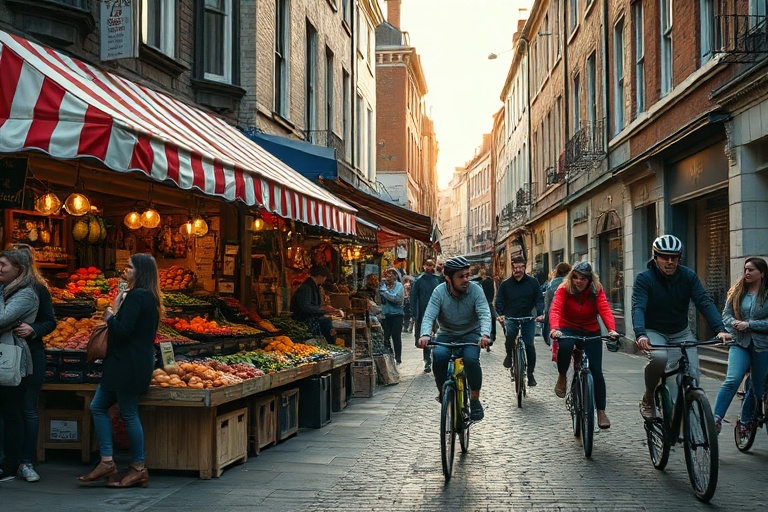
Hackney’s diversity is one of its defining features. Nearly 50% of its residents were born outside the UK, with significant communities from West Africa, the Caribbean, Eastern Europe, and South Asia. This multiculturalism is visible in the borough’s food scene, religious institutions, and festivals. From the Afro-Caribbean vibrancy of Dalston to the Turkish cafes of Stoke Newington, Hackney offers a microcosm of global migration patterns.
The borough’s culinary landscape alone tells a story of adaptation and innovation. Traditional Caribbean patties share menus with modern Levantine mezze, while Vietnamese bánh mì sits beside Portuguese pastel de nata. This fusion cuisine reflects Hackney’s role as a transit point for both people and ideas. The annual Hackney Food Festival celebrates this diversity, drawing chefs and food lovers from across London.
Religious and cultural institutions also highlight Hackney’s global connections. The Stoke Newington Synagogue, one of the oldest in London, stands near the Al-Rahma Mosque, while Hindu temples and African Pentecostal churches dot the borough. These spaces serve not just as places of worship but as social anchors, preserving languages and traditions while fostering interfaith dialogue.
Gentrification and the Fight for Community
No discussion of Hackney would be complete without addressing gentrification. The borough’s rising property values—some of the highest in London—have displaced long-term residents, particularly those from working-class and minority backgrounds. Between 2014 and 2023, average rents increased by over 60%, pushing out artists and small businesses that once defined the area’s creative identity.
Activists and grassroots organizations have responded with campaigns to preserve affordable housing and protect cultural spaces. Groups like Hackney Renters and Save Hackney’s Heritage have fought against luxury developments that erode community character. Their efforts highlight the tension between economic growth and social equity—a battle playing out in cities worldwide.
Yet gentrification in Hackney is not a simple narrative of villainy and victimhood. Many longtime residents have benefited from rising property values, and new businesses have brought investment. The challenge lies in balancing these gains with inclusive policies. Initiatives like the Hackney Co-operative Developments aim to create affordable co-housing projects, offering a model for other gentrifying neighborhoods.
The Future of Hackney: Sustainability and Innovation
Looking ahead, Hackney is positioning itself as a leader in sustainable urban living. The borough has committed to becoming carbon-neutral by 2040, with projects like the Hackney Marshes Wetland Restoration and community energy schemes. These efforts align with broader trends in urban planning, where cities are reimagining infrastructure to combat climate change.
Technology also plays a growing role in Hackney’s evolution. Co-working spaces like The Trampery attract digital nomads, while startups in fields like fintech and green tech are finding a home in the area. This tech-driven growth presents opportunities but also risks repeating the mistakes of previous waves of development. Ensuring that innovation benefits existing residents remains a critical challenge.
For those who call Hackney home, the borough’s future is a mix of pride and precarity. Its creative energy is undeniable, but its soul is increasingly tested by external pressures. Whether through art, activism, or community organizing, Hackney continues to redefine what it means to be a global neighborhood in the 21st century.
Conclusion
Hackney’s story is far from over. It is a place where history and modernity collide, where the struggles of the past shape the innovations of the future. Its transformation reflects broader shifts in urban life—where culture, migration, and economics intersect in complex ways. For visitors and residents alike, Hackney offers more than just a snapshot of London’s diversity; it provides a living example of how cities can evolve without losing their essence.
The challenge now is to ensure that this evolution is inclusive, sustainable, and true to the values that have made Hackney a beacon of creativity and resilience.