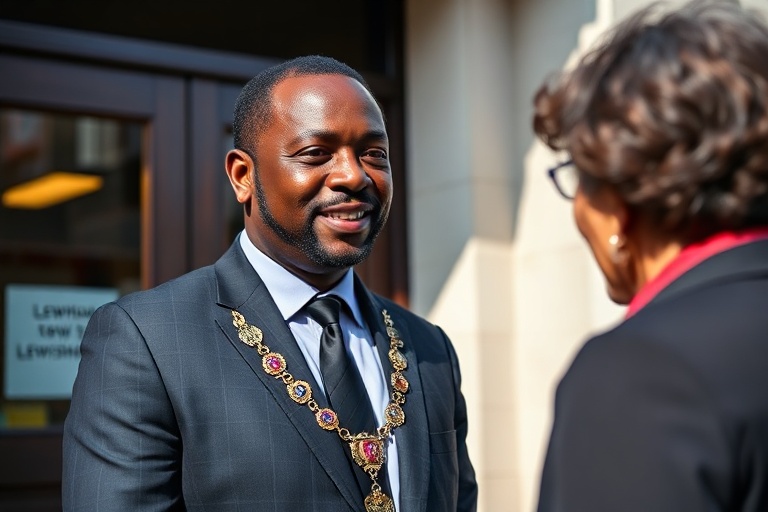
How Lewisham’s Mayor Is Shaping Local Politics and Global Urban Trends
The role of mayor in London’s diverse boroughs often serves as a microcosm of broader political and social currents. In Lewisham, a borough known for its rich cultural history and working-class roots, the position has taken on new significance in recent years. Lewisham’s mayor not only oversees local governance but also reflects wider trends in urban leadership, community engagement, and progressive policy-making. From affordable housing initiatives to climate action, the decisions made in this southeast London borough resonate beyond its borders.
Lewisham has long been a place of activism and social change. The borough played a pivotal role during the 1980s anti-racism movements and has remained a bastion of grassroots organizing. Today, its mayoralty has become a platform for reimagining how cities can govern with equity and innovation. The current mayor, elected in 2022, represents a shift toward more inclusive and environmentally conscious leadership, aligning with global calls for sustainable urban development. But how exactly is Lewisham’s mayor reshaping the borough’s future, and what lessons does this hold for cities worldwide?
The Evolution of Mayoral Power in Lewisham
Lewisham has had an elected mayor since 2002, following a referendum that transformed its governance structure. Unlike traditional council-led systems, the directly elected mayor model concentrates executive power in one individual, offering both advantages and challenges. This system allows for decisive leadership but also raises questions about accountability and transparency. Over the past two decades, Lewisham’s mayors have navigated these dynamics while responding to the borough’s evolving needs.
The current mayor’s administration has prioritized three key areas: housing affordability, climate resilience, and youth opportunity. These priorities reflect both local demands and global imperatives. In a city where housing costs have spiraled out of control, Lewisham’s commitment to building social housing has drawn attention. The mayor’s office has also championed green infrastructure, from expanding cycling lanes to retrofitting public buildings with renewable energy systems. These efforts align with London’s broader sustainability goals while addressing Lewisham’s specific vulnerabilities to air pollution and flooding.
Affordable Housing as a Cornerstone of Change
Housing remains one of the most pressing issues in London, and Lewisham is no exception. The borough’s mayor has made affordable housing a central pillar of their agenda, launching initiatives to increase the supply of council homes and protect tenants from displacement. One standout program is the Affordable Homes for Local People scheme, which prioritizes borough residents in new housing developments. This approach contrasts with London-wide policies that often favor luxury developments over social housing.
The mayor’s housing strategy also includes a strong focus on preventing homelessness. Through partnerships with local charities and housing associations, the administration has expanded emergency accommodation and support services. These measures have not only improved living conditions but also reduced the strain on public services. Internationally, cities like Vienna and Singapore have demonstrated how public housing can be both high-quality and sustainable. Lewisham’s experiments offer valuable insights for policymakers elsewhere who are grappling with similar challenges.
Climate Action and Community-Led Solutions
Climate change poses an existential threat to urban areas, and Lewisham is taking proactive steps to mitigate its impact. The borough has committed to achieving net-zero carbon emissions by 2030, a target that aligns with the Paris Agreement. Key projects include the Lewisham Solar Bond, which allows residents to invest in local renewable energy projects, and the expansion of green spaces to combat the urban heat island effect. These initiatives are not just technical fixes but are deeply rooted in community participation.
One innovative approach is the mayor’s “Climate Assembly,” a citizen-led forum that brings together residents to co-design sustainability policies. This model emphasizes democratic engagement and has inspired similar initiatives in cities like Paris and Barcelona. By involving diverse voices—from young activists to elderly residents—the assembly ensures that climate action reflects the borough’s social fabric. This bottom-up strategy contrasts with top-down environmental policies that often overlook local realities.
The mayor’s climate agenda also extends to transport. Lewisham has invested heavily in cycling infrastructure, including the ambitious “Cycle Superhighway” project, which aims to create safer, more accessible routes for cyclists. This shift not only reduces carbon emissions but also improves public health and social equity. Globally, cities like Copenhagen and Amsterdam have shown how cycling can transform urban mobility. Lewisham’s progress demonstrates that even less affluent boroughs can adopt progressive transportation models.
Youth Engagement and the Future of Local Leadership
Recognizing that young people are the future of local governance, Lewisham’s mayor has prioritized youth engagement through programs like the “Mayor’s Youth Parliament” and apprenticeship schemes in green industries. These efforts aim to bridge the gap between young residents and decision-making processes. By providing platforms for youth voices, the administration is fostering a new generation of leaders who are environmentally conscious and socially aware.
The mayor’s focus on youth extends to education and employment. Lewisham’s schools have seen increased funding for STEM (Science, Technology, Engineering, and Mathematics) programs, particularly in underrepresented communities. Additionally, the borough has partnered with local businesses to create job opportunities in emerging sectors like renewable energy and digital technology. These initiatives are crucial in a borough where youth unemployment has historically been higher than the London average.
Internationally, cities like Reykjavik and Medellín have demonstrated how youth engagement can revitalize civic life. Lewisham’s approach offers a blueprint for other urban areas seeking to empower younger residents and create inclusive economies. By investing in education and employment, the mayor is not only addressing immediate challenges but also laying the groundwork for long-term prosperity.
Lessons for Cities Worldwide
Lewisham’s mayoral model offers several lessons for urban leaders globally. First, the importance of community-led solutions cannot be overstated. Policies that emerge from grassroots engagement are more likely to gain public trust and achieve lasting impact. Second, the integration of climate action with social justice is essential. Lewisham’s housing and environmental policies are intertwined, reflecting a holistic approach to urban development. Finally, the role of youth in shaping the future of cities is a critical consideration. By prioritizing education and employment, Lewisham is ensuring that its leadership remains relevant and responsive to the needs of all residents.
The borough’s experiments with governance also highlight the potential of directly elected mayors to drive change. While this model has its critics, Lewisham’s experience suggests that it can foster innovation and accountability when paired with robust civic participation. As cities worldwide grapple with housing crises, climate emergencies, and social inequality, Lewisham’s approach provides a compelling case study in progressive urban leadership.
Looking ahead, Lewisham’s mayor will face new challenges, from the economic fallout of Brexit to the ongoing impacts of the COVID-19 pandemic. Yet, the borough’s track record of resilience and innovation offers reason for optimism. By continuing to prioritize equity, sustainability, and youth engagement, Lewisham’s leadership could serve as a model for other cities seeking to build a more just and sustainable future.