How The Super Mario Bros. Movie Became the Highest-Grossing Game Film Ever
How The Super Mario Bros. Movie Became a Box Office Heavyweight
The Super Mario Bros. Movie arrived in theaters with high expectations—and delivered a performance that surprised even skeptics. Earning over $1.36 billion worldwide, the film became the highest-grossing video game movie of all time, outpacing previous records set by its own franchise predecessor. For Universal Pictures and Illumination, the result was a validation of long-held strategy: turning a beloved IP into a mainstream cinematic event.
Unlike many adaptations that stumble at the box office, this movie benefited from decades of cultural imprinting. Mario’s mustachioed face isn’t just a gaming icon—it’s a global symbol recognized across generations. That built-in recognition, combined with modern animation and a star-studded voice cast, created a rare convergence of nostalgia and novelty. The film’s success also underscores a broader trend in Hollywood: when executed well, video game movies can transcend niche appeal and become blockbusters.
The Numbers Behind the Success
The box office performance of The Super Mario Bros. Movie reveals several key patterns. It opened with $375 million globally during its first weekend, including $146 million in North America—a figure that surpassed industry forecasts. Notably, the film maintained momentum over several weeks, a sign of strong word-of-mouth and repeat viewing, particularly among families and younger audiences.
Here are the top markets that drove its success:
- North America: $574 million (domestic gross)
- China: $94 million, one of the highest openings for an animated film
- Japan: $80 million, reflecting Mario’s deep cultural roots as a Japanese creation
- United Kingdom: $62 million
- Mexico: $50 million, indicating strong Latin American engagement
The film’s global reach was further amplified by its availability in 4K, IMAX, and premium large formats, catering to both casual viewers and dedicated fans seeking an immersive experience. This multi-format strategy helped sustain box office revenue beyond the initial surge.
Why This Movie Worked When Others Didn’t
Video game adaptations have a notoriously poor track record. Warcraft, Rampage, and Prince of Persia all struggled to connect with audiences despite strong source material. So what made The Super Mario Bros. Movie different?
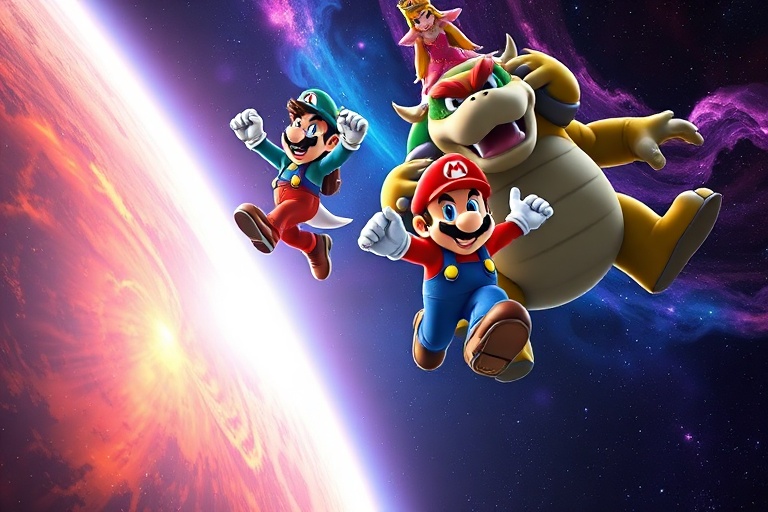
First, it embraced its source material unapologetically. The film leans into the whimsy and physics-defying world of the games, from zero-gravity platforming in the cosmos to the vibrant, candy-colored landscapes of the Mushroom Kingdom. The animation style mirrors the look of the games without feeling derivative, striking a balance between fidelity and cinematic flair.
Second, the voice cast brought star power without overshadowing the property. Chris Pratt’s portrayal of Mario struck a balance between heroism and humor, while Jack Black’s Bowser became a fan-favorite villain. The ensemble—including Keegan-Michael Key, Seth Rogen, and Anya Taylor-Joy—added depth and comedic timing that elevated the script.
“The movie doesn’t just adapt the game—it translates its joy. That’s the secret sauce.”
Third, timing played a role. After years of pandemic-related cinema closures and streaming dominance, audiences returned to theaters in force for event-style entertainment. The Super Mario Bros. Movie arrived at a moment when families were eager for a shared, PG-rated adventure that appealed to kids and adults alike.
Broader Implications for Hollywood and Gaming
The success of this film is more than a box office milestone—it’s a blueprint. Studios are now racing to greenlight more video game adaptations, with Sonic the Hedgehog 3, Five Nights at Freddy’s, and Mortal Kombat 2 all in development. The question isn’t whether these adaptations will happen, but how well they’ll be executed.
However, not every game can—or should—be turned into a movie. The key differentiator for Mario was its universal appeal, simple narrative, and visual dynamism. Games like Dark Souls or XCOM, with their complex lore and slower pacing, may never translate effectively to the big screen. The risk of over-saturation looms large, especially if future adaptations prioritize franchise recognition over story and character development.
There’s also a cultural shift to consider. As gaming becomes the dominant form of entertainment for younger generations, Hollywood is taking notice. The rise of eSports, streaming platforms like Twitch, and in-game events like Fortnite concerts has blurred the line between gaming and mainstream media. The Super Mario Bros. Movie isn’t just a film—it’s a cultural bridge, connecting older audiences to a new medium.
A Legacy in the Making
Looking ahead, The Super Mario Bros. Movie has already cemented its place in cinema history. It proved that video game films can be more than novelty projects—they can be tentpole releases with staying power. It also set a new standard for animation, voice acting, and cross-generational storytelling.
For Universal and Nintendo, the challenge now is sustaining that momentum. A sequel is already in development, and merchandise, video game tie-ins, and theme park integrations are sure to follow. The real test will be whether future Mario films can maintain the same level of creativity and charm without relying solely on brand recognition.
One thing is clear: The Super Mario Bros. Movie didn’t just break records—it redefined what a video game adaptation can be. In doing so, it opened the door for a new era of cinematic gaming experiences.
For more on the intersection of gaming and entertainment, explore our Gaming News and Entertainment categories on Dave’s Locker.