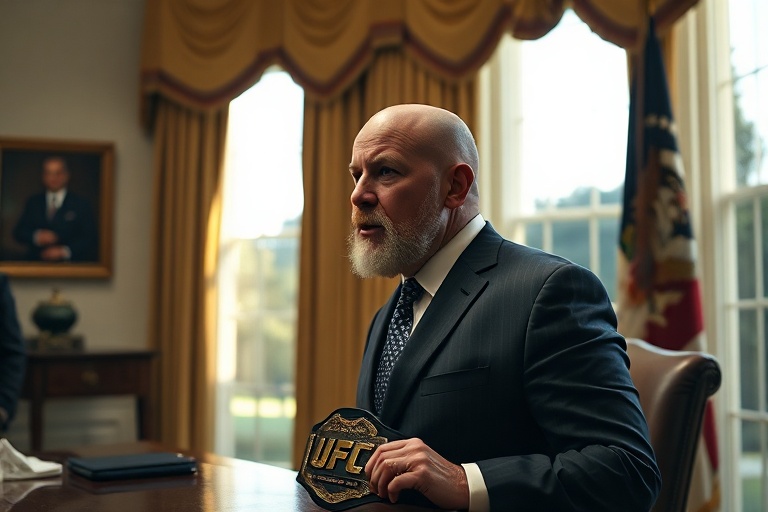
The intersection of combat sports and politics isn’t new, but few moments have blurred those lines as dramatically as the UFC’s growing influence in Washington, D.C. What started as a fringe fascination—celebrities and athletes dabbling in policy—has evolved into a calculated strategy where mixed martial arts brands flex political muscle. The UFC White House phenomenon reflects broader shifts in how sports leagues engage with power structures, leveraging star power and financial clout to shape narratives far beyond the cage.
The Rise of the UFC in Political Circles
Dana White, UFC president since 2001, has long operated as much as a showman as a sports executive. His brash persona and unfiltered commentary made him a magnet for media attention, but his foray into politics began subtly. In 2016, White hosted a meet-and-greet with Donald Trump at UFC headquarters, a move that signaled an alignment with the then-presumptive Republican nominee. That meeting wasn’t just a photo op—it was a statement: the UFC had arrived in a space where traditional sports leagues rarely tread.
Since then, the UFC has cultivated relationships with lawmakers on both sides of the aisle. The promotion’s lobbying efforts intensified around issues like athlete visas, performance-enhancing drug regulations, and even antitrust concerns. In 2020, the UFC spent $1.1 million on federal lobbying, according to OpenSecrets data—more than double its spending in previous years. This financial commitment wasn’t just about access; it was about influence.
Key Players in the UFC’s Political Playbook
The UFC’s strategy relies on a mix of celebrity endorsements, financial contributions, and behind-the-scenes maneuvering. Here’s how it’s structured:
- Dana White’s Direct Pipeline: White’s personal friendship with Trump and other high-profile Republicans has given the UFC direct access to decision-makers. His public support for policies like relaxed PED testing and streamlined visa processes aligns with the UFC’s operational needs.
- Lobbying Expenditures: The UFC has hired former lawmakers and regulatory specialists to navigate Capitol Hill. These lobbyists focus on issues that directly impact the sport, such as international fighter mobility and state athletic commission oversight.
- Athlete Advocacy: Fighters like Jon Jones and Amanda Nunes have publicly weighed in on political issues, using their platforms to amplify UFC-aligned messaging. While individual opinions vary, the UFC’s roster provides a built-in audience for policy-related content.
- Media Partnerships: The UFC’s deal with ESPN and its growing digital presence allow it to control the narrative around its political engagements. By framing lobbying as “athlete protection,” the promotion avoids the backlash that other leagues face for overt political posturing.
Why the UFC’s Political Strategy Matters
The UFC’s approach isn’t just about securing favorable policies—it’s about redefining the relationship between sports and governance. Unlike the NFL or NBA, which often take cautious stances on partisan issues, the UFC thrives on disruption. Its willingness to engage with polarizing figures and policies sets a precedent for how other leagues might operate in an increasingly politicized landscape.
Consider the broader implications: if a combat sports league can successfully lobby for regulatory changes, what’s stopping other niche sports from following suit? The UFC’s model demonstrates that financial power, combined with media savvy, can bypass traditional advocacy routes. This could lead to a future where athlete unions and leagues wield more influence in drafting legislation than grassroots organizations do.
There’s also the question of authenticity. The UFC’s political engagements are often framed as altruistic—protecting fighters’ rights, expanding global opportunities—but critics argue it’s ultimately about profit. When the promotion lobbies against stricter PED testing, for example, is it advocating for athlete freedom or protecting its bottom line? The duality of these efforts complicates the UFC’s public image, blending genuine advocacy with self-interest.
The Broader Fight: Sports Leagues and Political Power
The UFC isn’t alone in recognizing the value of political engagement. The NBA’s relationship with China, the NFL’s stance on social justice, and even NASCAR’s conservative base all highlight how sports leagues navigate geopolitical and domestic policy landscapes. But the UFC’s strategy is unique in its aggressiveness and lack of subtlety. Where other leagues might issue carefully worded statements, the UFC’s leadership has shown a willingness to embrace controversy—whether it’s White’s social media rants or the promotion’s alignment with Trump-era policies.
This approach carries risks. The UFC’s political entanglements could alienate fans who see the sport as apolitical. MMA’s global audience is diverse, and its fanbase spans ideological divides. If the promotion is perceived as overly partisan, it risks fracturing its community. Yet, so far, the UFC’s gamble has paid off. Its events continue to draw record audiences, and its lobbying efforts have yielded tangible results, such as the 2019 signing of the Amir Albazi Act, which expedited visas for foreign fighters.
What’s Next for the UFC and Politics?
The UFC’s political playbook is still evolving. As the promotion expands into new markets—particularly in the Middle East and Asia—its lobbying efforts will likely focus on international policy as much as domestic. Issues like data sovereignty for digital broadcasts, cross-border fighter mobility, and even free speech protections for athletes could become central to its advocacy.
Domestically, the UFC may double down on its bipartisan approach. While its ties to Republicans are well-documented, the promotion has also donated to Democratic lawmakers and supported policies like the FAA Reauthorization Act, which includes provisions for fighter safety. This flexibility allows the UFC to hedge its bets, ensuring access regardless of which party holds power.
For fans, the UFC’s political engagements offer both opportunities and challenges. On one hand, the promotion’s advocacy has led to tangible benefits for athletes. On the other, it risks turning the Octagon into another battleground for ideological clashes. The question isn’t whether the UFC will continue its political maneuvering—it’s how far it’s willing to go.
Conclusion: The UFC’s Political Legacy
The UFC White House phenomenon is more than a passing trend; it’s a blueprint for how sports leagues can leverage their cultural and financial capital to influence policy. Dana White and his team have turned the promotion into a political player, using star power, lobbying dollars, and media manipulation to shape an agenda that aligns with its interests. Whether this strategy ultimately strengthens the sport or undermines its credibility remains to be seen. What’s clear, however, is that the UFC has redefined the boundaries of what’s acceptable in sports governance—and other leagues are taking notes.
The fight for the UFC’s soul isn’t just happening in the cage anymore. It’s happening in the halls of Congress, on social media, and in the fine print of legislation. The Octagon may be its birthplace, but the real battle is for the future of sports—and politics—in America.
For those interested in how other sports leagues engage with power structures, Dave’s Locker News provides in-depth coverage of sports governance and cultural trends. For a deeper look at the business side of combat sports, visit Dave’s Locker Analysis.