Jared Bednar: How Colorado’s Coach Changed NHL Leadership Forever
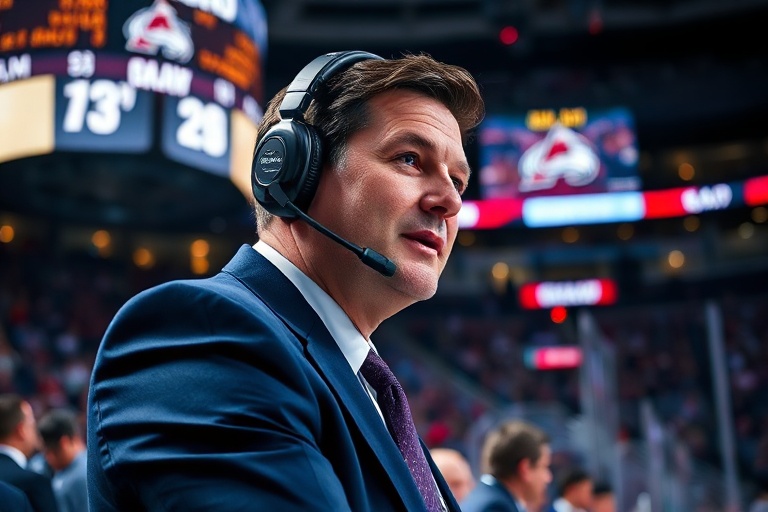
Jared Bednar’s name now resonates with championship pedigree in the NHL, but his journey to the top reflects a broader transformation in how hockey leadership is perceived globally. As the head coach of the Colorado Avalanche, Bednar has not only redefined team culture but also influenced how North American hockey approaches player development and tactical innovation. His success extends beyond trophies; it reflects a shift in coaching philosophy that prioritizes adaptability, player autonomy, and psychological resilience—principles increasingly relevant in high-pressure sports environments worldwide.
Born in Yorkton, Saskatchewan, Bednar’s early connection to hockey was rooted in Canada’s grassroots sporting culture. Saskatchewan has produced an outsized number of elite hockey minds relative to its population, a phenomenon tied to the province’s deep cultural investment in the sport. This environment shaped Bednar’s understanding of hockey as more than a game—it’s a communal experience, a platform for personal growth, and a reflection of identity. His coaching career began in junior hockey, where he quickly earned a reputation for fostering environments where players thrived under clear expectations and mutual respect.
From Minor Leagues to the NHL: A Career Built on Adaptability
Bednar’s rise through the coaching ranks was neither meteoric nor predictable. After stints in the Western Hockey League (WHL) and American Hockey League (AHL), he took over as head coach of the Lake Erie Monsters in 2013. Under his leadership, the Monsters—then a struggling franchise—won the Calder Cup in 2016, a victory that signaled a turning point in his career. This achievement caught the attention of the Colorado Avalanche, who hired him in 2016 with the mandate to rebuild a franchise that had struggled with consistency and identity.
Bednar’s early tenure in Colorado was marked by challenges. The team’s roster was a mix of unproven talent and aging veterans, and expectations were modest. Yet, his ability to connect with players on a personal level and adapt systems to individual strengths became a hallmark of his approach. By the 2021–22 season, Bednar had orchestrated one of the most surprising championship runs in recent NHL history. The Avalanche defeated the Tampa Bay Lightning in the Stanley Cup Final, ending a 20-year championship drought for the franchise and validating Bednar’s long-term vision.
His coaching style is often described as collaborative rather than autocratic. Players frequently cite his openness to ideas and willingness to delegate responsibility as key factors in their development. This approach mirrors a global trend in sports leadership, where coaches increasingly prioritize player agency and psychological well-being over rigid, top-down control. In countries like Sweden and Finland—where hockey is deeply embedded in national culture—such philosophies have long been standard. Bednar’s success has helped normalize this style in North America, where the culture of coaching has traditionally been more authoritarian.
Leadership in a Global Context: How Bednar Reflects Changing Coaching Norms
Bednar’s influence extends beyond the rink. His coaching philosophy aligns with a broader shift in global sports leadership, where traditional hierarchies are being reevaluated in favor of more inclusive, player-centered models. This trend is evident not only in hockey but also in soccer, basketball, and rugby, where coaches are expected to act as facilitators of performance rather than sole decision-makers.
In Europe, where hockey culture is often more integrated with national identity, coaches like Bednar are seen as bridges between North American innovation and established traditions. For instance, the Swedish Hockey League (SHL) has increasingly adopted hybrid systems that blend positional play with dynamic, positionless hockey—principles that resonate with Bednar’s Avalanche. Similarly, in Finland’s Liiga, coaches emphasize individual skill development within structured systems, a balance that Bednar has mastered.
Bednar’s leadership style also reflects a response to the modern athlete’s evolving needs. Today’s players, particularly in North America, are more vocal about mental health, career planning, and work-life balance. Coaches who fail to adapt risk alienating their talent. Bednar’s willingness to engage in open dialogue about these topics has made him a role model for younger coaches entering the profession. His emphasis on creating a supportive environment has drawn comparisons to figures like Jon Cooper of the Tampa Bay Lightning and Rod Brind’Amour of the Carolina Hurricanes—coaches who prioritize culture as much as competition.
Key Elements of Bednar’s Coaching Philosophy
- Player Autonomy: Bednar empowers players to take ownership of their roles, fostering creativity and confidence.
- Adaptive Systems: His teams are not rigid in structure; they adjust based on personnel and opponent tendencies.
- Open Communication: Regular one-on-one check-ins help build trust and address concerns before they escalate.
- Cultural Consistency: A unified locker room culture is prioritized over individual accolades.
The Cultural Impact of Bednar’s Success in North America
Bednar’s success has had a ripple effect across North American hockey. In the United States and Canada, where youth hockey often emphasizes early specialization and intense competition, Bednar’s approach offers an alternative model. His emphasis on development over immediate results has influenced how minor hockey organizations structure their programs. Coaches at the grassroots level are now encouraged to prioritize fun, skill acquisition, and long-term growth—values that align with Bednar’s philosophy.
His impact is also visible in the NHL’s expanding talent pipeline. The Avalanche’s championship core—featuring players like Nathan MacKinnon, Cale Makar, and Mikko Rantanen—is a product of both individual talent and a system that nurtures it. This has prompted other franchises to rethink their player development strategies, particularly in regions like the Midwest and Northeast, where hockey is deeply entrenched in local identity.
Bednar’s story resonates particularly in Canada, where hockey is often treated as a cultural touchstone. His ability to lead a team to a Stanley Cup while maintaining a relatively low-key public persona has made him a symbol of understated excellence. In a sport where coaches are often judged by their media presence as much as their results, Bednar’s humility stands out. This quality has endeared him to fans and players alike, reinforcing the idea that leadership is about substance over style.
Looking Ahead: What’s Next for Jared Bednar and the Avalanche
As Bednar enters his ninth season with the Avalanche, the pressure to sustain success is immense. The NHL is more competitive than ever, with teams like the Edmonton Oilers, Toronto Maple Leafs, and Florida Panthers investing heavily in star power and analytics. Bednar’s ability to navigate this landscape will depend on his continued adaptability. The Avalanche’s core remains strong, but the window for championship contention is always shifting.
Off the ice, Bednar’s role as a mentor to younger coaches is likely to grow. He has already been involved in initiatives aimed at diversifying coaching staffs in the NHL, recognizing the need for more representation in decision-making roles. This aligns with a broader movement in sports to address systemic inequities and ensure opportunities for underrepresented groups.
The global hockey community will be watching closely. In countries like China, where the sport is growing rapidly, Bednar’s success offers a blueprint for developing homegrown talent and building sustainable programs. His emphasis on player development over short-term gains is particularly relevant in emerging markets, where the goal is often to establish a foundation rather than chase immediate results.
For now, Jared Bednar remains a quiet force in hockey—a coach who has redefined success on his own terms. His story is a reminder that leadership is not about grand gestures but about consistency, adaptability, and a deep respect for the game. As the Avalanche continue their pursuit of another championship, Bednar’s legacy is already secure as one of the most influential coaches of his generation.
Explore more sports leadership insights on Dave’s Locker.
For analysis on coaching trends across sports, visit our Analysis section.