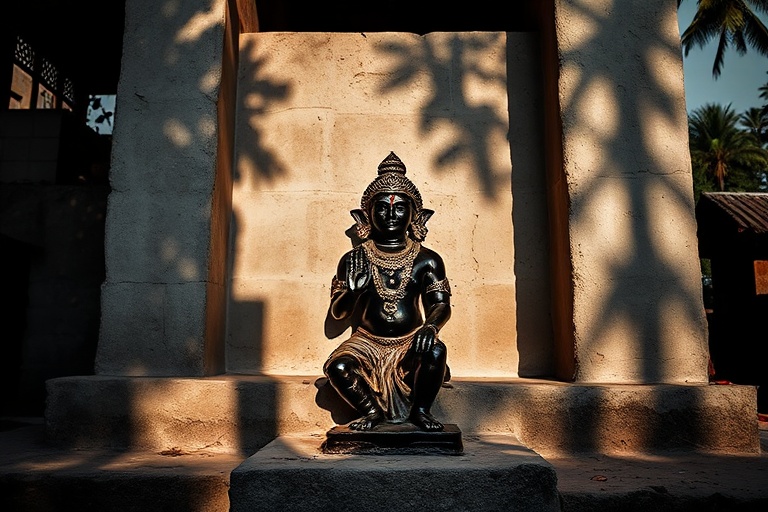
Color holds power. It shapes perceptions, influences emotions, and often carries layers of meaning beyond its visual presence. Among the spectrum of hues, karuppu—the Tamil word for black—stands out as one of the most symbolically charged. Far from being merely a shade, karuppu weaves itself into the fabric of South Indian culture, spirituality, and daily life. Its significance extends from religious rituals to fashion, from social identity to historical narratives. Understanding karuppu requires peeling back layers of tradition, modernity, and evolving societal norms.
The Roots of Karuppu in Ritual and Religion
In South India, particularly Tamil Nadu, karuppu occupies a sacred space. It is the color most closely associated with the divine feminine in its fierce form. Goddesses like Kali and Bhadrakali are often depicted draped in black or wearing black attire, symbolizing both destruction and protection. Temples dedicated to these deities frequently incorporate black elements in their architecture and rituals. Devotees wear black during festivals like Kali Puja and Navratri, not just as a mark of devotion but as a way to channel the goddess’s energy.
The color’s spiritual resonance isn’t limited to Hinduism. In Dravidian traditions, black is linked to Maa, the primordial earth, grounding spiritual practices in the tangible world. Karuppu’s presence in rituals often signifies a connection to ancestral wisdom and the cyclical nature of life and death. Even in modern times, black remains a dominant color in mourning rituals, reflecting the Tamil belief in the continuity of existence beyond physical form.
Symbolism Across Contexts
Karuppu’s symbolism varies depending on the context:
- Protection: Black is worn as armor against negative energy. Amulets and charms in black are common in rural households.
- Fertility: The color is associated with the womb and agricultural cycles, tying it to prosperity and growth.
- Rebellion: In contemporary settings, black clothing is adopted by youth movements as a statement against oppression.
- Unity: During times of social unrest, black attire has been used to signify collective solidarity.
Karuppu in Fashion and Modern Identity
While karuppu’s spiritual roots run deep, its presence in fashion is equally compelling. South Indian textiles have long embraced black, particularly in sarees. A pavadai-davani (a traditional skirt and blouse set) in black is a staple in many households, worn during religious ceremonies and family gatherings. The color’s versatility allows it to transition seamlessly from festive grandeur to everyday wear, making it a wardrobe essential.
In recent years, karuppu has also become a canvas for modern designers. Brands like Daves Locker’s Fashion section have highlighted how black is reimagined in contemporary South Asian fashion. From minimalist silhouettes to bold embroidery, designers are leveraging karuppu to blend tradition with global aesthetics. This evolution reflects a broader trend: the reclamation of cultural symbols in modern identity.
The Psychology of Black in South Indian Aesthetics
Black’s dominance in South Indian fashion isn’t accidental. Psychologically, it evokes a sense of mystery, strength, and elegance. In a region where vibrant colors often dominate, black stands out for its understated power. It’s a color that commands attention without shouting, a quality that resonates with both tradition and modernity. Studies in color psychology suggest that black can enhance focus and authority, traits that align with South India’s emphasis on discipline and heritage.
The Broader Implications of Karuppu
Karuppu’s cultural footprint extends beyond South India. In Sri Lankan Tamil communities, for example, black is similarly revered in religious and social contexts. Diaspora communities in Malaysia, Singapore, and the West carry these traditions forward, often adapting them to new environments. This global reach underscores karuppu’s role as a unifying symbol across Tamil identities.
Yet, karuppu is not without its contradictions. In a world increasingly dominated by fast fashion and digital aesthetics, the color’s traditional significance sometimes clashes with modern trends. Some critics argue that commercialization dilutes its spiritual essence, reducing karuppu to a mere fashion statement. Others see this as an opportunity for cultural revival, where younger generations reinterpret the color’s meaning in ways that resonate with them.
“Karuppu is more than a color; it’s a living tradition. Its ability to adapt while retaining its core symbolism is what makes it timeless.” — Dr. Aruna Srinivasan, Cultural Anthropologist
Karuppu in the Digital Age
The internet has amplified karuppu’s presence, albeit in fragmented ways. Social media platforms like Instagram and TikTok showcase black attire in fashion hauls, religious tutorials, and even memes. Hashtags like #KaruppuSaree or #BlackInCulture have gained traction, creating virtual communities around the color. This digital engagement highlights karuppu’s relevance in an era where identity and expression are increasingly curated online.
However, the digital space also presents challenges. Misrepresentation and appropriation are risks, especially when karuppu is stripped of its context for aesthetic appeal. Platforms like Daves Locker’s Culture section play a crucial role in educating audiences about the color’s deeper meanings, ensuring that its cultural significance isn’t lost in translation.
Conclusion: The Enduring Power of Karuppu
Karuppu is a paradox—a color that is both ancient and ever-evolving. It anchors traditions while inspiring innovation. Its presence in rituals, fashion, and digital spaces speaks to its versatility and resilience. As South Indian culture continues to navigate globalization, karuppu remains a steadfast symbol of identity, spirituality, and creativity.
For those who wear it, revere it, or simply appreciate its depth, karuppu is a reminder that colors are never just colors. They are stories, emotions, and legacies, passed down through generations. In a world that often prioritizes the new over the timeless, karuppu stands as a testament to the enduring power of cultural heritage.