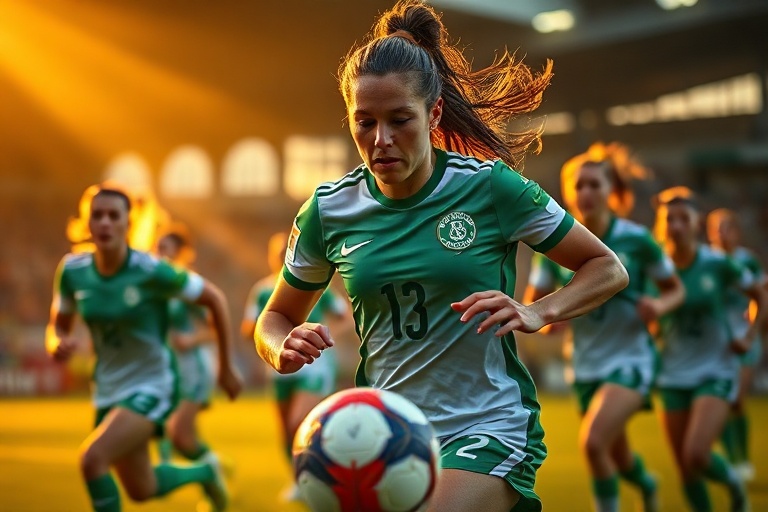
Katie McCabe: Ireland’s Football Captain Leading Change On and Off Field
Katie McCabe has established herself as one of the most influential figures in Irish football. As captain of both the Republic of Ireland women’s national team and Arsenal Women, she has become a symbol of leadership, skill, and resilience. Her journey from a young player in Dublin to an international star reflects both personal growth and the evolving landscape of women’s football.
Early Career and Rise to Prominence
Born on September 21, 1995, in Dublin, McCabe began playing football at a young age. She joined St. Catherine’s Park in her hometown before moving to the youth system at Shelbourne Ladies, where her talent quickly became evident. By the age of 16, she made her senior debut for Shelbourne, showcasing her technical ability and tactical awareness.
Her performances at Shelbourne caught the attention of scouts, leading to a move to the Women’s National League (WNL). She played for UCD Waves, where she refined her skills and developed into a midfield playmaker. Her ability to read the game and deliver precise passes set her apart from her peers.
These early experiences shaped her understanding of the game’s demands. She learned the importance of consistency, adaptability, and mental toughness—qualities that would later define her professional career.
International Breakthrough with Ireland
McCabe made her debut for the Republic of Ireland women’s national team in 2015 at just 19 years old. Initially used as a winger, she soon transitioned into a more central role, where her vision and passing range flourished. Her technical skills and leadership qualities did not go unnoticed.
In 2017, she was named captain of the national team at the age of 21, making her one of the youngest captains in Irish football history. This appointment reflected the trust placed in her by both teammates and coaches. Under her leadership, Ireland qualified for major tournaments, including the UEFA Women’s Euro 2022 and the 2023 FIFA Women’s World Cup.
At the World Cup in Australia and New Zealand, McCabe played a pivotal role. She started all three group-stage matches and delivered a standout performance against Canada, contributing to a 1-0 victory. Her ability to control the tempo of the game and create scoring opportunities highlighted her importance to the team.
- Key Achievements with Ireland:
- 2022 UEFA Women’s Euro qualification
- 2023 FIFA Women’s World Cup qualification
- Captain since 2017
- Over 70 international caps
Club Success with Arsenal Women
McCabe’s club career reached new heights when she joined Arsenal Women in January 2021. The move to one of the most prestigious clubs in women’s football was a significant milestone. At Arsenal, she reunited with Jonas Eidevall, who had previously coached her at Eskilstuna in Sweden, further solidifying her development.
In her first full season with Arsenal, McCabe became a regular starter in the midfield. Her ability to dictate play and contribute defensively added depth to the squad. She played a key role in Arsenal’s 2021-22 FA Women’s Super League campaign, helping the team finish second in the league.
By the 2022-23 season, she had firmly established herself as a first-team player. Her performances earned praise for their consistency and impact. Whether playing as a deep-lying midfielder or further forward, she adapted seamlessly to different tactical setups.
McCabe’s partnership with Arsenal’s creative players, such as Beth Mead and Vivianne Miedema, highlighted her ability to elevate those around her. Her work rate and tactical discipline made her a coach’s dream, while her knack for scoring important goals added another dimension to her game.
The Leadership Style and Off-Field Influence
McCabe’s leadership extends beyond tactics and performance. She is known for her vocal presence on the pitch, often organizing her teammates and communicating effectively under pressure. Her ability to remain composed in critical moments has earned her respect across the football community.
Off the field, McCabe has become an advocate for women’s football in Ireland. She has spoken openly about the challenges faced by female athletes, including pay disparities, visibility, and infrastructure. Her advocacy aligns with broader efforts to grow the sport at both the grassroots and professional levels.
In interviews, she has emphasized the importance of investment in women’s football, citing the need for better facilities, youth programs, and media coverage. Her platform as a national team captain gives her a powerful voice in these discussions.
She has also been involved in charitable initiatives, using her influence to support causes close to her heart. Whether through fundraising events or public appearances, she demonstrates a commitment to making a positive impact beyond the pitch.
Challenges and Resilience
McCabe’s career has not been without challenges. Injuries have at times disrupted her progress, forcing her to adapt and rebuild her fitness. In 2020, she suffered a serious knee injury that required surgery and a lengthy rehabilitation process. Her return to full fitness was a testament to her determination and professionalism.
She has also faced criticism and scrutiny, as public figures in football often do. However, her response to adversity has only strengthened her reputation. Rather than retreating, she has used challenges as motivation to improve and prove her doubters wrong.
Her resilience is a defining trait. Whether recovering from injury, adapting to a new league, or leading a national team through qualification campaigns, she has consistently demonstrated mental toughness and adaptability.
Looking Ahead: The Future of Katie McCabe
At 28 years old, McCabe is in the prime of her footballing career. With Arsenal and Ireland both aiming for further success, her role will remain crucial. The 2024-25 season presents new opportunities, including potential domestic trophies and international competitions.
For Ireland, the focus will be on building a competitive squad capable of advancing in major tournaments. McCabe’s experience and leadership will be vital in guiding a new generation of players. Her ability to mentor younger teammates reflects her growth as both a player and a leader.
At club level, Arsenal’s ambitions under Jonas Eidevall include reclaiming the WSL title and competing in the UEFA Women’s Champions League. McCabe’s versatility and tactical intelligence make her a key asset in these ambitions.
Beyond football, McCabe’s influence continues to grow. She represents a new wave of athletes who are unafraid to speak out on social issues while excelling in their sport. Her legacy will likely extend beyond trophies and statistics, shaping the future of women’s football in Ireland and beyond.
As she continues to evolve, one thing is certain: Katie McCabe is more than a footballer. She is a leader, an advocate, and a role model whose impact will be felt for years to come.
Conclusion
Katie McCabe’s journey from Dublin’s local pitches to the global stage is a story of talent, hard work, and leadership. Her achievements with Ireland and Arsenal highlight her importance in the world of women’s football. Yet, it is her character—her resilience, advocacy, and commitment to growth—that truly sets her apart.
As she continues to inspire fans and teammates alike, McCabe’s legacy is still being written. For young players dreaming of following in her footsteps, her career serves as a powerful example of what dedication and determination can achieve.