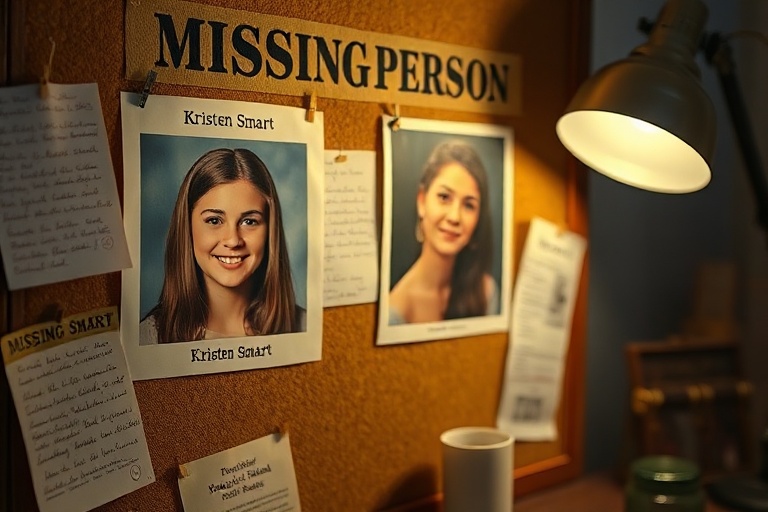
Kristen Smart Case: Decades of Search for Justice Explained
The disappearance of Kristen Smart in 1996 remains one of the most haunting unresolved cases in modern American criminal history. Nearly three decades later, her family continues to seek answers while law enforcement pursues every possible lead. This case has not only shaped California’s approach to missing persons investigations but has also left an indelible mark on true crime discourse nationwide.
The timeline of events stretches across years, involving multiple investigations, legal battles, and public scrutiny. Kristen’s case is far more than a cold case—it is a story of persistence, evolving forensic science, and the enduring hope that justice can still be served.
The Night Kristen Disappeared
On the evening of May 24, 1996, Kristen Smart—a bright 19-year-old college student from California Polytechnic State University—attended an off-campus party near San Luis Obispo. She was last seen walking back to her dorm around 2:00 a.m. on May 25. When she failed to return or check in, her roommates grew concerned. After 24 hours with no contact, they reported her missing.
Initially, investigators suspected Kristen might have left voluntarily, a common assumption in cases involving young adults. Yet as days passed with no credible leads, authorities began to suspect foul play. The search area expanded, and local media amplified the urgency of the search.
Within weeks, detectives zeroed in on Paul Flores, a fellow student who had been at the same party. Though never charged at the time, Flores remained a person of interest. His father, Ruben Flores, also became a figure of interest due to inconsistencies in his statements and behavior following Kristen’s disappearance.
Key Witnesses and Unresolved Leads
Several witnesses came forward over the years, describing suspicious behavior around the time of Kristen’s disappearance. One neighbor reported seeing a white van near the dorms that night. Another witness claimed to have seen Paul Flores near Kristen’s dorm around the time she vanished. Despite these accounts, physical evidence was scarce, and the case grew colder.
In 2004, the San Luis Obispo County Sheriff’s Office reclassified Kristen’s case as a homicide, citing new evidence and witness statements. This shift brought renewed attention but also frustration, as no arrests were made for another decade.
Arrests, Trials, and Legal Battles
In April 2021, Paul Flores and his father Ruben were arrested and charged with Kristen’s murder. The arrests came after decades of investigative work, including the use of advanced forensic techniques and renewed public pressure. The case finally moved to trial in 2022, drawing national media coverage.
The prosecution presented a compelling timeline, suggesting Kristen was attacked near her dorm and her body was later moved. Forensic experts testified about soil and bone fragments found in Paul Flores’ car and bedroom, which matched the area where Kristen’s remains were later discovered.
After a lengthy trial, Paul Flores was found guilty of murder in October 2022. He was sentenced to life in prison without the possibility of parole. Ruben Flores was acquitted of charges related to accessory after the fact but remains under scrutiny for his role in the aftermath.
Forensic Breakthroughs and Their Role
The case saw significant advances thanks to modern forensic technology. In 2021, investigators used ground-penetrating radar to search a property linked to the Flores family. They uncovered Kristen’s remains buried beneath a patio slab. DNA analysis later confirmed the match.
This breakthrough was pivotal not only for closure but also for the legal proceedings. It provided physical evidence that had been missing for 25 years, reinforcing witness testimony and circumstantial evidence.
Impact on Law Enforcement and Missing Persons Protocols
The Kristen Smart case has had a lasting impact on how law enforcement handles missing persons investigations, particularly those involving college students. It exposed gaps in initial response protocols and highlighted the importance of treating every disappearance as a potential homicide until proven otherwise.
In response to public outcry, California passed “Kristen’s Law” in 2021, mandating enhanced training for law enforcement in missing persons cases. The law also established a statewide alert system for endangered missing persons, modeled after Amber Alerts but tailored for adults at high risk.
National Attention and Advocacy
Kristen’s case gained national attention through media coverage, podcasts, and advocacy by her family. Her parents, Stan and Denise Smart, founded the Kristen Smart Foundation, which advocates for stronger protections for college students and improved missing persons response systems.
The foundation has worked with legislators to push for reforms, including mandatory reporting requirements for universities when students go missing. Their efforts have resulted in policy changes at Cal Poly and other institutions across the state.
Where the Case Stands Today
Though Paul Flores is now serving his sentence, questions remain about Ruben Flores’ involvement and whether others may have played a role. Investigators have stated the case is not fully closed, and the search for full accountability continues.
For Kristen’s family, the conviction brought a measure of peace but not closure. In a 2023 interview, Denise Smart stated, “We still miss her every single day. This verdict gives us justice, but it doesn’t bring her back.”
The case also serves as a reminder of the power of persistence. Detectives, journalists, and advocates never stopped pursuing the truth—even when the trail went cold. Their dedication ensured that one of the most infamous missing persons cases in U.S. history did not fade into obscurity.
Lessons for Families of Missing Persons
The Kristen Smart case offers several lessons for families facing similar tragedies:
- Never give up hope: Even after decades, new leads and technology can emerge.
- Demand transparency: Families should insist on regular updates from law enforcement and access to case files.
- Leverage public support: Media attention and advocacy groups can amplify a case and pressure authorities.
- Use every tool available: From social media campaigns to forensic advances, persistence requires strategy.
For those interested in supporting similar causes, resources are available through organizations like the National Center for Missing & Exploited Children and the Kristen Smart Foundation.
Conclusion: A Case That Changed Everything
The Kristen Smart case is more than a tragedy—it is a turning point in how missing persons cases are investigated and prosecuted in the United States. It demonstrated that even the most complex cases can be solved with time, technology, and relentless advocacy.
As the legal proceedings conclude, the broader conversation about student safety, law enforcement accountability, and forensic innovation continues. Kristen’s legacy lives on not only in the lives she touched but in the systems that have been reshaped in her name.
For her family, the fight for justice was never just about one verdict. It was about ensuring no other family has to endure 25 years of uncertainty. In that sense, Kristen’s story is still being written—and her memory continues to inspire change.