New York Local Police Tighten ICE Restrictions Amid Rising Immigration Concerns
The New York Police Department (NYPD) has recently implemented stricter guidelines surrounding cooperation with Immigration and Customs Enforcement (ICE). These measures reflect broader shifts in urban policing strategies, particularly in sanctuary cities. The move comes as local governments nationwide reassess their relationships with federal immigration authorities amid heightened political tensions.
New York’s approach isn’t isolated. Cities like Chicago, San Francisco, and Los Angeles have adopted similar policies to shield undocumented residents from deportation risks. The NYPD’s decision underscores a deliberate effort to maintain trust between immigrant communities and law enforcement—a balance that has become increasingly precarious in recent years.
Understanding the New ICE Restrictions in New York
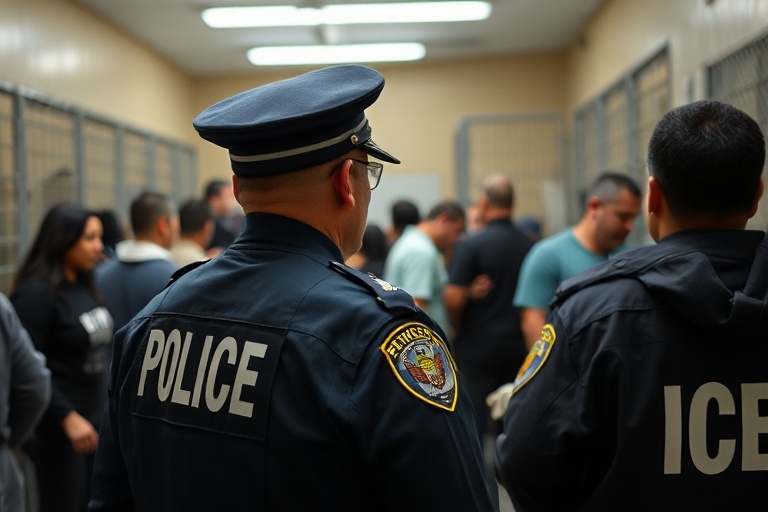
The updated NYPD guidelines restrict officers from inquiring about immigration status during routine interactions. Exceptions exist only in cases involving serious felonies or threats to public safety. Officers are also prohibited from detaining individuals solely for ICE requests unless they have a criminal warrant or have been convicted of specific violent crimes.
These changes align with New York’s political climate, where progressive leaders have pushed for stronger protections for undocumented residents. The state’s 2019 Green Light Law, which allows undocumented immigrants to obtain driver’s licenses, further illustrates this trend. Critics argue the restrictions hinder ICE’s ability to enforce federal immigration laws, while supporters praise them as necessary safeguards for vulnerable communities.
The Global Context: How Other Countries Balance Immigration and Policing
New York’s policies echo approaches taken in other nations where immigration enforcement is a contentious issue. In Canada, for example, federal immigration officers cannot enter hospitals, schools, or places of worship without warrants—a policy designed to prevent the intimidation of undocumented residents. Similarly, Germany’s federal police are barred from conducting immigration checks in public spaces unless there’s a direct threat.
These international examples highlight a common dilemma: How can law enforcement protect communities while avoiding the perception of targeting immigrants? The answer often lies in legal frameworks that separate local policing from federal immigration enforcement. In the Netherlands, police are explicitly instructed not to assist ICE-like agencies unless required by law, a model that New York’s updated guidelines loosely follow.
Yet, the global landscape isn’t uniform. Countries like Italy and Hungary have adopted stricter measures, with local police actively collaborating with immigration authorities. This divergence reflects broader ideological divides on immigration, where urban centers tend to favor inclusionary policies while rural or conservative regions prioritize control.
Impact on Immigrant Communities and Law Enforcement
The immediate effect of New York’s restrictions has been a measurable shift in how immigrant communities interact with police. Advocacy groups report increased willingness among undocumented residents to report crimes without fear of deportation. This aligns with research showing that sanctuary policies foster greater trust in law enforcement among marginalized groups.
However, the changes haven’t been without controversy. Some law enforcement officials express concerns about potential blind spots in criminal investigations. ICE, in particular, has criticized the policies, arguing they undermine public safety by allowing criminals to evade deportation. The agency points to cases where individuals with violent histories have been released due to lack of cooperation, though New York officials counter that such incidents are rare.
For local police, the new guidelines also introduce operational challenges. Officers must now navigate a complex legal landscape where federal and local priorities sometimes clash. Training programs have been expanded to ensure compliance, but the learning curve remains steep. Meanwhile, immigrant advocacy organizations continue to push for even stronger protections, including bans on sharing information with ICE in non-criminal cases.
What’s Next for New York and Beyond?
The NYPD’s updated policies are part of a broader trend where cities are taking immigration enforcement into their own hands. Legislation like New York’s 2019 “Immigrant Protection Act” sets a precedent for other states, particularly in the Northeast and West Coast. Yet, the legal battles are far from over. Federal agencies have challenged sanctuary policies in court, arguing they violate constitutional principles of immigration enforcement.
For now, New York’s approach serves as a case study for other municipalities grappling with similar questions. The outcome could influence policies far beyond the state’s borders, shaping how cities nationwide balance local priorities with federal mandates. One thing is clear: The debate over immigration enforcement is far from settled, and New York’s latest move is just one chapter in a much larger story.
Key Takeaways for Residents and Policymakers
New York’s updated ICE restrictions reflect a growing trend among cities to limit cooperation with federal immigration authorities. While the policies aim to protect undocumented residents, they also spark legal and operational challenges. As other states and countries watch closely, the long-term implications remain uncertain—particularly in an era where immigration policies are increasingly politicized.
For residents, the message is clear: Know your rights. For policymakers, the challenge is to strike a balance between public safety and inclusivity. And for law enforcement, the task is to adapt to an ever-changing legal landscape without compromising community trust.