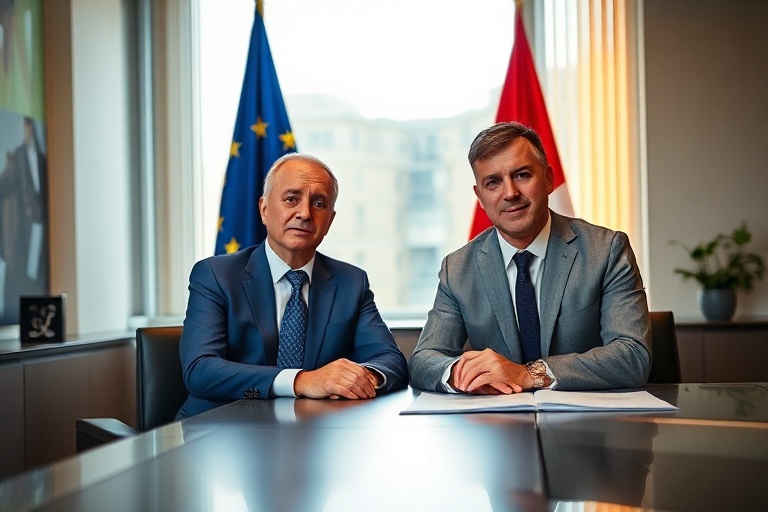
Latvia, a Baltic state with a population of just under 1.9 million, operates under a parliamentary system where the Prime Minister serves as the head of government. The role has evolved significantly since the country regained independence in 1991, reflecting Latvia’s journey from Soviet rule to European Union membership. Understanding the Prime Minister’s position requires examining both constitutional powers and the political dynamics that shape governance in Riga.
The Constitutional Role and Powers of the Prime Minister
The Prime Minister of Latvia is appointed by the President but must secure majority support from the Saeima, the country’s unicameral parliament. This requirement ensures that the Prime Minister commands legislative backing, reinforcing the parliamentary nature of Latvia’s government. The Constitution of Latvia, adopted in 1922 and restored in 1993, outlines the Prime Minister’s responsibilities, which include leading the Cabinet of Ministers, setting national policy priorities, and representing Latvia in international forums.
The Prime Minister also plays a crucial role in crisis management. During the COVID-19 pandemic, for example, then-Prime Minister Krišjānis Kariņš frequently addressed the nation, balancing public health directives with economic concerns. His government’s decisions, such as lockdowns and vaccination campaigns, demonstrated the Prime Minister’s ability to steer the country through emergencies while maintaining transparency.
Unlike some European systems where the head of state holds significant executive power, Latvia’s President serves primarily as a symbolic figure. The Prime Minister, therefore, wields substantial influence over domestic and foreign policy, from negotiating EU treaties to managing relations with neighboring countries like Estonia and Lithuania.
A Brief History: From Independence to EU Membership
Latvia declared independence from Russia in 1918, and its first Prime Minister, Kārlis Ulmanis, took office in 1918. The interwar period saw Latvia establish a democratic system, though political instability led to Ulmanis’ eventual authoritarian rule in 1934. After Soviet occupation in 1940, Latvia regained independence in 1991, prompting a return to democratic governance.
The post-Soviet era brought challenges, including economic transition and NATO/EU accession negotiations. The first Prime Minister after independence, Ivars Godmanis, oversaw the difficult process of privatization and market liberalization. His tenure set the stage for Latvia’s eventual EU membership in 2004, a milestone that reshaped the country’s political and economic landscape.
In the 2000s, Latvia faced financial crises, including the 2008 global recession, which led to austerity measures and public unrest. Prime Minister Valdis Dombrovskis, who served from 2009 to 2014, became widely respected for stabilizing the economy and restoring growth. His leadership earned him international recognition, including a role as Vice-President of the European Commission.
Key Milestones in Latvian Leadership
- 1991: Ivars Godmanis becomes first post-Soviet Prime Minister.
- 2004: Latvia joins the EU and NATO under Prime Minister Indulis Emsis.
- 2009-2014: Valdis Dombrovskis steers Latvia through economic recovery.
- 2021: Krišjānis Kariņš takes office amid pandemic challenges.
The Current Prime Minister: Krišjānis Kariņš
Since January 2021, Latvia has been led by Krišjānis Kariņš, a center-right politician from the New Unity party. Kariņš, a former Member of the European Parliament, brings a technocratic approach to governance, emphasizing digital transformation and economic competitiveness. His government has prioritized Latvia’s energy security, particularly in response to Russia’s war in Ukraine, which has heightened concerns over energy dependence.
Kariņš’ leadership has also focused on strengthening Latvia’s defense capabilities. In 2022, his government approved a significant increase in military spending, aligning with NATO’s commitment to collective security. This shift reflects broader geopolitical tensions, as Latvia seeks to reduce reliance on Russian energy and bolster ties with Western allies.
Domestically, Kariņš has faced challenges, including protests over rising inflation and housing costs. His government responded with subsidies for vulnerable households and investments in affordable housing, aiming to balance economic growth with social equity. However, critics argue that these measures have not fully addressed systemic issues, such as labor shortages and demographic decline.
Challenges and Future Prospects for Latvia’s Leadership
Latvia’s Prime Minister must navigate a complex political environment. The country’s multi-party system often leads to coalition governments, which can dilute the Prime Minister’s authority. For example, Kariņš’ government includes parties with divergent views on issues like taxation and environmental policy, requiring constant negotiation to maintain stability.
Demographic decline poses another challenge. Latvia’s population has shrunk by nearly 20% since 1991, driven by emigration and low birth rates. The government has introduced policies to incentivize repatriation and attract foreign workers, but reversing this trend will require long-term strategies.
On the international stage, Latvia’s relationship with the EU remains critical. The country benefits from EU funding for infrastructure and development but must also align with Brussels on issues like climate policy and rule of law. The Prime Minister’s ability to balance these priorities will shape Latvia’s future within the European project.
Looking ahead, the next Latvian Prime Minister will likely face decisions on energy diversification, digital governance, and security policy. As Latvia commemorates its 100th anniversary of independence in 2091, the leadership’s choices will determine whether the country can overcome its demographic and geopolitical challenges.
What to Watch in Latvian Politics
- Energy Independence: Will Latvia accelerate its transition to renewable energy sources?
- Defense Spending: How will NATO commitments shape Latvia’s military budget?
- EU Relations: Can Latvia maintain influence in Brussels amid shifting political winds?
- Demographic Policies: What new measures will address population decline?
For those interested in Latvia’s political evolution, our Politics section offers deeper analysis on Baltic governance trends. Alternatively, explore European affairs coverage for broader context on Latvia’s role in the EU.
The Prime Minister of Latvia stands at the intersection of history and modernity. From navigating post-Soviet transitions to addressing 21st-century crises, this role demands adaptability and foresight. As Latvia continues to shape its identity within Europe, the Prime Minister’s decisions will resonate far beyond Riga’s cobblestone streets.