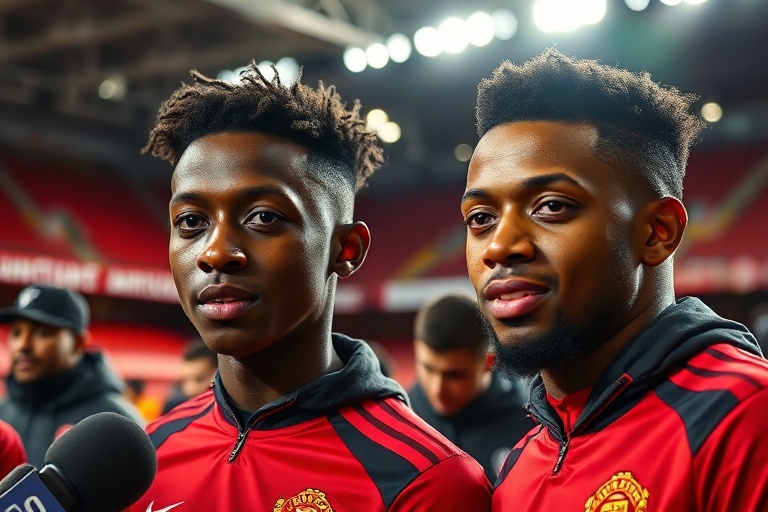
Manchester United’s Elliot Anderson: The Transfer Saga That Captured Global Attention
Elliot Anderson’s potential move from Newcastle United to Manchester United has dominated football discussions this summer, reflecting broader trends in how player transfers shape club strategies and fan emotions across Europe. The 20-year-old midfielder, known for his technical ability and versatility, has become a focal point in Manchester United’s ongoing rebuilding efforts under new manager Kieran McKenna. While the transfer remains unconfirmed, its implications stretch beyond the pitch, touching on financial realities, cultural shifts in football management, and the evolving expectations of supporters.
The Anderson saga is not just about one player. It underscores how modern transfers—especially those involving young English talents—are increasingly scrutinized through the lenses of identity, loyalty, and the globalized nature of the sport. Clubs in the Premier League are now more than ever navigating a complex web of financial fair play regulations, fan engagement, and sporting ambition. For Manchester United, a club with a historic global fanbase, this transfer represents more than squad reinforcement; it’s a statement about ambition and identity in a competitive era.
Why Elliot Anderson Fits Manchester United’s Vision
Manchester United’s interest in Elliot Anderson is rooted in both immediate need and long-term vision. The club has struggled to consistently challenge for top-four finishes in recent seasons, and McKenna’s project demands players who can adapt to a high-pressing, possession-based style. Anderson, with his ability to play as a box-to-box midfielder or deeper creator, fits that profile. His intelligence in breaking lines and carrying the ball forward makes him a valuable asset in transitional play—a key area of improvement for the Red Devils.
From a cultural perspective, Anderson also embodies a shift toward developing homegrown talent. After years of high-profile foreign signings, Manchester United are now prioritizing players who can connect with the local fanbase and represent the club’s English identity. This reflects a wider trend in English football, where clubs are under pressure to invest in academies and promote young English players—a response not only to regulatory pressures but also to fan sentiment.
His versatility is another major draw. In a squad often criticized for lacking flexibility, Anderson can slot into multiple midfield roles. That adaptability is crucial in a league where fixtures come thick and fast, and squad depth determines success. While the transfer fee remains undisclosed, reports suggest it could exceed £40 million, a figure that reflects his potential rather than current output—a gamble Manchester United appear willing to take.
The Financial and Strategic Context of the Transfer
The potential Anderson transfer must be viewed within the financial constraints of modern football. Under the leadership of co-owners INEOS and CEO Jean-Clair Todibo, Manchester United have emphasized fiscal responsibility alongside ambition. The club’s recent signings—such as Joshua Zirkzee and Leny Yoro—have reflected a strategy of targeted investment in proven performers. Anderson, however, represents a different kind of acquisition: a high-ceiling young player with domestic experience.
Financially, the move aligns with Premier League trends where young English players are increasingly seen as assets with both sporting and commercial value. Anderson’s profile makes him marketable not only in the UK but globally, particularly in Asia and the Americas, where Manchester United have strong commercial ties. His presence could enhance the club’s narrative around youth development, a story that resonates with younger fans and sponsors alike.
Yet, the financial outlay comes at a time when Manchester United are still recovering from the debt incurred during the Glazer era. While the club reported a £27 million pre-tax profit in their latest accounts, this was largely driven by commercial revenue rather than football operations. The Anderson deal, if completed, would likely be funded through a combination of club funds and potential player sales—highlighting the delicate balance between ambition and sustainability.
The Cultural Impact: Identity, Loyalty, and Fan Expectations
Beyond tactics and finances, the Anderson transfer touches on deeper cultural themes within football. For decades, Manchester United have been defined by their ability to attract global superstars—from Cantona to Ronaldo—players whose charisma and skill transcended the sport. Today, the club faces pressure to redefine its identity around authenticity and connection. Anderson, a Geordie who grew up supporting Newcastle, represents a shift toward players who understand the emotional pulse of English football.
This shift reflects broader changes in how fans engage with their clubs. Supporters today are more vocal about player backgrounds, academy contributions, and local representation. The rise of social media has amplified these voices, turning every transfer into a public debate. For Manchester United fans, Anderson’s potential arrival is not just about performance—it’s about whether the club is truly listening to its roots.
There’s also the question of loyalty. Anderson’s move from Newcastle to Manchester United would be a significant shift within English football’s cultural geography. The North East and North West have long-standing rivalries, and such transfers often spark emotional reactions. However, in an era where players frequently move between rival clubs, Anderson’s decision could be seen as a pragmatic career choice rather than a betrayal—especially if it aligns with his ambition to play at the highest level.
What’s Next for Elliot Anderson and Manchester United?
As of late July, negotiations remain ongoing. Newcastle are reportedly reluctant to sell, valuing Anderson as a key part of their long-term project under new manager Eddie Howe. Meanwhile, Manchester United are reportedly exploring alternative options, including other midfield targets. The Anderson transfer, therefore, is far from guaranteed—but its very presence in discussions reveals much about the current state of football.
If completed, the deal would mark another step in Manchester United’s transition from a club of superstars to one of strategic development. It would also signal a recognition that success in modern football requires more than financial firepower; it demands cultural alignment, tactical clarity, and a connection to the next generation of players and fans.
Regardless of the outcome, the Anderson saga highlights a broader truth: in today’s football landscape, transfers are not just transactions. They are narratives—about ambition, identity, and the evolving relationship between clubs, players, and supporters. For Manchester United, this story is still being written.
Key Takeaways: What the Elliot Anderson Transfer Reveals
- Strategic Fit: Anderson’s versatility and high-pressing ability align with Manchester United’s tactical evolution under McKenna.
- Financial Balance: The transfer reflects a careful approach to spending, balancing ambition with fiscal responsibility.
- Cultural Shift: The move toward young English talent signals a desire to reconnect with local fan identity.
- Fan Engagement: Supporter reactions highlight the growing importance of player backgrounds and loyalty in transfer decisions.
As the transfer window progresses, the football world will watch closely—not just to see if Anderson dons the red of Manchester United, but to understand what that choice says about the future of the beautiful game.
Explore more about Manchester United’s transfer strategy and academy developments on our Sports page.
For deeper analysis on Premier League trends and player valuations, visit our Analysis section.