Mike Banks isn’t just a musician; he’s a cultural architect whose work has echoed across decades and continents. As the co-founder of Underground Resistance (UR), Banks didn’t just create music—he forged a movement that redefined electronic soundscapes while embedding social and political commentary into every beat. His influence stretches from the industrial corridors of Detroit to the neon-lit clubs of Berlin, Tokyo, and beyond, making him one of the most consequential yet understated figures in modern music.
The Birth of Underground Resistance
Underground Resistance emerged in 1989, a period when Detroit’s music scene was still raw from the collapse of its automotive industry and the broader economic despair of the late 20th century. Mike Banks and his partner, Jeff Mills, founded UR as a collective that would challenge the commercialization of techno music while amplifying Black voices in a genre that was increasingly dominated by European reinterpretations. Banks’ vision was clear: techno wasn’t just about rhythm and bass—it was a tool for resistance, a sonic protest against systemic oppression.
UR’s early releases, like the seminal Faces & Phases EP, didn’t just push boundaries—they obliterated them. The label’s aesthetic was unapologetically militant, with album art featuring Black Power symbols and tracks that carried the weight of Detroit’s streets. Banks’ production style was gritty, raw, and unfiltered, blending the mechanical precision of Kraftwerk with the raw energy of Chicago house and the militant rhythms of funk. This fusion created a sound that felt both futuristic and deeply rooted in the African American experience.
Detroit’s Sonic Revolution
The significance of Underground Resistance cannot be overstated. In an era where techno was becoming a commodity in Europe, Banks ensured it remained a voice for the marginalized. His work with UR wasn’t just about music—it was about identity. Tracks like Punisher and Interference carried messages of defiance, while the label’s anonymous releases (many credited simply to “The Underground Resistance”) reinforced the idea that the music, not the artist, was the message. This anonymity wasn’t just a gimmick; it was a deliberate rejection of the cult of personality that dominated the music industry.
Banks’ influence extended beyond Detroit. Through UR, he fostered a global network of artists, producers, and DJs who shared his ethos. The label’s reach stretched to Europe, where techno was already a cultural force, and to Japan, where a burgeoning scene eagerly embraced UR’s sound. This international exchange wasn’t just about music—it was about solidarity. Banks’ work helped create a transnational community of artists who saw techno as more than just a genre; it was a way of life.
Banks’ Musical Philosophy: Sound as Resistance
Mike Banks’ approach to music is rooted in a deep understanding of its power. For him, techno isn’t just a backdrop for dancing—it’s a weapon. His tracks often incorporate field recordings, spoken word samples, and industrial noises that evoke the harsh realities of urban life. This wasn’t accidental; it was intentional. Banks believed that music should reflect the struggles of the communities it emerged from, and his productions were a direct response to the economic and social decay of Detroit.
One of the most striking aspects of Banks’ work is his use of silence. Unlike the relentless 4/4 beats that define much of electronic music, UR’s tracks often feature abrupt pauses, distorted textures, and unnerving soundscapes. This wasn’t just a stylistic choice—it was a reflection of the unpredictability of life in Detroit. The music mirrored the city’s resilience, its ability to endure despite overwhelming odds.
The Role of Technology in Banks’ Sound
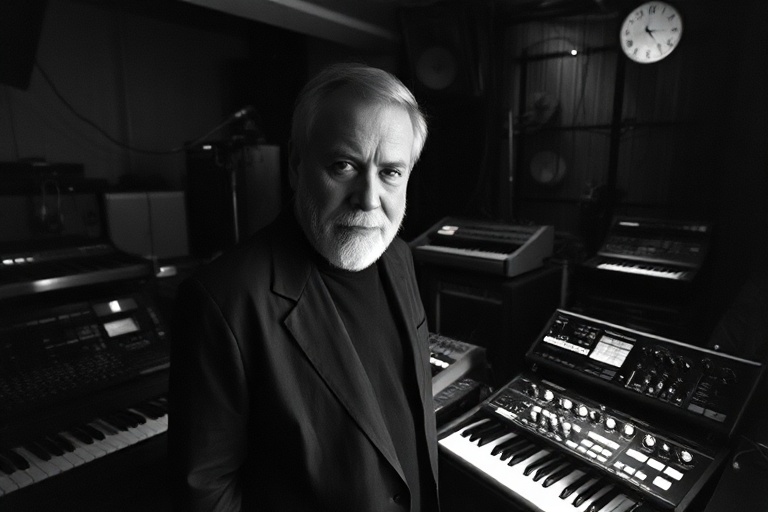
Banks’ production techniques were as unconventional as his philosophy. He frequently used analog equipment, favoring the warm, unpredictable tones of vintage synthesizers and drum machines over the sterile precision of digital software. This choice wasn’t just aesthetic; it was political. By rejecting the digital revolution that was sweeping through the music industry, Banks made a statement about authenticity and craftsmanship in an age of mass production.
His collaborations with other artists often involved extensive experimentation. Banks was known for spending hours in the studio, tweaking sounds and refining arrangements until every element felt just right. This meticulous approach resulted in music that was both technically impressive and emotionally resonant. Tracks like Good Life and Jazz Is the Teacher showcase his ability to blend hypnotic grooves with intricate layers of sound, creating an experience that is both cerebral and visceral.
The Global Impact of Mike Banks
While Mike Banks is often associated with Detroit, his influence is undeniably global. Underground Resistance’s music has been embraced by scenes in cities as diverse as Berlin, London, Tokyo, and São Paulo. In Europe, Banks’ sound became a cornerstone of the underground techno movement, inspiring a generation of DJs and producers who saw techno as a form of political expression. In Japan, UR’s music found a particularly receptive audience, with Japanese artists like DJ Nobu and DJ Toshiyuki incorporating Banks’ techniques into their own work.
Banks’ impact isn’t limited to music. His ethos has influenced fashion, visual art, and even political movements. The militant aesthetic of Underground Resistance has been adopted by artists and activists worldwide, who see it as a symbol of resistance against oppression. Banks’ work has also been cited as an inspiration by figures in the sports world, where athletes like Colin Kaepernick have used their platforms to challenge systemic injustice in ways that echo Banks’ own activism.
A Legacy That Transcends Generations
Today, Mike Banks remains as active as ever. While Underground Resistance continues to release music, Banks has also expanded his creative horizons. He has composed soundtracks for films and collaborated with artists outside the electronic music sphere. His recent work with the Detroit Symphony Orchestra on the Strings of Life project demonstrated his ability to bridge genres and audiences, proving that his influence extends far beyond the confines of techno.
Banks’ legacy is also evident in the countless artists who cite him as an influence. From Jeff Mills to Carl Craig to newer producers like Jay Daniel, his fingerprints are all over the modern techno landscape. Yet, despite his immense contributions, Banks remains humble. He has often spoken about the importance of community over individual recognition, a philosophy that has defined his career.
Why Mike Banks Matters Today
In an era where music is often commodified and stripped of its cultural significance, Mike Banks’ work serves as a reminder of what art can be. His music isn’t just about entertainment—it’s about survival, resistance, and the unbreakable spirit of a city that has faced countless challenges. Banks’ ability to weave social commentary into his tracks without sacrificing musicality is a testament to his genius. He has shown that techno can be both a dancefloor anthem and a rallying cry, a contradiction that few artists have managed to pull off with such consistency.
Moreover, Banks’ story is a lesson in staying true to one’s roots. In an industry that often prioritizes trends over tradition, he has remained steadfast in his commitment to Detroit and its cultural heritage. His refusal to compromise his vision, even in the face of commercial pressures, is a rarity in today’s music landscape. It’s a reminder that authenticity still has value, and that art can be a powerful force for change.
As we look to the future of electronic music, Mike Banks’ influence is more relevant than ever. The genre continues to evolve, with new subgenres and hybrid styles emerging constantly. Yet, the core principles that Banks championed—resistance, authenticity, and community—remain at the heart of the best techno music. His work is a blueprint for artists who want to use their platform to challenge the status quo and create something that truly matters.
In the end, Mike Banks isn’t just a pioneer of techno—he’s a pioneer of cultural resistance. His music doesn’t just fill dancefloors; it fills hearts and minds with a sense of purpose. It’s a reminder that art isn’t just about escape; it’s about facing reality head-on, with courage and creativity. And in a world that often feels divided and uncertain, that’s a message we need now more than ever.