national portrait gallery
What the National Portrait Gallery Teaches Us About Identity and Legacy
The National Portrait Gallery is more than a collection of faces on walls. It is a living archive of human achievement, cultural memory, and evolving values. From its origins in London to sister institutions worldwide, these galleries do not merely display portraits. They curate narratives about who we are, who we celebrate, and how we remember.
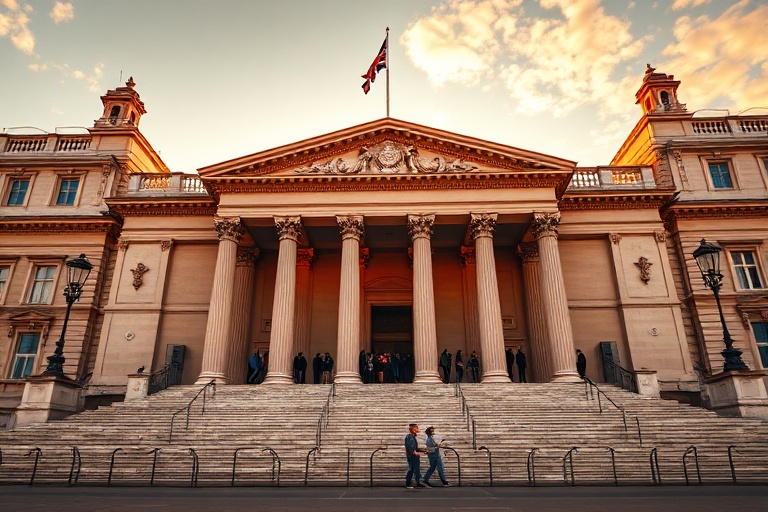
Founded in 1856, the first National Portrait Gallery opened in London with a radical idea: portraiture could serve history, not just vanity. Its founders believed that capturing the likeness of individuals was a way to preserve the spirit of an era. Today, that vision has expanded globally. Washington, D.C., Canberra, and Edinburgh now host their own versions, each reflecting local identity while contributing to a universal conversation about fame, power, and representation.
The Power of Public Portraiture in a Visual Age
Portrait galleries occupy a unique space between art and democracy. They democratize history by asking: Whose face deserves to be remembered? In an era dominated by social media and fleeting digital images, these institutions offer permanence. A portrait in a gallery is a deliberate choice—it endures beyond trends.
Consider the impact of photography. When the National Portrait Gallery in London began, most portraits were painted. Now, photographs dominate its halls. This shift reflects broader cultural changes: the rise of mass media, the decline of aristocratic patronage, and the growing importance of visual storytelling in public life.
Such galleries also reveal who has historically been excluded from public memory. For decades, women, people of color, and working-class figures were underrepresented. Recent efforts to diversify collections have reshaped these spaces. For example, the Smithsonian’s National Portrait Gallery in the U.S. has expanded its focus to include civil rights leaders, scientists, and artists from marginalized communities. These changes are not just symbolic. They challenge visitors to reconsider whose stories define a nation.
From Monarchy to Social Media: Who Belongs in a National Portrait Gallery?
The criteria for inclusion in a national portrait gallery vary by country and era. Traditionally, monarchs, politicians, and military leaders dominated these spaces. Their presence reinforced national identity through lineage and authority. But as societies evolve, so do the definitions of legacy.
In the United Kingdom, the National Portrait Gallery has long balanced tradition with innovation. The famous “Changing Faces” project, for instance, highlights contemporary figures from diverse backgrounds. Meanwhile, in Australia, portraits of Indigenous leaders now share space with colonial governors, forcing a reckoning with history.
In the United States, the National Portrait Gallery in Washington, D.C., has embraced this evolution. Its collection includes not only presidents but also cultural icons like musician Aretha Franklin and athlete Serena Williams. This shift reflects a broader cultural movement: the recognition that legacy is not solely tied to political power. It can also be shaped by art, activism, and achievement in fields like science and entertainment.
As we move further into the 21st century, even social media personalities may find their way into these institutions. The question is no longer just “Who deserves a portrait?” but “What does it mean to be remembered in a world of infinite images?”
The Role of Portraiture in Shaping National Narratives
National portrait galleries are not neutral. They shape—and are shaped by—national narratives. In France, the Musée d’Orsay’s portrait collection reflects the ideals of the Third Republic: progress, science, and democracy. In India, the National Portrait Gallery in Delhi balances colonial history with post-independence heroes, offering a visual timeline of a nation in transition.
These institutions also serve as sites of public discourse. When a new portrait is unveiled, it often sparks debate. Who is chosen? Who is left out? What values does the portrait convey? In 2018, the unveiling of a portrait of former U.S. First Lady Michelle Obama at the National Portrait Gallery in Washington became a cultural moment. The painting, by Amy Sherald, challenged traditional expectations of presidential portraiture with its bold style and emphasis on Black identity.
Such moments highlight the role of portraiture in cultural diplomacy. When a gallery showcases international figures, it fosters cross-cultural understanding. For example, the National Portrait Gallery in London has featured portraits of global icons like Nelson Mandela and Malala Yousafzai, reinforcing shared values across borders.
Preserving the Present: The Future of Portrait Galleries
The future of national portrait galleries is closely tied to technology. Digital archives now complement physical collections, allowing global access to portraits and stories. Some galleries experiment with augmented reality, letting visitors “meet” historical figures through interactive displays. Others use AI to analyze trends in representation over time.
Yet, challenges remain. Funding cuts, debates over deaccessioning, and questions about digital authenticity all shape the evolution of these institutions. One thing is clear: portrait galleries will continue to evolve. They will not only preserve the past but also reflect the present—questioning, challenging, and redefining who belongs in the story of humanity.
As we walk through their halls, we are reminded that a portrait is never just a face. It is a conversation between artist, subject, and viewer. And in a world of constant change, these conversations are more vital than ever.
Visiting a National Portrait Gallery: What to Look For
If you plan to visit one of these galleries, here are a few things to consider:
- Look beyond the faces: Notice the style of the portrait. Is it realistic, abstract, or symbolic? The technique often reveals as much as the subject.
- Ask who is missing: Scan the room. Whose stories are not being told? This question can lead to deeper understanding.
- Read the labels: Many portraits include quotes from the subject. These words add layers to the image.
- Compare eras: See how portraiture has changed over time. Notice shifts in fashion, technique, and representation.
- Engage with interactive displays: Many modern galleries offer digital tools that enrich the experience.
Whether you visit in person or explore online, a national portrait gallery invites you to see history—and yourself—differently.