Newham: A Global Crossroads of Culture, Sport, and Innovation
Newham, a borough in East London, has long been a place where global narratives intersect. From its industrial roots to its modern transformation, the area reflects broader shifts in urban development, migration, and cultural exchange. Today, Newham stands as a testament to resilience, diversity, and ambition, making it a compelling case study in urban evolution.
The borough’s history is deeply tied to the Thames, once home to bustling docks that connected London to the world. The decline of these docks in the mid-20th century left economic scars, but Newham’s revival began with the 2012 Olympic Games. The Stratford regeneration project didn’t just rebuild infrastructure—it redefined the borough’s identity, blending sport, commerce, and community into a cohesive vision.
The Olympic Legacy: More Than Just a Stadium
The 2012 Olympics were a turning point for Newham. The Queen Elizabeth Olympic Park, now a sprawling green space, was once a patchwork of industrial wastelands and neglected neighborhoods. The Games accelerated investment in transport, housing, and public services, turning Newham into a magnet for global attention.
Beyond the stadiums, the legacy includes the Sports facilities that host world-class events, from cycling to athletics. These venues now serve local communities, fostering grassroots participation in sports. The Olympic Village, repurposed into residential units, symbolizes Newham’s shift from temporary spectacle to permanent growth.
The Games also spotlighted Newham’s diversity. Athletes from over 200 nations competed, mirroring the borough’s own demographic: more than 40% of residents were born outside the UK. This multicultural fabric isn’t just demographic data—it’s the lifeblood of Newham’s cultural scene.
Cultural Melting Pot: Art, Music, and Food
Newham’s cultural scene thrives on its diversity. The borough is home to the Entertainment District, where venues like the Stratford East Theatre and the Broadway Theatre host everything from classical performances to cutting-edge experimental works. The Theatre Royal Stratford East, in particular, has a legacy of championing new voices, including the works of local playwrights and migrant artists.
Music is another cornerstone. Newham’s grime and hip-hop scenes have roots here, with artists like Wiley and Dizzee Rascal emerging from the borough’s estates. Today, genres blend seamlessly—reggae, Afrobeats, and drill coexist in the same venues, reflecting Newham’s global connections. The annual Newham Music Festival celebrates this diversity, turning the borough into a stage for international acts.
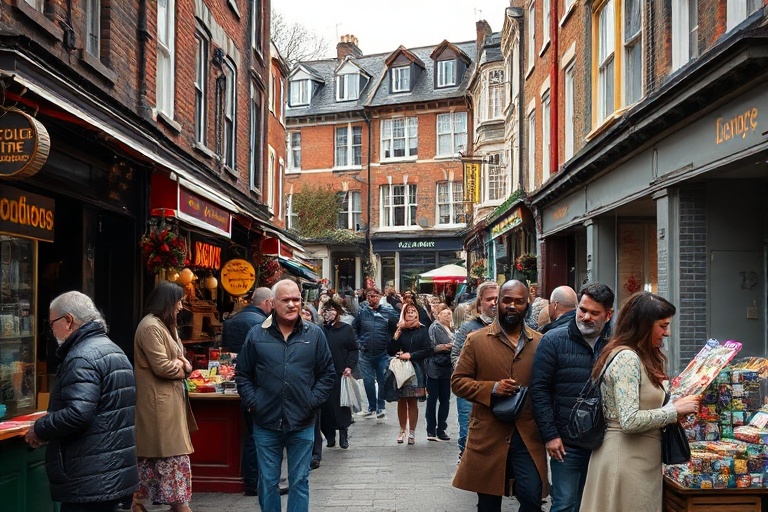
Food is perhaps Newham’s most visible cultural export. The Rokery Market in Stratford is a microcosm of global flavors, offering everything from Bengali curries to Caribbean patties. The borough’s culinary scene is a direct result of its migrant communities, with restaurants and street food stalls serving dishes that tell stories of displacement, adaptation, and fusion.
“Newham’s food isn’t just about eating—it’s about survival, celebration, and identity. Every dish is a chapter in the borough’s migration narrative.” — Local chef and community activist
Economic Resilience: From Docks to Digital
Newham’s economy has undergone radical shifts. The closure of the docks in the 1960s-70s left unemployment rates soaring. By the 1980s, the borough was one of the poorest in London. Yet, the 21st century brought a renaissance. Today, Newham is one of the fastest-growing economies in the UK, driven by technology, retail, and creative industries.
The rise of Canary Wharf’s financial district, just across the river, has had a spillover effect. Tech startups and co-working spaces now dot Newham, particularly in Stratford and Custom House. The International Quarter London, a mixed-use development, is a hub for global businesses, attracting professionals from India, Nigeria, and beyond.
Affordability remains a challenge, however. Despite economic growth, Newham has some of the highest poverty rates in London. The borough’s rapid gentrification has priced out long-term residents, sparking debates about housing equity. Initiatives like the Newham Council’s Affordable Homes Programme aim to balance progress with inclusivity, but the tension between development and displacement persists.
Global Connections: Newham’s Role in the World
Newham’s influence extends far beyond London. The borough is a key player in global migration networks, with strong ties to South Asia, West Africa, and the Caribbean. This connectivity is evident in its institutions:
- Religious Institutions: Mosques, temples, and churches cater to diverse faiths, including the East London Mosque and the BAPS Shri Swaminarayan Mandir in Neasden.
- Educational Hubs: The University of East London’s Stratford campus attracts international students, while schools like Sarah Bonnell School are models for multicultural education.
- Trade and Commerce: Markets like Brondesbury Market and Green Street are economic lifelines for migrant entrepreneurs, importing goods from their home countries.
Newham also plays a role in global sports. The Sports academies in the borough, such as the West Ham United Foundation, scout talent from local communities, offering pathways to professional careers. These academies aren’t just about football—they’re about social mobility, giving children from underprivileged backgrounds a chance to excel.
The Future: Challenges and Opportunities
Newham’s trajectory is a study in contrasts. On one hand, the borough is a symbol of urban success, with glowing skyscrapers and a vibrant cultural scene. On the other, it grapples with inequality, unaffordable housing, and the pressures of rapid change.
The borough’s leadership faces a delicate balancing act. How can Newham preserve its multicultural identity while accommodating global investors? How can economic growth lift all residents, not just newcomers? These questions aren’t unique to Newham—they’re echoed in cities from Berlin to Mumbai.
Yet, Newham’s greatest strength may be its people. The borough’s residents have repeatedly reinvented themselves, turning adversity into opportunity. Whether through art, entrepreneurship, or community organizing, Newham’s communities are writing their own narratives.
As the world becomes increasingly urbanized, Newham offers a blueprint for inclusive growth. Its story reminds us that cities aren’t just concrete and steel—they’re stories of resilience, diversity, and hope. In an era where urban centers are often divided, Newham stands as a rare example of a place where the world comes together.
For those looking to understand the pulse of modern urban life, Newham is a destination worth exploring.